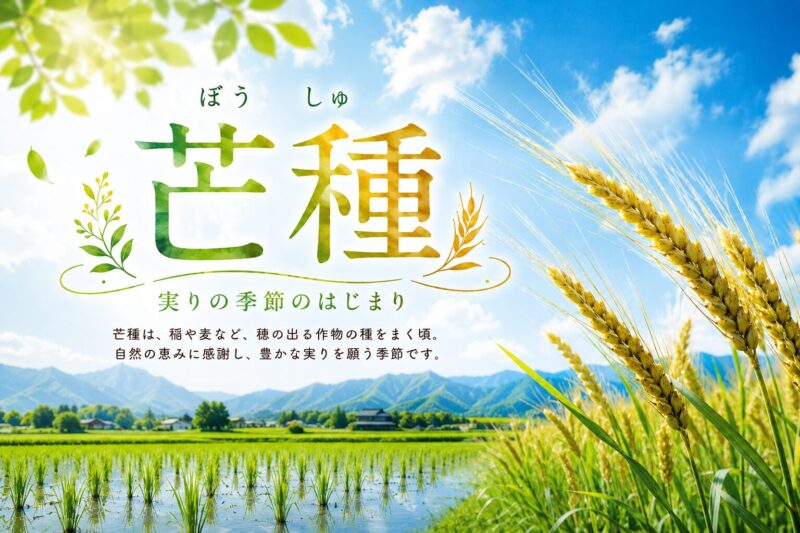
6月6日。2026年の今日は、二十四節気の「芒種」でもあります。梅雨の入り口、田植えの季節——そして今日は日本に古くから伝わる「習い事を始めるのに最もよい日」でもあります。
「6歳の6月6日に稽古を始めると、芸事が上達する」——この言い伝えを聞いたことがある方もいるでしょう。楽器の日・邦楽の日・いけばなの日が6月6日に制定されているのも、この言い伝えがルーツです。
今日はその600年前から続く不思議な言い伝えの本当の由来と、6月6日に重なるもうひとつの「歴史が変わった日」の物語をお届けします。
6月6日の記念日まとめ
6月6日の主な記念日・出来事
・楽器の日・邦楽の日——「6歳の6月6日から稽古を始めると上達する」という言い伝えにちなんで制定
・いけばなの日——同じく「6歳の6月6日」の言い伝えに由来して日本いけばな芸術協会が制定
・芒種(ぼうしゅ)——2026年の芒種は6月6日。田植えの季節・梅雨の入り口
・Dデイ記念日(1944年)——ノルマンディー上陸作戦が行われた日。第二次大戦の転換点
・かえるの日——「ケロ(6)ケロ(6)」の語呂合わせ
・らっきょうの日——6月がらっきょうの旬であることと「六(ろっ)」がらっきょうの形に似ているから
・ロールケーキの日——数字の「6」の形がロールケーキの巻き終わりに似ていることから
・梅の日——天文14年(1545年)旧暦6月6日に、梅を御所に献上した記録にちなむ
「6歳の6月6日」——600年前の世阿弥が始めた習い事の日
「6歳の6月6日に稽古を始めると上達する」——この言い伝えのルーツは今から約600年前、室町時代にまでさかのぼります。
きっかけは、能を大成した芸術家・世阿弥(1363年頃〜1443年頃)が著した能の理論書「風姿花伝」の一節でした。
風姿花伝(世阿弥)の冒頭の一節
「この芸において、おほかた、七歳をもてはじめとす」
(この芸において、おおよそ数え7歳〈つまり満6歳の年〉を稽古の始まりとするのがよい)
世阿弥はこの後、年齢ごとの稽古のあり方を細かく説いており、「子どもの成長に合わせ、まずはのびのびとやらせるのが大切」と記しています。能の理論書でありながら、子どもの教育論として今も古さを感じさせない内容です。
この「満6歳に始めるのがよい」という考えが、やがて江戸時代に歌舞伎の世界にも広まっていきます。そして——
「6月6日」になったもうひとつの理由
江戸時代の歌舞伎の台詞に「六歳の六月六日から……」という語呂のよいフレーズが頻繁に登場するようになり、聴衆の間に「稽古始めは6歳の6月6日がいい」という認識が広まっていきました。
「小指が立つ」——指折り説という可愛い民間伝承
「なぜ6月6日なのか」には、もうひとつ面白い説があります。
「指折り説」
指を折って数を数えるとき——
・1のとき:親指が立っている
・2のとき:人差し指が立っている
・3のとき:中指が立っている
・4のとき:薬指が立っている
・5のとき:小指が立っている
・6のとき:小指を折って、全部の指が曲がる
「小指(こゆび)が立つ」→「子(こ)が立つ」→「子どもが自立する」
→ 縁起がいいので稽古始めにふさわしい
科学的根拠はありませんが、この「指折り説」の可愛らしさと「子が立つ」という言葉遊びには、日本人らしい美しさを感じます。
「稽古」という言葉の本当の意味——反復練習ではなかった
ところで「稽古(けいこ)」という言葉、「練習する」「訓練する」という意味で使っていませんか?
実は「稽古」の漢字をひとつひとつ見ると、全く別の意味が浮かびあがります。
「稽古」の本当の意味
・「稽」=考える・照らし合わせる
・「古」=古(いにしえ)・古いもの
→ 「稽古」=「古きを考える・古きに学ぶ」という意味
「稽古照今」という四字熟語もあります。「古を考えて今を照らす」——過去の先例や伝統を深く学ぶことで、現在の自分を磨いていくという意味です。
「稽古」は単なる技術の反復練習ではなく、「先人の知恵と伝統を自分の体に刻み込んでいく」という深い行為でした。世阿弥が説いた稽古観は、今も生きています。
芒種——2026年の今日が「田植えの季節の始まり」
2026年6月6日は、二十四節気の「芒種」にあたります。
「芒」とは稲・麦などイネ科植物の穂先にある細い突起のこと。「芒のある穀物の種をまく時期」という意味から「芒種」と呼ばれます。実際には現代の農業では種まきはもっと早く行われていますが、田植えの目安の季節として今も親しまれています。
芒種の豆知識
・2026年の芒種:6月6日(土)——今日がまさに芒種
・芒種の次の節気:「夏至」6月21日頃
・この時期の自然:カマキリが生まれる頃(七十二候「蟷螂生」)
・梅の実が少しずつ色づき始める時期でもある
・農家にとっては麦の刈り取り・田植えなどで最も忙しい時期の始まり
稽古始めの日・芒種・梅雨の入り口——6月6日は、日本が「新しい季節を始める」準備をする日なのかもしれません。
Dデイ——1944年6月6日、歴史が変わった「上陸」の朝
1944年6月6日午前6時30分——「ノルマンディー上陸作戦(Dデイ)」が始まりました。連合軍17万人以上がフランス・ノルマンディーの海岸5か所に上陸し、ナチス・ドイツ占領下のヨーロッパを解放する最大規模の作戦が始まったのです。
Dデイの規模
・参加した兵士:約17万3,000人(史上最大規模の上陸作戦)
・船舶:約5,000隻
・航空機:約13,000機
・上陸地点:ノルマンディー沿岸の5か所(コードネーム:ユタ・オマハ・ゴールド・ジュノ・ソード)
・最も激戦となったのは「オマハ・ビーチ」——映画「プライベート・ライアン」の冒頭で描かれた場所
・この作戦が成功し、1945年5月のナチス・ドイツ無条件降伏へとつながった
まとめ——6月6日は「始める日」「思い出す日」「受け継ぐ日」
600年前の世阿弥の言葉が「楽器の日」を生み、梅雨の入り口に「芒種」という豊穣の季節が始まり、1944年の今日に歴史が動いた。
今日は何かを「始める」のに最もよい日です。大人の稽古始め——何か新しいことを始めてみませんか。
まとめ
- 6月6日は楽器の日・邦楽の日・いけばなの日——「6歳の6月6日に稽古を始めると上達する」という言い伝えに由来
- そのルーツは室町時代の世阿弥「風姿花伝」——「満6歳に稽古を始めよ」と書いた600年前の名著
- 6月6日に定着したのは江戸時代の歌舞伎の台詞から。「六歳の六月六日から……」という語呂のよさが広まった
- 「小指が立つ=子が立つ」という指折り説もあって可愛い
- 「稽古」の本当の意味は「古きを考える」——技術の練習だけでなく先人の知恵を体に刻むこと
- 2026年6月6日は芒種——田植えの季節の始まり・カマキリが生まれる頃
- 1944年6月6日、ノルマンディー上陸作戦(Dデイ)——17万人以上が参加した史上最大規模の上陸作戦。第二次大戦の転換点
最後まで読んでくださってありがとうございました😊
今日は「何かを始める日」として、ずっと気になっていた習い事や趣味の第一歩を踏み出してみてください。600年前の世阿弥も「今日から始めよ」と言っています。
では、よい一日をお過ごしください。
see you soon.
What Day Is June 6th? “When the Little Finger Stands, the Child Stands” — The 600-Year-Old Tradition That Says Today Is the Best Day to Start Learning Something New
June 6th. In 2026, today also falls on Bōshu (芒種) — one of the 24 traditional solar terms. The doorstep of the rainy season, the beginning of the rice-planting period — and also the day that, for centuries, has been considered the best day in Japan to begin learning a new art.
“If you begin your practice at age 6, on June 6th, you will master the art.” You may have heard this saying. The reason June 6th was designated as Instrument Day, Japanese Music Day, and Ikebana Day all traces back to this very belief.
Today, let’s explore the true 600-year-old origin of that curious tradition — and the story of another day in history that also falls on June 6th.
June 6th Commemorative Days at a Glance
Main Events & Commemorative Days on June 6th
· Instrument Day / Japanese Music Day — Established based on the belief that “beginning practice at age 6 on June 6th leads to mastery”
· Ikebana Day — Established by the Japan Ikebana Art Association for the same reason
· Bōshu (芒種) — The 2026 Bōshu falls today; the beginning of the rice-planting season and the rainy season
· D-Day Anniversary (1944) — The Normandy landings; the turning point of World War II in Europe
· Frog Day — Wordplay on “Kero (6) Kero (6)” (the sound a frog makes in Japanese)
· Rakkyo Day — June is the season for rakkyo (Chinese scallion); the character “六” resembles the shape of the vegetable
· Roll Cake Day — The shape of the number “6” resembles the spiral end of a rolled cake
· Ume Day — Marks a record from 1545 (old lunar calendar) of plums being presented to the Imperial Court on this day
“Age 6 on June 6th” — The Tradition That Zeami Started 600 Years Ago
“Begin your practice at age 6, on June 6th, and you will excel in the arts.” This belief traces back roughly 600 years — to the Muromachi period of Japanese history.
Its origin lies in a passage from Fūshikaden (風姿花伝) — the foundational text on Noh theatre written by Zeami Motokiyo (c. 1363–1443), the master who elevated Noh into a high art form.
Opening Lines of Zeami’s Fūshikaden
“In this art, the beginning is generally set at the age of seven.”
(In the old Japanese counting system, “age seven” means a child who has completed six full years — what we would today call age 6.)
Zeami goes on to give detailed guidance on how to teach at each stage of a child’s growth — emphasizing that young children should be allowed to play and explore freely, without being forced into rigid technique. As a theory of artistic education, it doesn’t feel a day out of date.
This idea — “begin at the age of six” — gradually spread from the world of Noh into the Kabuki theatre during the Edo period. And then:
🎭 How “June 6th” Became the Specific Date
During the Edo period, Kabuki scripts began frequently including the phrase “from the sixth year, on the sixth month, the sixth day…” — a pleasingly rhythmic string of sixes. This phrase caught on with audiences, and over time, “start your practice at age 6 on June 6th” became a widely accepted piece of common wisdom.
“The Little Finger Stands” — The Charming Folk Theory
There is actually a second explanation for why June 6th specifically became the designated day — and it’s a delightful one.
The “Finger-Counting Theory”
When you count on your fingers, folding them down one by one:
· At 1: the thumb is extended
· At 2: the index finger is extended
· At 3: the middle finger is extended
· At 4: the ring finger is extended
· At 5: the little finger (pinky) is extended
· At 6: the little finger folds down — all fingers are curled in
“The little finger (ko-yubi) stands up” → “The child (ko) stands up” → “The child becomes independent”
→ A lucky omen, and therefore a fitting day to begin one’s studies
There’s no scientific basis for this, of course — but the playfulness of the reasoning, and the way it maps “child” (ko) onto “little finger” (ko-yubi), has a distinctly Japanese charm that has kept it alive for centuries.
What “Keiko” Really Means — It Was Never Just “Practice”
The Japanese word for practice or training — keiko (稽古) — is usually translated simply as “practice” or “training.” But look at the characters that make it up and something quite different appears.
The True Meaning of “Keiko”
· 稽 (kei) = to think, to reflect, to hold up against something
· 古 (ko) = the old, the ancient, the past
→ “Keiko” = “to think about the old” / “to learn from what came before”
There is also a four-character expression: Keiko-shōkon (稽古照今) — “reflect on the past to illuminate the present.” By studying deeply the examples and traditions left by those who came before us, we refine who we are today.
“Keiko” was never simply about repeating a technique. It was about engraving the wisdom and traditions of one’s predecessors into one’s own body and mind. The vision of practice that Zeami described 600 years ago is still alive.
Bōshu — The 2026 Season of Planting Begins Today
June 6th, 2026 falls on Bōshu (芒種) — the ninth of the 24 traditional solar terms.
“Bō (芒)” refers to the slender bristle-like tip that grows from the ears of rice, wheat, and other grain plants. “Bōshu” means “the season for sowing grains with bō” — though in modern agriculture, sowing is done considerably earlier; today the term is understood as the beginning of the rice-transplanting season.
Bōshu — Quick Facts
· 2026 Bōshu: June 6th (Saturday) — today
· Next solar term: Geshi (夏至, Summer Solstice), around June 21st
· What’s happening in nature: praying mantises are hatching (72-microseason: “Kamakiri shōzu”)
· Plum fruits are beginning to ripen and deepen in color
· For farmers: the busiest time of year begins — wheat harvesting and rice transplanting
The day for beginning your practice. The beginning of the rainy season. The first day of Bōshu. June 6th is perhaps Japan’s day for starting something new.
D-Day — June 6th, 1944: The Morning History Changed
At 6:30 AM on June 6th, 1944, Operation Overlord — the Normandy Landings (D-Day) — began. More than 173,000 Allied troops landed simultaneously at five points along the coast of Normandy, France, in the largest amphibious invasion in military history — launching the liberation of Nazi-occupied Western Europe.
D-Day — The Scale
· Troops: approximately 173,000 (the largest amphibious operation in history)
· Vessels: approximately 5,000
· Aircraft: approximately 13,000
· Landing beaches: five points along the Normandy coast (codenamed Utah, Omaha, Gold, Juno, and Sword)
· The fiercest fighting: Omaha Beach — the setting of the opening sequence of Saving Private Ryan
· Outcome: the success of this operation led directly to the unconditional surrender of Nazi Germany in May 1945
Closing Thoughts — June 6th Is a Day to Begin, to Remember, and to Carry Forward
The words of Zeami, written 600 years ago, gave us Instrument Day. The rainy season opens into the abundance of Bōshu. And in 1944, on this same day, the largest military operation in history began to turn the tide of a world war.
Today is, by every tradition, a day to start something. Adult keiko — isn’t there something you’ve always wanted to try?
Summary
- June 6th is Instrument Day, Japanese Music Day, and Ikebana Day — all based on the belief that “beginning practice at age 6 on June 6th leads to mastery”
- The root is Zeami’s Fūshikaden (c. 1400) — a 600-year-old text on Noh theatre that recommended beginning training at the age of six
- The specific date of June 6th spread through Edo-period Kabuki scripts, where the phrase “from the sixth year, sixth month, sixth day” appeared as a pleasing, rhythmic line
- A second folk theory: at 6, the little finger folds down — “ko-yubi (little finger) stands” sounds like “ko (child) stands,” meaning the child becomes independent — a lucky omen
- The word “keiko” (稽古) doesn’t mean “practice” — it means “to think about the old, to learn from what came before”
- June 6th, 2026 is Bōshu — the beginning of the rice-planting season; praying mantises hatch; plums begin to ripen
- On June 6th, 1944, the Normandy Landings (D-Day) began — 173,000 troops, 5,000 vessels, the largest amphibious operation in history; the turning point of World War II
Thank you so much for reading all the way to the end 😊
Today is the best day to begin something. There’s a hobby or skill you’ve been meaning to try — Zeami, writing 600 years ago, said: start today.
Have a wonderful day.
See you soon.

コメント