今日は2026年の第2土曜日、一粒万倍日でもあります。
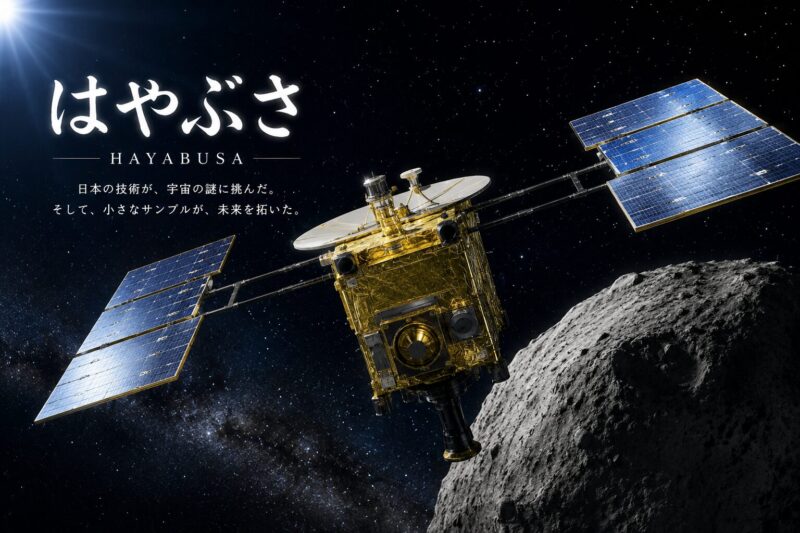
2010年6月13日深夜——オーストラリア・ウーメラ砂漠の夜空に、満月を超えるほど明るい流れ星が現れました。7年間・60億kmの旅を終えた小惑星探査機「はやぶさ」が、大気圏に突入しながら燃え尽きていく最後の輝きでした。
「さようなら、はやぶさ」——現地で見守っていたJAXAの担当者たちが、涙をこらえながら言った言葉です。
また1987年6月13日——広島カープの衣笠祥雄選手が、アメリカのルー・ゲーリックが持っていた連続試合出場の世界記録を塗り替えました。17年間、一度も試合を休まなかった「鉄人」の物語です。
6月13日の記念日まとめ
6月13日の主な記念日・出来事
・はやぶさの日——2010年6月13日、小惑星探査機「はやぶさ」が60億kmの旅を終えて地球帰還
・鉄人の日——1987年6月13日、衣笠祥雄が連続試合出場の世界記録を更新した日
・小さな親切の日——1963年6月13日、「小さな親切」運動がスタートした日
・いいみょうがの日——「いい(1)みょう(3)が」の語呂合わせ。高知産みょうがをPR
・国際アルビニズム啓発デー——アルビニズム(白皮症)への理解を促す国連制定の国際デー
・FMの日——F(アルファベット6番目)M(13番目)の組み合わせから
・英葡永久同盟締結記念日(1373年)——イギリスとポルトガルによる、世界最古の現存する同盟条約
「60億kmの旅の末、流れ星になった」——はやぶさ7年間の軌跡
2003年5月9日、小惑星探査機「はやぶさ」がM-Vロケットで打ち上げられました。目的地は地球から約3億2,000万km離れた小惑星「イトカワ」。月以遠の星の砂を持ち帰る「サンプルリターン」は、世界で初めての挑戦でした。
はやぶさの旅・基本データ
・打ち上げ:2003年5月9日
・目的地:小惑星イトカワ(地球から約3億2,000万km)
・推進方式:イオンエンジン(電気でキセノンイオンを加速する燃費のよいエンジン)
・総飛行距離:約60億km
・帰還:2010年6月13日(打ち上げから7年1ヶ月後)
・帰還場所:オーストラリア・ウーメラ砂漠
「次々と壊れていった」——絶体絶命の連続だった7年間
はやぶさの旅は、順調ではありませんでした。
はやぶさが乗り越えたトラブルの数々
・2003年:太陽フレアによって太陽電池パネルが劣化し、イオンエンジンの推力が低下
・2005年11月:イトカワへの着陸に挑戦。着陸は「1秒間」しかできなかった
・2005年12月:姿勢制御用エンジンが全損。通信が途絶える
・2006年1月:通信が完全に途絶——行方不明状態へ
・2006年3月:奇跡的に通信が回復(地球から3億3,000万km、秒速3mで離れていた)
・2009年:イオンエンジンが次々と寿命を迎え、残り1基の半分しか使えない状態に
→ JAXAのエンジニアが「2基の劣化したエンジンを組み合わせて1基分の推力を生み出す」という前代未聞の技術で復活
「はやぶさ自身に助けられた」——プロジェクトマネージャーはそう語りました。次々と機能を失いながらも、それでも地球へ向かい続けた探査機の姿は、まるで意志があるかのようでした。
「わずか1秒間の着地」——持ち帰った1,500粒の奇跡
2005年11月、はやぶさはイトカワへの着陸を試みました。計画では、弾丸を地表に撃ち込んで舞い上がった砂を採取するはずでしたが、弾丸発射装置が正常に動作しませんでした。
しかし——イトカワに触れたわずか1秒間の衝撃で舞い上がった微粒子が、カプセルの中に自然に入り込んでいたのです。
1秒間が生んだ奇跡
・地球に帰還したカプセルを開封すると:約1,500粒の微粒子を発見
・サイズ:直径0.01〜0.1mm(目に見えないほど小さい)
・分析結果:間違いなく小惑星イトカワの物質と確認
・科学的意義:月より遠い天体の物質を地球に持ち帰った、世界初の偉業
・太陽系誕生の謎を解く手がかりとして、今も世界中の研究者が分析を続けている
1秒間の接触で、1,500粒の宇宙の砂を持ち帰った——そしてはやぶさの本体は、2010年6月13日の深夜、大気圏に突入し流れ星となって燃え尽きました。カプセルだけが無事にウーメラ砂漠に着地しました。
帰還の瞬間
「ウーメラの夜空に、満月を超えるほど明るい流れ星が現れた。はやぶさが7年間の旅を終えて、最後の輝きを地球に向けて放ちながら燃え尽きていった」
衣笠祥雄「鉄人の記録」——1987年6月13日、2131試合連続出場
1987年6月13日——広島東洋カープの衣笠祥雄選手が、アメリカ大リーグのルー・ゲーリックが持っていた2130試合連続出場の世界記録を塗り替えました。
衣笠が連続出場を始めたのは1970年。以来17年間、骨折しても・高熱が出ても・死球で倒れても試合に出続けました。
衣笠祥雄の「鉄人」記録
・連続試合出場開始:1970年(23歳)
・最終連続試合出場数:2215試合(1987年に自ら申し出て終了)
・17年間で休んだ試合数:0
・記録達成時のエピソード:左手首骨折の状態で試合に出続けた試合も
・ルー・ゲーリックの記録(2130試合)を日本人として超えたことで「世界の衣笠」に
・1987年:国民栄誉賞を受賞。翌1988年に現役引退
「小さな親切」運動スタートの日——東大総長の卒業式の言葉から始まった
1963年6月13日——「小さな親切」運動本部が発足しました。そのきっかけは、同年3月の東京大学卒業式で、茅誠司総長が卒業生に向けて言った言葉でした。
茅誠司東大総長の言葉(1963年3月)
「皆さんにお願いすることは、『小さな親切』を勇気をもってやっていただきたい。そしてそれが、やがては日本の社会の隅々までを埋めつくすであろう親切というなだれの芽としていただきたい」
「勇気をもって」という言葉が印象的です。小さな親切は「特別なこと」ではなく、勇気が要ることだ——と総長は言いました。あれから63年、今も「小さな親切」運動は続いています。
まとめ——6月13日は「諦めない力」を感じる日
7年間・60億kmを旅し、流れ星になって帰ったはやぶさ。17年間一度も休まなかった衣笠。勇気をもって小さな親切をしようと訴えた茅総長。どの物語にも「諦めない」という言葉が宿っています。
まとめ
- 6月13日ははやぶさの日——2010年6月13日、60億kmの旅を終えてウーメラ砂漠の夜空に流れ星となって帰還
- 次々と壊れる中、JAXAエンジニアが「2基の劣化エンジンを組み合わせ1基分の推力を生み出す」前代未聞の技術で地球帰還を実現
- わずか1秒間の着地で採取した小惑星の砂1,500粒——月より遠い天体の物質を持ち帰った世界初の偉業
- 2026年の今日は帰還から16年目——はやぶさが持ち帰った砂は今も宇宙の謎を解くために研究中
- 1987年6月13日、衣笠祥雄が2131試合連続出場の世界記録を達成。17年間一度も休まなかった「鉄人」
- 1963年6月13日、「小さな親切」運動がスタート——東大総長の卒業式スピーチが起爆剤に
最後まで読んでくださってありがとうございました😊
今日の夜、空を見上げてみてください。16年前の今夜、ウーメラの空に満月より明るい流れ星が現れました。はやぶさが「ただいま」と言いながら燃えていった光でした。
では、よい一日をお過ごしください。
see you soon.
What Day Is June 13th? “Goodbye, Hayabusa” — The Night a Spacecraft Became a Shooting Star After 6 Billion Kilometers, and the Iron Man Who Never Once Missed a Game in 17 Years
In the traditional Japanese calendar, today is an Ichiryu Manbai day — a day considered especially auspicious for beginnings.
On the night of June 13th, 2010, a shooting star brighter than the full moon crossed the sky above the Woomera Desert in South Australia. It was the asteroid probe Hayabusa — burning up as it re-entered Earth’s atmosphere after a journey of 6 billion kilometers spanning 7 years.
“Goodbye, Hayabusa.” Those were the words the JAXA team members watching on the ground said, struggling to hold back their tears.
And on June 13th, 1987, Hiroshima Carp outfielder Sachio Kinugasa broke the world record for consecutive games played — a record held for decades by American baseball legend Lou Gehrig. For 17 years, Kinugasa had not missed a single game.
June 13th Commemorative Days at a Glance
Main Events & Commemorative Days on June 13th
· Hayabusa Day — June 13th, 2010: the asteroid probe Hayabusa returns to Earth after a 6-billion-kilometer journey
· Iron Man Day (Tetsujin no Hi) — June 13th, 1987: Sachio Kinugasa breaks the world record for consecutive games played
· Small Kindness Day — June 13th, 1963: Japan’s “Small Kindness Movement” officially launched
· Myōga Day — Wordplay on “I (1) i-myō (3) ga”; promotes Kochi-grown myōga (Japanese ginger)
· International Albinism Awareness Day — UN-designated day to promote understanding of albinism
· FM Day — F is the 6th letter of the alphabet; M is the 13th
· Anglo-Portuguese Alliance Anniversary (1373) — The world’s oldest surviving military alliance, between England and Portugal
“6 Billion Kilometers, and Then a Shooting Star” — The 7-Year Journey of Hayabusa
On May 9th, 2003, the asteroid probe Hayabusa was launched aboard an M-V rocket. Its destination: the asteroid Itokawa, approximately 320 million kilometers from Earth. The mission — to land on a body beyond the Moon, collect samples, and bring them back — was the first attempt of its kind in human history.
Hayabusa — Mission Overview
· Launch: May 9th, 2003
· Destination: asteroid Itokawa (approximately 320 million km from Earth)
· Propulsion: ion engine (accelerates xenon ions using electrical energy — extremely fuel-efficient)
· Total distance traveled: approximately 6 billion km
· Return: June 13th, 2010 (7 years and 1 month after launch)
· Landing site: Woomera Desert, South Australia
“It Just Kept Breaking Down” — Seven Years of Crisis After Crisis
Hayabusa’s journey was anything but smooth.
The Crises Hayabusa Survived
· 2003: A solar flare damages the solar panels, reducing ion engine thrust
· November 2005: Attempts to land on Itokawa — the actual surface contact lasts just 1 second
· December 2005: The attitude control engine fails completely; contact with the probe is lost
· January 2006: Communication cuts out entirely — Hayabusa goes missing
· March 2006: Contact is miraculously restored (Hayabusa is 330 million km away, drifting at 3 m/s)
· 2009: Ion engines fail one by one; only half of one remaining engine is still functional
→ JAXA engineers devise an unprecedented technique: combining two degraded engines to generate the thrust of one working engine
“We were saved by Hayabusa itself.” — the project manager said. Piece by piece losing its functions, yet continuing to push toward Earth as though it had its own will — the probe came to feel almost alive to the people who watched over it.
“One Second of Contact” — The 1,500 Grains That Changed Science
In November 2005, Hayabusa attempted to collect samples from Itokawa’s surface. The plan called for firing a small bullet into the asteroid to kick up material — but the bullet mechanism failed to fire correctly.
And yet — in the single second that Hayabusa was in contact with the surface, dust disturbed by the probe’s touch had naturally drifted into the collection capsule.
The Miracle of One Second
· When the capsule was opened on Earth: approximately 1,500 particles of material were found
· Size: 0.01–0.1 mm in diameter (invisible to the naked eye)
· Analysis result: confirmed as material from asteroid Itokawa
· Scientific significance: the world’s first sample return from a body beyond the Moon
· The particles continue to be analyzed by researchers around the world as clues to the origin of the solar system
One second of contact. 1,500 grains of cosmic dust brought home across 6 billion kilometers. And on the night of June 13th, 2010, Hayabusa’s body entered the atmosphere and became a shooting star — burning brilliantly as it fell. Only the capsule survived to land on the desert floor.
The Moment of Return
“A shooting star brighter than the full moon crossed the Woomera sky. Hayabusa, finishing its seven-year journey, blazed its final light toward the Earth it had been reaching for — and was gone.”
Sachio Kinugasa — June 13th, 1987: Game 2,131
On June 13th, 1987, Sachio Kinugasa of the Hiroshima Toyo Carp broke the consecutive games played record held by New York Yankees legend Lou Gehrig — 2,130 games.
Kinugasa’s streak had begun in 1970. For 17 years — through broken bones, high fevers, and being hit by pitches — he took the field every single game.
The “Iron Man” Record of Sachio Kinugasa
· Streak began: 1970 (age 23)
· Final consecutive games total: 2,215 games (he voluntarily ended the streak in 1987)
· Games missed in 17 years: zero
· Notable moment: played through a fractured left wrist without telling the team
· Breaking Gehrig’s record made him “Kinugasa of the World” — celebrated across Japan and the US
· 1987: awarded the People’s Honor Award (Kokumin Eiyo-shō); retired from baseball in 1988
Small Kindness Day — The Words from a University Commencement That Started a Movement
On June 13th, 1963, Japan’s “Small Kindness Movement” (Chiisana Shinsetsu Undō) officially launched. Its origin was a commencement address delivered at Tokyo University in March of that year by President Seiji Kaya.
President Kaya’s Words at Tokyo University Commencement (March 1963)
“What I ask of you is this: carry out small acts of kindness with courage. And let each of those acts become the seed of an avalanche of kindness that will one day fill every corner of Japanese society.”
The phrase “with courage” stands out. Small kindnesses are not easy, he was saying — they take something from us. That movement he inspired 63 years ago continues to this day.
Closing Thoughts — June 13th Is a Day to Feel the Power of Not Giving Up
Hayabusa, which traveled 6 billion kilometers and came home as a shooting star. Kinugasa, who never once missed a game in 17 years. President Kaya, who asked students to be brave enough to be kind. In every story today, the same word lives: keep going.
Summary
- June 13th is Hayabusa Day — on June 13th, 2010, after 6 billion kilometers, Hayabusa became a shooting star above the Woomera Desert and came home
- As the probe failed piece by piece, JAXA engineers combined two degraded ion engines into one — an unprecedented feat of ingenuity
- Just one second of surface contact on Itokawa yielded 1,500 grains of asteroid material — the world’s first sample return from beyond the Moon
- Today, 16 years after its return, the dust Hayabusa brought home is still being analyzed to unlock the secrets of the solar system
- On June 13th, 1987, Sachio Kinugasa broke the world record for consecutive games played at 2,131 — never missing a single game in 17 years
- On June 13th, 1963, Japan’s “Small Kindness Movement” launched — sparked by a university president’s commencement address
Thank you so much for reading all the way to the end 😊
Tonight, look up at the sky. Sixteen years ago tonight, a shooting star brighter than the full moon crossed the sky above Woomera. That was Hayabusa, saying “I’m home” as it burned.
Have a wonderful day.
See you soon.


コメント