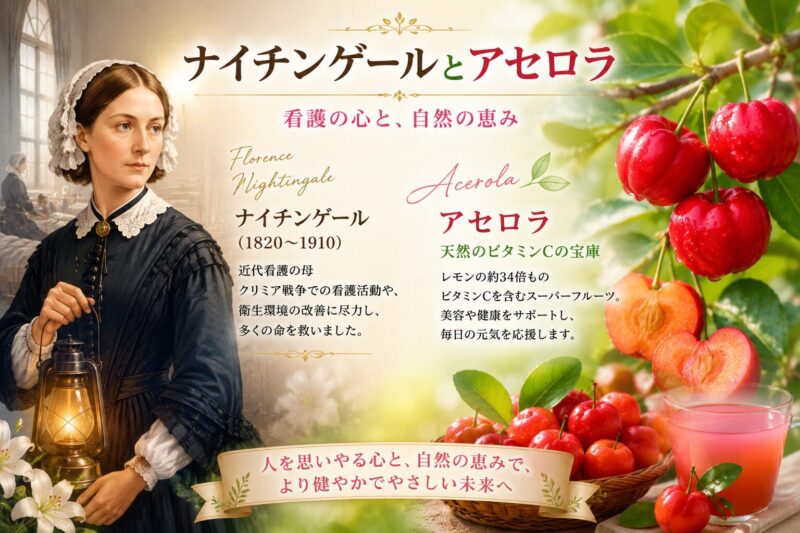
5月12日。今日は「看護の日」「国際看護師の日」「ナイチンゲールデー」と、看護にまつわる記念日が集まる一日です。
「ナイチンゲールといえば白衣の天使、ランプを持って夜回りをした優しい看護師」——そんなイメージを持っている方が多いと思います。
でも実は、ナイチンゲールのもうひとつの顔をご存知ですか?
彼女は「統計学の母」とも呼ばれる人物でした。データと図表を武器に、政府を動かし、医療制度そのものを変えた革命家だったのです。今日はその知られざるナイチンゲールの物語をお届けします。
5月12日の記念日まとめ
📖 5月12日の主な記念日
・国際看護師の日——1965年、国際看護師協会が制定。ナイチンゲールの誕生日(1820年)にちなむ
・看護の日——1991年、厚生省が制定。この日から1週間は「看護週間」
・ナイチンゲールデー——赤十字社が制定
・海上保安の日——1948年5月12日、海上保安庁が開庁
・アセロラの日——沖縄・本部町が制定。5月に初収穫が始まることから
・ザリガニの日——1927年5月12日、アメリカザリガニが初めて日本に持ち込まれた日
【メナイチンゲールとは何者だったのか——上流階級の令嬢が「下層の仕事」に飛び込むまで
フローレンス・ナイチンゲールは1820年5月12日、イタリアのフィレンツェで生まれました。名前の「フローレンス」は生まれた街・フィレンツェの英語読みから付けられたものです。
家は裕福なイギリス上流階級。哲学・数学・経済学・歴史学・音楽に加え、フランス語・ギリシャ語・ラテン語・ドイツ語・イタリア語と、当時の女性としては異例の高等教育を受けて育ちました。
そんな彼女が看護師を志したのは29歳のとき。しかし当時の看護師とは、「下層階級の無教養な女性がするお世話係」と見なされていた職業でした。上流階級の令嬢が選ぶような仕事ではなかったのです。
家族は猛反対しました。それでも彼女は31歳でドイツへ渡り、看護師の訓練を受け始めます。
ナイチンゲールの決意
「神が私に使命を与えた。看護師になることは天命だ」
——貧しい農民の悲惨な生活を目の当たりにした彼女は、人の役に立つことへの強い使命感を持っていたといいます。
死亡率42%→2%/データで戦争を変えた統計学者の顔
1853年にクリミア戦争が勃発すると、ナイチンゲールは38人の看護師を率いて戦地へ向かいます。
赴任先のスクタリ野戦病院の実態は凄惨なものでした。病院に運ばれた兵士の死亡率は40%以上。しかし驚くべきことに、その死因のほとんどは戦傷ではなく、不衛生な環境による感染症でした。
ナイチンゲールはすぐに行動しました。徹底的な衛生改善——換気・清潔・消毒。その結果、わずか半年ほどで死亡率は2%台にまで激減しました。
しかし彼女が真に革命を起こしたのは、その後です。
帰国したナイチンゲールは、「兵士の死因のほとんどは感染症だ」という事実を政府と社会に訴えようとしました。そこで彼女が使ったのが「データの可視化」という手法でした。
ナイチンゲールが生み出した「鶏のとさかグラフ」
死亡者数を月ごとに色分けした扇形のグラフを作成。戦傷死・感染症死・その他死亡を一目で比較できるように工夫した。棒グラフや円グラフが一般的でなかった時代に、「レーダーチャート」の元祖を生み出したのもナイチンゲールでした。
このグラフを使って彼女はヴィクトリア女王に直接訴えます。専門家でない女王でも一目でわかるように、数字ではなく「見えるデータ」で戦ったのです。
彼女の訴えは政府を動かし、イギリス陸軍の医療衛生制度は大改革されました。「クリミアの天使」の正体は、データを武器に戦った革命家だったのです。
「ランプの貴婦人」の真実/夜回りに込めた哲学
ナイチンゲールといえば、ランプを持って夜の病棟を見回る姿が有名です。「ランプの貴婦人」という呼び名もそこから来ています。
しかしこの夜回りには、単なる優しさ以上の意味がありました。
当時の病院では、昼間に患者の状態を把握しても夜間に急変することが多く、多くの兵士が夜中に亡くなっていました。ナイチンゲールはこれを「夜間の観察不足」と分析し、自ら夜も病棟を歩き回ることで患者の状態を把握し、異変に早期対応するシステムを作ったのです。
現代の病院に当たり前のように存在するナースコール・ナースステーション・病床の配置——実はこれらを最初に考案したのもナイチンゲールでした。彼女は病院建築そのものをデザインし直したのです。
看護師のイメージを変えた「看護覚え書」
1860年、40歳のナイチンゲールは『看護覚え書(Notes on Nursing)』を出版します。
この本の中で彼女はこう書いています。
ナイチンゲールの言葉
「看護とは、新鮮な空気、陽光、暖かさ、清潔さ、静かさを適切に保ち、食事を適切に選択し管理すること——こういったことのすべてを、患者の生命力の消耗を最小にするよう整えることを意味する」
この本は看護教育の原点として、160年以上たった今でも読み継がれています。また彼女はこの本の印税を、看護師訓練学校の設立資金に充てました。
1858年には王立統計学会の初の女性会員にも選ばれています。「天使」のイメージとは異なる、データと論理で戦った知の巨人の顔がそこにあります。
アセロラの日/沖縄が誇るビタミンCの女王
5月12日は沖縄県本部町が制定した「アセロラの日」でもあります。5月から初収穫が始まることにちなんでいます。
アセロラのビタミンC含有量は、レモンの約34倍・イチゴの約80倍という驚異的な数値。沖縄では「ビタミンCの女王」として親しまれています。
ナイチンゲールが衛生と栄養で兵士の命を救ったように、アセロラも「体を守る食べ物」として注目されているのは、何か縁を感じますね。
5月12日は「データと信念が世界を変える」ことを思い出す日
「天使」のイメージで語られることの多いナイチンゲールですが、その本質は「データを武器に、信念を持って世界を変えた人」でした。
上流階級という恵まれた環境の中から、あえて最も過酷な場所へ飛び込み、感情ではなく数字と論理で政府を動かした。その生き方は、今を生きる私たちにも深く刺さるものがあります。
まとめ
- 5月12日はナイチンゲールの誕生日(1820年)にちなむ「国際看護師の日」「看護の日」
- ナイチンゲールは裕福な上流階級の出身。家族の猛反対を押し切って31歳で看護師の道へ
- クリミア戦争の野戦病院で、死亡率を40%以上から2%台へ激減させた
- 死因のほとんどが「感染症」だと突き止め、データの可視化(鶏のとさかグラフ)で政府を動かした
- 「統計学の母」として1858年に王立統計学会初の女性会員に選ばれた
- ナースコール・ナースステーション・病床配置など、現代の病院の仕組みを考案したのもナイチンゲール
- アセロラの日——沖縄・本部町発祥。ビタミンCはレモンの約34倍のスーパーフード
最後まで読んでくださってありがとうございました😊
今日は身近にいる看護師さんや医療に携わる方へ、心の中でそっと感謝を伝えてみてください。
ナイチンゲールが変えた世界の上に、私たちは生きています。
では、よい一日をお過ごしください。
see you soon.
What Day Is May 12th? The Hidden Face of “The Lady with the Lamp” — Florence Nightingale Was Actually a Statistician
May 12th. Today is a day packed with observances honoring nursing — International Nurses Day, Nurses Day in Japan, and Nightingale Day.
“Florence Nightingale — the Angel in White, the kind nurse who walked the wards at night with her lamp.” That’s the image most people carry.
But did you know there was another side to Nightingale that rarely gets told?
She is also known as “the Mother of Statistics” — a revolutionary who wielded data and charts as weapons, moved governments, and transformed the entire system of modern healthcare. Today, let’s explore the Nightingale that history often forgets.
May 12th Commemorative Days at a Glance
📖 Main Commemorative Days on May 12th
· International Nurses Day — Established in 1965 by the International Council of Nurses, marking Nightingale’s birthday (1820)
· Nurses Day (Japan) — Established in 1991 by Japan’s Ministry of Health and Welfare; the surrounding week is “Nursing Week”
· Nightingale Day — Established by the Red Cross
· Maritime Safety Day — Marks the opening of the Japan Coast Guard on May 12th, 1948
· Acerola Day — Established by Motobu Town, Okinawa; the first harvest of acerola begins in May
· Crayfish Day — On May 12th, 1927, American crayfish were first introduced to Japan
Who Was Florence Nightingale, Really? — The Aristocratic Daughter Who Chose the “Lowest” Profession
Florence Nightingale was born on May 12th, 1820, in Florence, Italy. Her name “Florence” came directly from her birthplace — the English rendering of the city’s name.
Her family was wealthy British upper class. She received an exceptional education for a woman of her era — philosophy, mathematics, economics, history, and music, alongside fluency in French, Greek, Latin, German, and Italian.
Yet at 29, she resolved to become a nurse. The problem: nursing at the time was considered the work of “uneducated women from the lower classes.” It was simply not a profession an aristocratic lady chose.
Her family was horrified. They protested fiercely. But Nightingale refused to be deterred. At 31, she traveled to Germany to begin her nursing training.
Nightingale’s Conviction
“God has given me a mission. Becoming a nurse is my calling.”
— Having witnessed the desperate poverty of rural communities during charitable visits, Nightingale felt a profound and unshakeable drive to serve others.
From 42% to 2% — The Statistician Who Changed War with Data
When the Crimean War broke out in 1853, Nightingale led a team of 38 nurses to the front lines.
The conditions at Scutari military hospital were catastrophic. More than 40% of soldiers who arrived were dying. And the shocking truth she uncovered was that most of those deaths were not caused by battle wounds — they were caused by infectious disease in the filthy, unventilated wards.
Nightingale acted immediately. Rigorous sanitary reform: ventilation, cleanliness, disinfection. Within roughly six months, the death rate had plummeted to under 2%.
But the true revolution came after she returned home.
Back in England, she set out to prove to the government and the public that most soldiers were dying of preventable infection — not enemy fire. Her weapon of choice: data visualization.
Nightingale’s “Coxcomb Chart” — the Polar Area Diagram
She created a fan-shaped chart, color-coded by month, showing deaths from wounds, from infection, and from other causes side by side in a single glance. At a time when bar graphs and pie charts were not in common use, Nightingale effectively invented what we now recognize as the ancestor of the radar chart.
Armed with this chart, she went directly to Queen Victoria. Rather than overwhelming a non-specialist monarch with raw numbers, she made the data visible — intuitive — impossible to ignore.
Her argument moved the government. The British Army’s entire medical and sanitary system was reformed. The “Angel of Crimea” was, at her core, a revolutionary who fought with facts.
The Truth Behind “The Lady with the Lamp” — A Philosophy, Not Just Compassion
The image of Nightingale walking the hospital wards at night, lamp in hand, is her most iconic. The name “the Lady with the Lamp” comes from this very practice.
But those nighttime rounds carried a purpose beyond simple kindness.
In hospitals of the era, patients whose condition seemed stable during the day would often deteriorate overnight — and many soldiers died in the early hours with no one nearby. Nightingale identified this as a failure of nighttime observation, and built a systematic response: walking the wards herself through the dark hours, monitoring patients, and intervening early when something changed.
The nurse call system, the nurses’ station, and the spatial layout of hospital wards that we take completely for granted in modern hospitals — all of these were first conceived by Nightingale. She didn’t just reform nursing. She redesigned the hospital itself.
The Book That Changed What Nursing Meant — “Notes on Nursing”
In 1860, at the age of 40, Nightingale published Notes on Nursing: What It Is, and What It Is Not.
In it, she wrote:
Nightingale’s Words
“It ought to signify the proper use of fresh air, light, warmth, cleanliness, quiet, and the proper selection and administration of diet — all at the least expense of vital power to the patient.”
This book remains a foundational text in nursing education more than 160 years later. Nightingale also donated the royalties to fund the establishment of a nurse training school.
In 1858, she was elected the first female member of the Royal Statistical Society. Behind the “angel” image was a titan of intellect — someone who fought with data, logic, and relentless conviction.
Acerola Day — Okinawa’s Queen of Vitamin C
May 12th is also Acerola Day, established by Motobu Town in Okinawa Prefecture, where the first harvest of the season begins in May.
Acerola contains roughly 34 times more vitamin C than lemon and about 80 times more than strawberries — earning it the nickname “Queen of Vitamin C” in Okinawa.
Just as Nightingale saved soldiers’ lives through sanitation and nutrition, acerola stands as a symbol of food that protects the body. There’s a kind of quiet harmony in finding both on the same day.
Closing Thoughts — May 12th Is a Day to Remember That Data and Conviction Can Change the World
Nightingale is so often spoken of as an angel. But at her core, she was something more specific: a person who changed the world with data and unwavering belief.
From a position of extraordinary privilege, she chose the hardest path — and then refused to rely on emotion alone. She brought numbers, charts, and logic to bear on the people with the power to act. And she won.
That way of moving through the world still has something to teach us today.
Summary
- May 12th marks Nightingale’s birthday (1820) — the basis for International Nurses Day and Nurses Day in Japan
- Born into the British aristocracy, Nightingale defied fierce family opposition and began nursing training at 31
- At a Crimean War field hospital, she reduced the death rate from over 40% to under 2%
- She identified infection — not battle wounds — as the main killer, and used data visualization (the Coxcomb Chart) to convince the government to act
- In 1858, she became the first female member of the Royal Statistical Society — known as “the Mother of Statistics”
- The nurse call system, nurses’ station, and hospital ward layout we use today were all invented by Nightingale
- Acerola Day — Motobu Town, Okinawa; acerola contains about 34 times more vitamin C than lemon
Thank you so much for reading all the way to the end 😊
Today, take a quiet moment to feel grateful for the nurses and healthcare workers around you. The world they work in was built, in no small part, by Florence Nightingale.
Have a wonderful day.
See you soon.
コメント