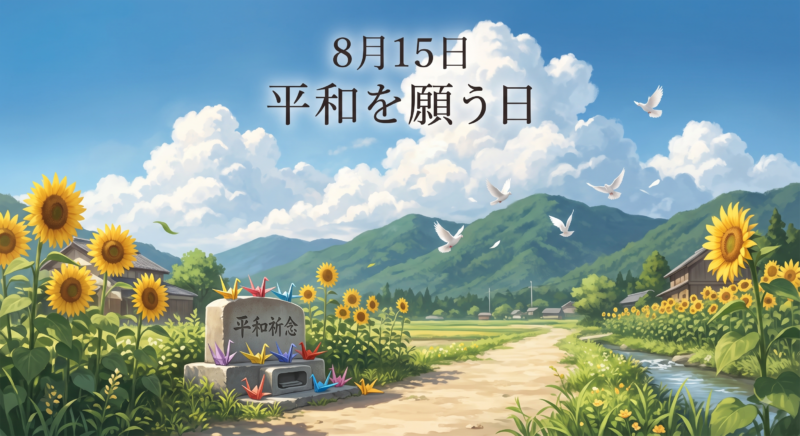
今日8月15日は、日本にとって特別な意味を持つ「終戦の日」です。
1945年(昭和20年)8月15日正午、昭和天皇によるラジオ放送(いわゆる玉音放送)を通じて、日本のポツダム宣言受諾と戦争終結が国民に伝えられました。1982年(昭和57年)の閣議決定により、この日は正式に「戦没者を追悼し平和を祈念する日」と定められています。
全国戦没者追悼式——毎年繰り返される、国を挙げての祈り
毎年8月15日、東京都千代田区の日本武道館では、政府主催による「全国戦没者追悼式」が執り行われます。1963年(昭和38年)から続くこの式典には、天皇皇后両陛下、内閣総理大臣、衆参両院議長、そして全国から遺族の代表など、例年約4,500人〜6,000人が参列します。
式典は午前11時51分頃に始まり、正午の時報を合図に、参列者全員が起立して1分間の黙祷を捧げます。この追悼式は宗教的に中立な形で行われ、内閣総理大臣による式辞、天皇陛下によるお言葉が続くのが通例です。
追悼の対象は、旧日本軍の軍人・軍属約230万人と、空襲や原子爆弾投下などで亡くなった一般市民約80万人を合わせた、日本人戦没者計約310万人。この数字は、今も多くの人々に共有されている記憶です。
語り継がれる記憶——世代を超えて
終戦から80年以上が経過し、式典に参列する遺族の世代は、戦没者の子から孫、そしてひ孫へと移り変わりつつあります。近年は戦争を知らない世代が大多数となる中、青少年代表による献花なども行われ、次世代へ記憶をつないでいく取り組みが続けられています。
厚生労働省は毎年、全国の方々にも正午からの1分間の黙祷を呼びかけています。それぞれの職場やご家庭で、静かに手を合わせる時間を持つ方も多いのではないでしょうか。
✍️ 今日という日に
81年という長い歳月が流れても、あの戦争で失われた310万もの命の記憶を語り継ぐ努力は、今も続けられています。私たちが今享受している平和な日常は、決して当たり前のものではないのかもしれません。
今日、正午になったら、遠く離れた場所からでも少しだけ手を止めて、静かに心を落ち着けてみませんか。そして、これからも平和な日々が続いていくことを、共に願いたいと思います。
本日も良い一日をお過ごしください。
See you soon.
Today, August 15th, holds special and solemn meaning for Japan as “the Day of the End of the War.”
At noon on August 15, 1945 (Showa 20), Emperor Showa’s radio broadcast (the so-called Gyokuon-hōsō) announced to the nation that Japan had accepted the Potsdam Declaration and that the war had come to an end. Through a Cabinet decision made in 1982 (Showa 57), this day was formally designated “a day to mourn the war dead and pray for peace.”
The National Memorial Ceremony for the War Dead — A Nationwide Prayer, Observed Every Year
Every year on August 15th, the government-hosted “National Memorial Ceremony for the War Dead” is held at the Nippon Budokan in Chiyoda Ward, Tokyo. This ceremony, continuing since 1963 (Showa 38), is typically attended by around 4,500 to 6,000 people, including Their Majesties the Emperor and Empress, the Prime Minister, the Speakers of both houses of the Diet, and representatives of bereaved families from across the country.
The ceremony begins around 11:51 AM, and at the stroke of noon, all those in attendance rise and observe a minute of silence together. The ceremony is conducted in a religiously neutral manner, typically followed by an address from the Prime Minister and remarks from the Emperor.
Those honored include approximately 2.3 million former military personnel and civilian employees of the Japanese armed forces, along with approximately 800,000 civilians who died in air raids and the atomic bombings — bringing the total number of Japanese war dead commemorated to approximately 3.1 million. This number remains a widely shared part of collective memory to this day.
Memory Carried Forward Across Generations
More than 80 years after the end of the war, the generation of bereaved family members attending the ceremony has shifted from children of the war dead to grandchildren, and now great-grandchildren. As the vast majority of people today have no direct experience of the war, efforts continue to pass the memory on to future generations — including the participation of youth representatives in the ceremony’s flower offerings.
Each year, the Ministry of Health, Labour and Welfare calls on people across the country to join in a minute of silence beginning at noon. Many people likely take a quiet moment to press their hands together, whether at work or at home.
On This Day
Even after 81 years, the effort to pass down the memory of the 3.1 million lives lost in that war continues. The peaceful, ordinary days we now live may, in truth, be anything but ordinary.
When noon arrives today, even from somewhere far away, perhaps we might pause for a moment and quietly still our hearts. And in that same quiet, let’s hope together that peaceful days continue on into the future.
Have a wonderful day today.
See you soon.

コメント