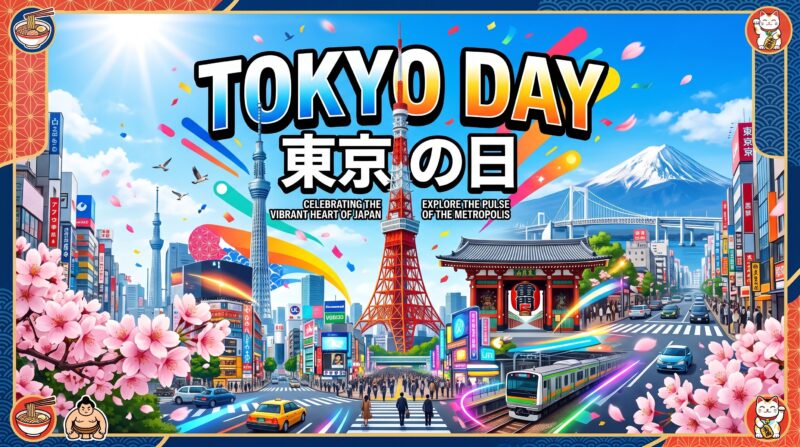
今日7月17日は、「江戸」が今の名前に変わった「東京の日」、イギリス発の風刺雑誌にちなむ「漫画の日」、そしてスマホでおなじみの「世界絵文字デー」が重なる、なんとも「表現」にまつわる一日です。
東京の日——「江戸」が「東京」になった日
慶応4年(1868年)7月17日、明治天皇の詔勅により「江戸ヲ称シテ東京ト為スノ詔書」が発せられ、「江戸」が「東京」に改称されました。
「西の都」である京都に対し、「東の都」という意味を込めて名付けられた「東京」。実は当初、この漢字は「とうけい」と読まれることも多かったそうです。国語の教科書で「トーキョー」とふりがなが振られたことで、今の読み方に統一されていきました。
ちなみに現在のような「東京都」という名称になったのは、太平洋戦争中の1943年、東京府と東京市が統合されてから。江戸→東京府→東京都という変遷を経て、今の私たちが知る東京になったんですね。
漫画の日——イギリス生まれの風刺誌が「漫画」の語源に
1841年7月17日、イギリスで絵入り風刺週刊誌『パンチ(Punch)』が創刊されました。1992年の終刊まで実に151年間続いた長寿雑誌です。
この『パンチ』、実は日本の漫画文化にも大きな影響を与えています。1862年、横浜でイギリス人画家チャールズ・ワーグマンが日本語版『ジャパン・パンチ』を刊行。ここに掲載された風刺画は「ポンチ絵」と呼ばれ、日本語の「漫画」という呼び名のルーツのひとつになったと言われています。
ちなみに「漫画の日」は他にも、手塚治虫の誕生日にちなむ11月3日、命日にちなむ2月9日もあります。年に3回も「漫画の日」があるとは、日本の漫画愛の深さを感じますね。
世界絵文字デー——スマホのカレンダーアイコンが由来!
「世界絵文字デー(World Emoji Day)」は2014年に制定された、比較的新しい記念日です。
日付の由来がユニーク。多くのスマートフォンの「カレンダー」を表す絵文字アイコンに「7月17日」が表示されていることにちなんで、この日が選ばれました。この日には毎年、Apple・Google・Facebookなど大手テック企業が新しい絵文字を発表する慣例があります。
絵文字はもともと1990年代の日本で生まれた文化。今では世界共通のコミュニケーションツールとして、言葉の壁を越えて感情を伝える存在になっています。「漫画」も「絵文字」も、日本発の「絵で伝える文化」が世界に広がったという共通点があるんですね。
なでしこジャパン、世界の頂点に立った日
2011年7月17日、ドイツで開催されたFIFA女子ワールドカップ決勝で、なでしこジャパンがFIFAランキング1位のアメリカ代表と対戦。2-2の同点からのPK戦の末、見事優勝を果たしました。
東日本大震災から4ヶ月という時期での快挙は、日本中に大きな勇気と感動を与えました。「なでしこ」という言葉に込められた、しなやかで強い日本女性の象徴——まさにその名にふさわしい歴史的勝利でしたね。
✍️ 今日のまとめ
都市の名前が変わり、風刺画から漫画文化が生まれ、絵文字が世界の共通言語になり、なでしこが世界一に輝いた——今日は「表現の力」を感じる一日ですね。
言葉にできない気持ちも、絵や記号ならすんなり伝わることがあります。今日は誰かに、スタンプや絵文字でちょっとした気持ちを伝えてみませんか?
本日も良い一日をお過ごしください。
See you soon.
Today, July 17th, brings together “Tokyo Day,” marking the moment “Edo” became the name we know today, “Manga Day,” tracing back to a satirical magazine born in England, and “World Emoji Day,” a fixture of our smartphone lives. A day that, in its own way, is all about the power of expression.
Tokyo Day — The Day “Edo” Became “Tokyo”
On July 17, 1868 (the 4th year of Keio), Emperor Meiji issued an imperial edict titled “The Proclamation Renaming Edo as Tokyo,” officially changing the city’s name from “Edo” to “Tokyo.”
In contrast to Kyoto, the “Western Capital,” Tokyo was named to mean the “Eastern Capital.” Interestingly, in the early days, these characters were often read as “Tokei” rather than “Tokyo.” It wasn’t until Japanese language textbooks began printing the furigana reading “Tōkyō” that the pronunciation we use today became standardized.
As a side note, the city didn’t become “Tokyo-to” (Tokyo Metropolis) in its current form until 1943, during the Pacific War, when Tokyo Prefecture and Tokyo City were merged. Edo → Tokyo Prefecture → Tokyo Metropolis — through this series of transformations, the Tokyo we know today came into being.
Manga Day — A British Satirical Magazine Becomes the Root of the Word “Manga”
On July 17, 1841, the illustrated satirical weekly magazine Punch launched in England. It ran for an astonishing 151 years before ceasing publication in 1992.
Punch, as it turns out, had a significant influence on Japanese manga culture. In 1862, British artist Charles Wirgman published a Japanese edition called Japan Punch in Yokohama. The satirical illustrations featured in it came to be known as “Ponchi-e” (Punch pictures), and this term is considered one of the roots of the Japanese word “manga.”
Incidentally, Japan actually observes “Manga Day” three separate times a year — this one, plus November 3rd (Tezuka Osamu’s birthday) and February 9th (his death anniversary). Having three separate manga days in one year really speaks to the depth of Japan’s love for the medium.
World Emoji Day — Born from a Smartphone Calendar Icon
“World Emoji Day” is a relatively new observance, established in 2014.
The origin of the date is delightfully unique: it was chosen because the calendar icon displayed on many smartphones shows “July 17th” as its default date. Every year on this day, major tech companies like Apple, Google, and Facebook have made a tradition of announcing new emoji designs.
Emoji originally emerged as a distinctly Japanese cultural creation in the 1990s. Today they’ve become a universal communication tool, conveying emotion across language barriers everywhere in the world. Both “manga” and “emoji,” in their own ways, are Japanese-born cultures of “communicating through pictures” that went on to spread across the globe.
The Day Nadeshiko Japan Reached the Top of the World
On July 17, 2011, in the FIFA Women’s World Cup final held in Germany, Nadeshiko Japan faced off against the world’s top-ranked team, the United States. After a 2-2 draw, Japan triumphed in a penalty shootout to claim the championship.
Achieving this feat just four months after the Great East Japan Earthquake gave the entire nation an enormous surge of courage and emotion. “Nadeshiko” — a word symbolizing gentle yet resilient Japanese women — could not have been a more fitting name for such a historic victory.
Today’s Takeaway ✍️
A city’s name transformed. Satirical illustrations gave rise to a manga culture. Emoji became a universal language. And Nadeshiko rose to become the best in the world. Today is a day that reminds us of the power of expression.
Sometimes, feelings that are hard to put into words come through effortlessly in a picture or a symbol. Why not send someone a little sticker or emoji today to share how you feel?
Have a wonderful day today.
See you soon.

コメント