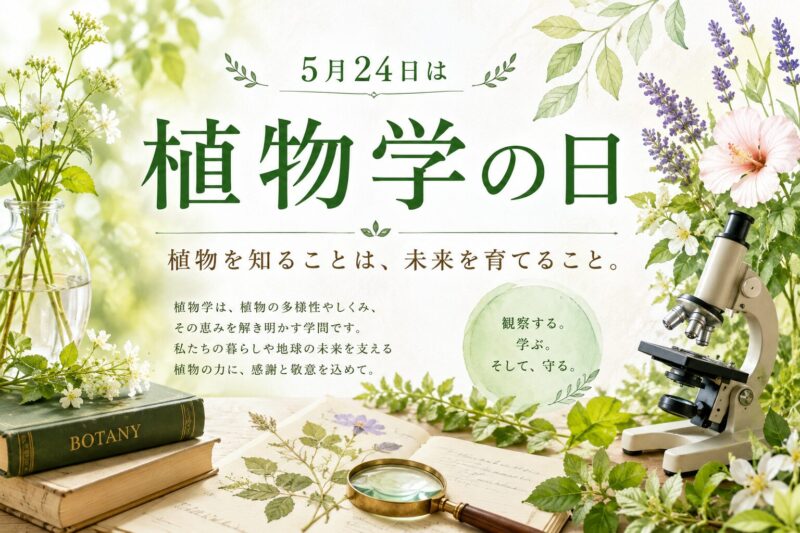
5月22日。今日は「植物学の日」です。
1862年のこの日、「日本植物学の父」と呼ばれる植物学者・牧野富太郎が高知県佐川町で生まれました。
小学校を中退。大学から追放される。借金まみれで貧乏生活。それでも植物への愛を一切曲げず、65歳で博士号を取得し、93歳まで徹夜で研究し、94歳で逝去するまで草花と生き続けた男の話を、今日はお届けします。
5月22日の記念日まとめ
5月22日の主な記念日・出来事
・植物学の日——牧野富太郎の誕生日(1862年)にちなんで制定
・国際生物多様性の日——1992年、ケニアで生物多様性条約が採択された日
・パックマンの日——1980年5月22日、ナムコがアーケードゲーム「パックマン」を発売
・サイクリングの日——1964年、日本サイクリング協会が設立認可を受けた日
・たまご料理の日——「たまご(05)ニワトリニワトリ(22)」の語呂合わせ
・うなぎの未来を考える日——2009年5月22日、世界初の天然ニホンウナギの卵の採取に成功
・ほじょ犬の日——2002年、身体障害者補助犬法が成立
・チリ地震記念日(1960年)——観測史上最大M9.5の地震が発生。津波が日本にも到達
「私は植物の愛人として生まれた」——牧野富太郎の波乱万丈な94年
牧野富太郎は1862年5月22日、高知県佐川町の裕福な商家に生まれました。しかし3歳で父を、5歳で母を亡くし、祖母・浪子に育てられました。
幼いころから草花が大好きで、一人で山や野原を歩き回り植物を観察していた富太郎。その姿は生涯変わりません。自身の人生をこう語っています。
牧野富太郎の言葉
「私は植物の愛人としてこの世に生まれて来たように感じます」
「草を褥(しとね)に木の根を枕、花と恋して九十年」
小学校中退→大学追放→65歳でようやく博士号
牧野の学歴は驚くべきものです。小学校に入学するも2年で自主退学(12歳)。その後は独学で植物学を学び続け、22歳で上京。当時の最高学府・東京大学理学部植物学教室への出入りを許可されます。
しかし——ここからが波乱の始まりです。独学の若者が次々と新種を発見し学術論文を発表する姿が教授陣の反感を買い、牧野は東京大学から突然「出入り禁止」を命じられます。
牧野富太郎・波乱の年表
・12歳:小学校を自主退学
・22歳:東京大学植物学教室への出入りを許可される
・28歳:大学から「出入り禁止」→事実上の追放
・31歳:助手として大学に復帰(ただし薄給)
・50歳:ようやく大学の「講師」に
・65歳:東京帝国大学より理学博士の学位を授与
・78歳:「牧野日本植物図鑑」を刊行
・89歳:第1回文化功労者に選定
・90歳頃まで:全国を植物採集で歩き回る
・93歳:病床でも徹夜で植物研究を続ける
・94歳:永眠
小学校を中退した男が、65歳でようやく博士号を取得する——この事実だけで、どれほどの壁を乗り越えてきたかが伝わります。
妻の名を冠した「スエコザサ」——愛と感謝の植物命名
牧野の研究への情熱は、経済観念を完全に上回っていました。植物採集の旅費・標本制作費・出版費……膨大な出費が続き、裕福だった実家も没落。13人の子どもを抱えながら、食費にも事欠く極貧生活が長年続きました。
その生活を支え続けたのが、妻の壽衛子(すえこ)でした。彦根藩士族の出身でありながら、牧野の研究のために生涯を捧げ、50代で亡くなります。
牧野富太郎の言葉
「私が終生植物の研究に身を委ねることが出来たのは、何といっても亡妻壽衛子のお蔭が多分にある」
「よくもあんな貧乏生活の中で専ら植物にのみ熱中して研究が出来たものだと、われながら不思議になることがある。それほど妻は私に尽くしてくれた」
牧野は仙台で発見したばかりの新種のササに、亡き妻の名前を冠して「スエコザサ」と命名しました。「世の中のあらん限りやスエコザサ」——この一句に、すべての感謝と愛が込められています。
「雑草という草はない」——すべての命に名前を
牧野富太郎の言葉で最も有名なのがこれです。
牧野富太郎の言葉
「雑草という草はない。名がないなら、付ければよい。一つ一つの草花にはそれぞれに違いがあって、それぞれに精一杯生きているんだ」
「雑草」とは、人間が勝手につけた「役に立たない草」という差別的なカテゴリーです。牧野はそれを認めませんでした。
牧野が生涯で発見・命名した植物は1,500種以上。収集した植物標本は40万点以上。現在も日本の植物の約300種は牧野が付けた学名が使われています。ケヤキ・キンモクセイ・クチナシなど、身近な植物もその中に含まれています。
93歳まで家族の心配をよそに徹夜で研究を続け、94歳で「草を褥に」その生涯を閉じました。
パックマンの日——「女性にも楽しめるゲーム」として生まれた
今日5月22日は、世界的ゲーム「パックマン」が1980年に発売された日でもあります。
パックマンが生まれた背景が面白いです。当時はスペースインベーダーの大ヒットでシューティングゲームが全盛でしたが、ナムコは「女性にも楽しんでもらえるゲームを作りたい」と考えました。カラフルなキャラクター、やさしい操作感、コーヒーブレイク演出——こうして生まれたパックマンは、世界中の女性・子どもを含む新しい層のゲームファンを生み出しました。
パックマン豆知識
・発売:1980年5月22日、ナムコ(現バンダイナムコ)
・キャラクターのヒント:ピザを1ピース取った形(○から一切れ切り取った形)
・世界初の「コーヒーブレイク」演出(ステージクリア後の休憩アニメ)を導入
・ギネス記録:「最も認知されているアーケードゲームキャラクター」
・現在も世界100カ国以上でプレイされ続けている
My Arcade パックマン ポケット プレーヤー プロ: ポータブル ビデオ ゲーム、2.75 インチ カラー ディスプレイ、子供用玩具, パックマン ゲーム
国際生物多様性の日——チリ地震と「スエコザサ」が繋がる話
5月22日は国連が制定した「国際生物多様性の日」でもあります。1992年、ケニアのナイロビで生物多様性条約が採択されたことを記念しています。
牧野富太郎が「雑草という草はない」と言い続けた信念——それはまさに生物多様性の本質でした。
「役に立つ植物」だけを守るのではなく、名もなき草花一本一本に価値があると認めること。今日の「国際生物多様性の日」と、今日生まれた牧野富太郎の信念は、深いところで重なっています。
まとめ——5月22日は「好きを貫く」ことを思い出す日
小学校を中退し、大学に追放され、借金まみれで生きた94年間——それでも牧野は一度も「植物が好き」という気持ちを曲げませんでした。
好きなことを貫いた人生の足跡が、今も日本中の植物の名前として生き続けています。
まとめ
- 5月22日は植物学の日——「日本植物学の父」牧野富太郎の誕生日(1862年)
- 牧野は小学校中退→大学追放→65歳で博士号→93歳まで徹夜研究→94歳で逝去という波乱の生涯
- 「私は植物の愛人としてこの世に生まれた」——職業ではなく人生そのものが植物への愛だった
- 亡き妻・壽衛子への感謝を込めて、新種のササを「スエコザサ」と命名した
- 「雑草という草はない」——すべての命に名前と価値がある、という信念
- 発見・命名した植物1,500種以上・収集した標本40万点以上。現在も約300種の学名が使われている
- パックマンの日——1980年5月22日発売。「女性にも楽しめるゲーム」として誕生した
- 国際生物多様性の日——牧野の「雑草という草はない」の信念と深く重なる日
最後まで読んでくださってありがとうございました😊
今日、道ばたに生えている草を踏む前に、一瞬だけ立ち止まってみてください。牧野富太郎なら、きっとその草にも名前を付けてあげていたはずです。
では、よい一日をお過ごしください。
see you soon.
What Day Is May 22nd? “There Is No Such Thing as a Weed” — The Man Who Dropped Out of Elementary School, Was Expelled from University, Earned His PhD at 65, and Stayed Up All Night Researching Until Age 93
May 22nd. Today is Botany Day (Shokubutsugaku no Hi) in Japan.
On this day in 1862, Tomitaro Makino — known as “the Father of Japanese Botany” — was born in Sakawa Town, Kochi Prefecture.
He dropped out of elementary school. He was expelled from university. He spent most of his life buried in debt. And yet he never once bent his love of plants — earning his doctorate at 65, staying up all night researching at 93, and living alongside his beloved flowers until his death at 94. Today, let’s tell his story.
May 22nd Commemorative Days at a Glance
Main Events & Commemorative Days on May 22nd
· Botany Day — Established to mark the birthday of Tomitaro Makino (1862)
· International Day for Biological Diversity — In 1992, the Convention on Biological Diversity was adopted in Nairobi, Kenya
· Pac-Man Day — May 22nd, 1980: Namco released the arcade game Pac-Man
· Cycling Day — 1964: the Japan Cycling Association received official recognition on this date
· Egg Dish Day — Wordplay on “Tamago (05) Niwatori Niwatori (22)” (egg / chicken chicken)
· Eel’s Future Day — May 22nd, 2009: the world’s first successful collection of wild Japanese eel eggs
· Assistance Dog Day — 2002: Japan’s Act on Assistance Dogs for Physically Disabled Persons was enacted
· Chile Earthquake Anniversary (1960) — The largest earthquake ever recorded, M9.5, struck Chile; the resulting tsunami reached Japan
“I Feel I Was Born to Be a Lover of Plants” — Tomitaro Makino’s 94 Years of Wild Turbulence
Tomitaro Makino was born on May 22nd, 1862, in a prosperous merchant family in Sakawa Town, Kochi Prefecture. His father died when he was three. His mother died when he was five. He was raised by his grandmother, Nami.
From earliest childhood, he was captivated by plants — wandering alone through mountains and meadows, studying every flower and leaf he found. That never changed. He described his own life this way:
Tomitaro Makino’s Words
“I feel I was born into this world to be a lover of plants.”
“With grass as my bed and tree roots as my pillow, I spent ninety years in love with flowers.”
Elementary School Dropout → Expelled from University → PhD at Age 65
Makino’s academic record is remarkable — in the most unconventional sense. He enrolled in elementary school but left after just two years at age 12. He then taught himself botany through independent study, and at 22 traveled to Tokyo, where he was granted access to the Botany Department of Tokyo Imperial University — Japan’s most prestigious institution of learning.
Then the turbulence began. As this self-taught young man produced discovery after discovery — naming new species, publishing academic papers — the resentment of the credentialed faculty grew. And one day, Makino found himself banned from entering the university.
Tomitaro Makino — A Timeline of Turbulence
· Age 12: Leaves elementary school
· Age 22: Granted access to Tokyo Imperial University’s Botany Department
· Age 28: Banned from the university — effectively expelled
· Age 31: Returns as a low-paid assistant
· Age 50: Finally appointed as a lecturer
· Age 65: Awarded a doctorate by Tokyo Imperial University
· Age 78: Publishes the Makino’s Illustrated Flora of Japan
· Age 89: Selected as one of the first recipients of the Order of Cultural Merit
· Around age 90: Still traveling Japan on plant-collecting expeditions
· Age 93: Continues researching all night, despite failing health
· Age 94: Passes away
A man who never finished elementary school, receiving his doctorate at 65 — the obstacles he crossed speak for themselves.
Suekoasa — A Plant Named for the Woman Who Made It All Possible
Makino’s passion for research consistently outpaced his finances. Travel costs for plant-collecting trips, specimen-making expenses, publication costs — the spending never stopped. His prosperous family home eventually collapsed. With 13 children to feed, there were years when the family could barely afford food.
Through all of it, his wife Sueko kept the household alive. Born into a samurai family of the Hikone domain, she devoted her entire life to supporting Makino’s research — and died in her fifties.
Makino’s Words
“That I was able to devote my entire life to the study of plants is owed, more than anything, to my late wife Sueko.”
“That I could immerse myself so completely in plants, even in such grinding poverty — I find myself amazed by it even now. That is how much she gave to me.”
When Makino discovered a new species of bamboo grass in Sendai, he named it Suekoasa — after his late wife. He also wrote a poem: “As long as this world endures, so shall Suekoasa.” In those words lives everything he felt.
“There Is No Such Thing as a Weed” — A Name for Every Living Thing
Makino’s most famous words are these:
Makino’s Words
“There is no such thing as a weed. If a plant has no name, then give it one. Every single flower and blade of grass is different from every other — and every one is doing its utmost to live.”
“Weed” is a category invented by humans to mean “a plant with no use to us.” Makino refused to accept it. Every plant deserved a name — and its own dignity.
Over his lifetime, Makino discovered and named more than 1,500 plant species. He collected more than 400,000 plant specimens. Today, around 300 species of Japanese plants still carry the scientific names he assigned — including the keyaki (zelkova), kinmokusei (fragrant olive), and kuchinashi (gardenia), plants familiar to anyone who has walked through Japan.
He stayed up researching all night at 93, despite his family’s worried protests. At 94, he passed away — “with grass as his bed,” just as he had always lived.
Pac-Man Day — Born to Bring Women into Gaming
May 22nd, 1980 also marks the release of one of the most recognized video games in history: Pac-Man, by Namco.
The thinking behind Pac-Man is worth knowing. In an era when Space Invaders had made shooting games the dominant form of arcade entertainment, Namco asked a different question: “How do we make a game that women will enjoy too?” The result was colorful characters, gentle gameplay, and the world’s first “coffee break” — a short animated intermission between stages. Pac-Man opened gaming to an entirely new audience: women, children, and people who had never touched an arcade cabinet before.
Pac-Man Fun Facts
· Released: May 22nd, 1980, by Namco (now Bandai Namco)
· The character’s shape was inspired by a pizza with one slice removed
· Introduced the world’s first “coffee break” cutscene (an animated rest between stages)
· Guinness World Record holder: “Most recognized arcade game character”
· Still played in over 100 countries today
International Day for Biological Diversity — Where Makino’s Legacy Meets the World
May 22nd is also the International Day for Biological Diversity, designated by the United Nations. It marks the adoption of the Convention on Biological Diversity in Nairobi, Kenya, in 1992.
Makino’s lifelong insistence that “there is no such thing as a weed” was, at its core, a statement about biodiversity — about the intrinsic value of every living thing, regardless of its usefulness to human beings.
The day that celebrates biological diversity and the birthday of the man who named 1,500 forgotten plants — falling on the same date feels like something more than coincidence.
Closing Thoughts — May 22nd Is a Day to Remember What It Means to Follow What You Love
He dropped out of school. He was expelled from the university he loved. He spent decades buried in debt. And through every one of those 94 years, Makino never once stopped loving plants.
The footprint of a life spent following that love is still visible today — in the names of the plants that grow in gardens, forests, and roadsides all across Japan.
Summary
- May 22nd is Botany Day — marking the birthday of Tomitaro Makino (1862), “the Father of Japanese Botany”
- His life: elementary school dropout → expelled from university → PhD at 65 → researching all night at 93 → died at 94
- “I feel I was born to be a lover of plants” — for Makino, botany was not a career. It was his entire life.
- He named a newly discovered bamboo grass Suekoasa — after his late wife Sueko, who gave everything to support him
- “There is no such thing as a weed” — every living thing has a name and a value worth recognizing
- He named over 1,500 plant species and collected over 400,000 specimens; about 300 of his scientific names are still in use today
- Pac-Man Day — released May 22nd, 1980; created to bring women and new audiences into gaming
- International Day for Biological Diversity — Makino’s belief that every plant deserves a name is the spirit of this day
Thank you so much for reading all the way to the end 😊
Today, before you step on the grass growing at the edge of the road — pause for just a moment. Tomitaro Makino would have given that plant a name.
Have a wonderful day.
See you soon.
コメント