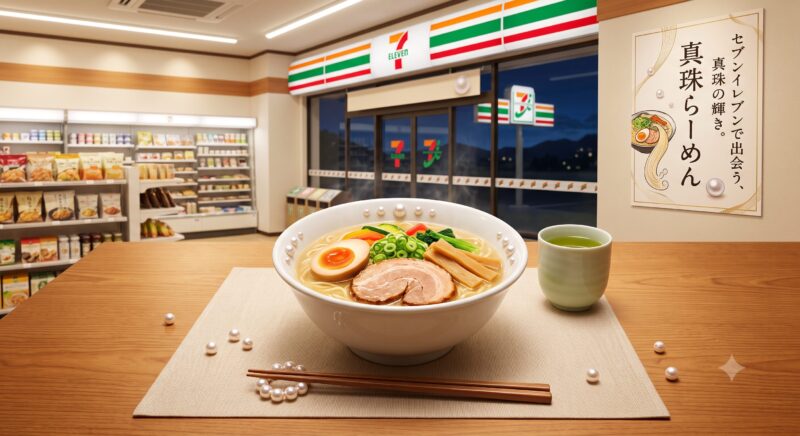
今日7月11日は、日付がそのままブランド名になった「セブン-イレブンの日」、水戸黄門ゆかりの「ラーメンの日」、そして日本が世界に誇る宝石の発明にちなんだ「真珠記念日」が重なる、盛りだくさんな一日です!
セブン-イレブンの日——コンビニ誕生の意外な歴史
「セブン(7)-イレブン(11)」の語呂合わせそのままの「セブン-イレブンの日」。
実はセブン-イレブンの歴史はアメリカから始まります。1927年、テキサス州のサウスランド・アイス社が「朝7時から夜11時まで営業する」という当時としては革新的なスタイルで氷の小売店をスタート。その営業時間から「セブン-イレブン」と名付けられました。
日本には1974年5月、東京・豊洲に第1号店がオープン。その加盟第一号は「豊洲の酒屋の店主」でした。当初は「コンビニ」という業態自体がなく、「こんな業種が成功するの?」と懐疑的な声も多かったとか。
その後、セブン-イレブンの店舗数は増え続け、2007年にはマクドナルドを抜いて世界最多の店舗数を誇るチェーンストアに。現在は世界中に展開しています。「朝7時から夜11時まで」という当初のコンセプトは今や24時間営業に進化し、私たちの生活に欠かせない存在となりました。
ラーメンの日——水戸黄門が日本初のラーメンを食べた!?
「7」をレンゲに、「11」を箸に見立てた「ラーメンの日」。一般社団法人日本ラーメン協会が制定しました。
この日付にはもう一つの理由があります。日本で最初にラーメンを食べたとされる水戸黄門こと徳川光圀の誕生日が7月11日(1628年・新暦)なのです!
光圀は学者肌で好奇心が旺盛。中国から招いた儒学者・朱舜水から「湯麺」を教わり、これが日本のラーメンの原型になったと言われています。「水戸黄門」として助さん格さんと旅をしていたあの方が、ラーメン伝来にも関わっていたとは驚きですよね。
真珠記念日——捨てられかけた貝が生んだ「真珠王」の奇跡
1893年7月11日、三重県鳥羽の御木本幸吉夫妻が世界で初めて真珠の養殖に成功しました。
1890年に養殖実験を開始してから3年目の朝、実験中のアコヤ貝の中から半円形の真珠が付着した貝を発見。「もう諦めようか」と思っていた矢先の大発見でした。
その後、御木本は1899年に銀座に「御木本真珠店(現・ミキモト)」を開店し、世界中で真珠を販売。発明王エジソンが「真珠と無線電信は、日本が世界に誇る二大発明だ」と称えたという逸話も残っています。天然真珠しかなかった時代に「誰もが真珠を身につけられる世界」を実現した御木本の夢——まさに「あきらめなかった者の勝利」ですね。
7月11日のその他の出来事
- 1854年:ペリーが琉球(現・沖縄)に来航し、琉米修好条約を締結。黒船来航の翌年、沖縄もアメリカと条約を結んでいたんですね。
- 1962年:国産初の旅客機「YS-11」が完成。日本の航空技術の誇りとなった名機です。
- 1987年:世界人口が50億人を突破。これを記念して「世界人口デー」が制定されました。現在は80億人超——わずか40年でここまで増えたのですね。
- 2008年:iPhone 3Gが日本でも発売。ソフトバンクから登場したこの端末が、スマホ時代の扉を開きました。
✍️ 今日のまとめ
「7時から11時まで」の小さな氷屋が世界最大のコンビニに、「諦めかけた」養殖実験が世界の真珠産業に、水戸黄門の好奇心が日本のラーメン文化に——今日は「小さな始まりが大きな歴史になる」ことを感じさせてくれる一日です。
今夜はラーメンをすすりながら、あなたの「小さな始まり」に思いを馳せてみませんか?🍜✨
本日も良い一日をお過ごしください。
See you soon.
Today, July 11th, brings together three commemorative days all at once: “Seven-Eleven Day” — where the date itself became the brand name — “Ramen Day,” with its surprising connection to the legendary Mito Komon — and “Pearl Memorial Day,” honoring one of Japan’s greatest gifts to the world of jewelry. A wonderfully packed day!
Seven-Eleven Day — The Unexpected History Behind the Convenience Store
“Seven-Eleven Day” is about as straightforward as a commemorative day gets — the name is right there in the date: 7/11.
But the story behind it starts in America. In 1927, the Southland Ice Company in Texas launched an ice retail shop with what was, at the time, a revolutionary concept: staying open from 7 in the morning until 11 at night. That operating schedule gave the store its name.
Japan’s first location opened in Toyosu, Tokyo in May 1974. The very first franchisee was the owner of a local liquor shop in Toyosu. At the time, the “convenience store” as a business model didn’t really exist yet, and plenty of people were skeptical — “can something like this actually work?”
Work it did. Store numbers kept climbing, and by 2007, Seven-Eleven had surpassed McDonald’s to become the world’s largest chain store by number of locations. Today it operates across the globe. The original concept of “open from 7 to 11” has since evolved into 24-hour operations — and become something most of us can’t imagine living without.
Ramen Day — Did Mito Komon Eat Japan’s First Ramen?
“Ramen Day” was established by the Japan Ramen Association, with the number “7” representing a renge (soup spoon) and “11” representing a pair of chopsticks.
But there’s a second reason for the date: Tokugawa Mitsukuni — better known as the beloved folk hero Mito Komon — was born on July 11th, 1628 (in the modern calendar). He is widely regarded as the first Japanese person to eat ramen.
Mitsukuni was scholarly by nature and famously curious. A Confucian scholar he had invited from China introduced him to “tangmian” (soup noodles), and this dish is said to be the origin of Japanese ramen. To think that the very man who traveled Japan with Suke-san and Kaku-san, dispensing justice with his family crest, also played a role in bringing ramen to Japan — remarkable.
Pearl Memorial Day — The Miracle of the “Pearl King” Who Almost Gave Up
On July 11, 1893, Mikimoto Kōkichi and his wife in Toba, Mie Prefecture, succeeded in cultivating pearls for the very first time in the world.
Three years after beginning his cultivation experiments in 1890, one morning he discovered a shell with a half-sphere pearl attached inside one of his experimental akoya oysters. It came just as he was on the verge of giving up entirely.
Mikimoto went on to open his “Mikimoto Pearl Store” (now MIKIMOTO) on the Ginza in 1899 and sold pearls around the world. The story goes that Thomas Edison praised him, saying the pearl and wireless telegraphy were Japan’s two greatest gifts to civilization. In an era when only natural pearls existed, Mikimoto realized a dream of bringing pearls within reach of everyone. Truly a victory for those who refuse to quit.
Other Events on July 11th
- 1854: Commodore Perry arrived in Ryukyu (present-day Okinawa) and concluded the Treaty of Amity between the United States and the Ryukyu Kingdom — the year after his famous arrival at Uraga, Okinawa was also signing treaties with America.
- 1962: Japan’s first domestically produced passenger aircraft, the “YS-11,” was completed — a source of national pride for Japanese aviation.
- 1987: World population surpassed 5 billion, leading to the establishment of “World Population Day.” Today it stands at over 8 billion — an extraordinary increase in just 40 years.
- 2008: The iPhone 3G went on sale in Japan through SoftBank — the device that opened the door to the smartphone era.
Today’s Takeaway ✍️
A small ice shop open from 7 to 11 became the world’s largest convenience store chain. A cultivation experiment nearly abandoned became the foundation of a global pearl industry. A curious scholar’s appetite became the origin of Japan’s ramen culture. Today is a day that reminds us: small beginnings have a way of becoming big history.
Tonight, why not slurp some ramen and reflect on the small beginnings in your own life? 🍜✨
Have a wonderful day today.
See you soon.

コメント