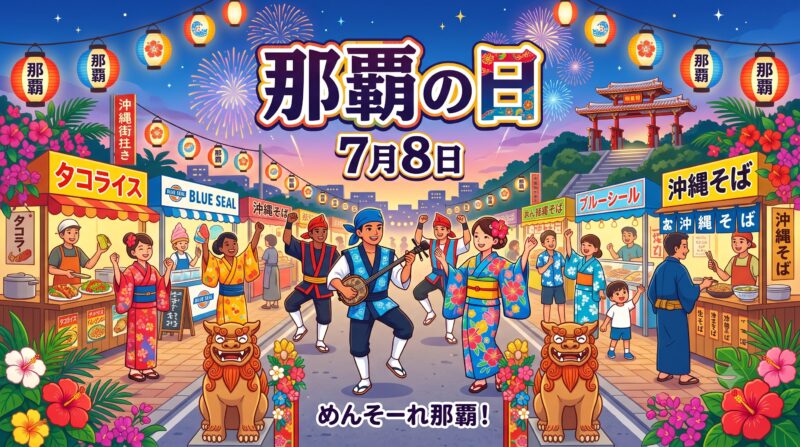
七夕の余韻が残る今日7月8日。実はこの日もなかなか興味深い記念日が揃っています。
ここ沖縄にゆかりのある「那覇の日」、熊本地震からの復興を願う「七転八起の日」、そして歴史を動かした幕末の事件まで——今日もいろいろと深掘りしてみましょう!
那覇の日——「な(7)は(8)」から生まれた沖縄愛
「な(7)は(8)」の語呂合わせから生まれた「那覇の日」。もともとはラジオ沖縄の番組「那覇が好き」のリスナーたちが自発的に制定した記念日で、後に那覇市も公認するようになりました。
那覇といえば国際通り、首里城、そして沖縄料理——ゴーヤチャンプルー、ラフテー、沖縄そば……。この時期の那覇は梅雨も明け、青い空と海が広がる絶好の観光シーズンでもあります。
世界遺産の首里城は2019年の火災で正殿が焼失しましたが、復元工事が進み、2026年現在も着々と再建が続いています。沖縄の人々の「また元通りに」という強い思いが、毎日積み重なっています。
七転八起の日——何度でも立ち上がる心意気
「七(7)転八(8)起」の数字の語呂から制定されたのが「七転八起の日」です。
この記念日は、2016年4月の熊本地震からの復興を願う気持ちを込めて制定されました。「何度転んでも、また立ち上がる」——そのメッセージを伝えるため、熊本県阿蘇市の「くまモンの起き上がりこぼし」というお守りに込められた思いが由来です。
「七転び八起き」という言葉、普段何気なく使っていますが、7回転んで8回立ち上がるという意味。「失敗の数より、立ち上がった回数の方が一つ多い」——これって、すごく前向きな考え方ですよね。
幕末の歴史——池田屋事件が起きた日
1864年7月8日(旧暦6月5日)、京都の旅籠「池田屋」で歴史的な事件が起きました。新選組が、長州藩・土佐藩などの尊王攘夷派志士たちを急襲した「池田屋事件」です。
約2時間に及んだ戦闘で多くの志士を捕らえた新選組はこの一件で全国的にその名を轟かせました。一方、この事件が引き金となり長州藩が激怒。翌月の「禁門の変」へとつながり、やがて明治維新へと歴史が動いていきます。
歴史の大きな転換点が、京都の一軒の旅籠で静かに幕を開けた夜——その緊張感は、今も司馬遼太郎の小説や数々の大河ドラマで語り継がれています。
ウォール・ストリート・ジャーナル創刊の日
1889年7月8日、アメリカで経済紙「ウォール・ストリート・ジャーナル(WSJ)」が創刊されました。
現在も世界最大級の発行部数を誇るこの経済紙、創刊当初は4ページのシンプルな紙面でした。130年以上の歴史を経て、今やデジタル版の購読者だけで数百万人を超えます。情報の形は変わっても、「確かな経済情報を届ける」という使命は変わらないのですね。
✍️ 今日のまとめ
那覇への愛、七転び八起きの心意気、歴史を変えた一夜、そして情報の力——今日は「粘り強さと情熱」を感じる一日です。
何度転んでも、また立ち上がれる。那覇の日に、そんな沖縄の強さを改めて感じながら、今日も前を向いて歩いていきましょう。
本日も良い一日をお過ごしください。
See you soon.
Still riding the afterglow of Tanabata, today — July 8th — turns out to be a surprisingly rich day for commemorations.
From “Naha Day,” with its deep ties to Okinawa right here, to “Shichiten Hakki Day” — born from the spirit of resilience after the Kumamoto earthquake — to a fateful night in the late Edo period that changed the course of Japanese history. Let’s dig in!
Naha Day — A Love Letter to Okinawa, Born from a Wordplay
“Naha Day” grew out of the wordplay “na (7) – ha (8)” — sounding like “Naha,” the capital of Okinawa. It was originally established by listeners of the Radio Okinawa program “Naha ga Suki” (I Love Naha), and was later officially recognized by Naha City itself.
When you think of Naha, you think of Kokusai-dori, Shuri Castle, and Okinawan cuisine — goya champuru, rafute, Okinawa soba… By this time of year, the rainy season has lifted, and Naha opens up into brilliant blue skies and ocean — perfect tourist season.
Shuri Castle, a UNESCO World Heritage Site, lost its main hall to fire in 2019, but reconstruction work has been steadily progressing, and as of 2026, the rebuilding continues day by day. The Okinawan people’s fierce determination to restore it to its former glory is being built into every stone, one day at a time.
Shichiten Hakki Day — The Spirit of Getting Back Up, No Matter How Many Times
“Shichiten Hakki no Hi” — literally “Seven Falls, Eight Rises Day” — takes its name directly from the numbers 7 and 8.
This commemoration was established with the recovery from the April 2016 Kumamoto earthquakes in mind. Its spirit is captured in a product called the “Kumamon Okiagari-koboshi” — a tumbling roly-poly toy charm from Aso City, Kumamoto — which embodies the message: no matter how many times you fall, you always get back up.
The phrase “nana korobi ya oki” (seven tumbles, eight rises) is one we use casually, but its meaning runs deep: falling down seven times and getting up eight. In other words, the number of times you rise is always one more than the number of times you fall. What a remarkably forward-looking way to see the world.
A Night That Changed History — The Ikedaya Incident
On July 8, 1864 (the 5th day of the 6th month in the old calendar), a landmark event unfolded at the Ikedaya Inn in Kyoto. The Shinsengumi — a special police force operating under the Kyoto Protectorate — launched a sudden raid on loyalist samurai from the Choshu and Tosa domains who had gathered there in secret. This became known as the “Ikedaya Incident.”
After nearly two hours of fighting, the Shinsengumi captured most of the activists, and the incident propelled the group to national fame overnight. But it also ignited the fury of the Choshu domain — leading the following month to the “Kinmon Incident,” and setting in motion the chain of events that would ultimately bring about the Meiji Restoration.
A pivotal turning point in history, beginning quietly in a single inn on a Kyoto back street. The tension of that night lives on today in the novels of Shiba Ryotaro and countless NHK historical dramas.
The Wall Street Journal’s First Edition
On July 8, 1889, the Wall Street Journal (WSJ) published its very first edition in the United States.
Now one of the largest-circulation newspapers in the world, it began as a modest four-page publication. More than 130 years later, its digital subscribers alone number in the millions. The form that information takes may change entirely, but the mission — delivering reliable economic news — remains the same.
Today’s Takeaway ✍️
Love for Naha, the spirit of rising every time you fall, a night that turned history, and the enduring power of information — today is a day that quietly radiates tenacity and passion.
No matter how many times you fall, you can always get back up. On Naha Day, feeling the deep resilience that defines Okinawa, let’s keep moving forward — eyes ahead.
Have a wonderful day today.
See you soon.


コメント