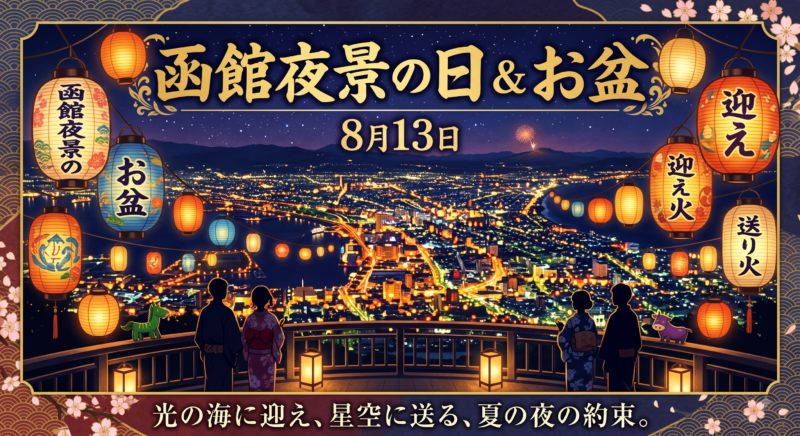
今日8月13日は、日本三大夜景のひとつを誇る「函館夜景の日」、そして多くの地域で行われる月遅れのお盆「迎え火」が重なります。夜の街の光と、ご先祖様を迎える灯り——今日は「灯り」がテーマの一日ですね。
函館夜景の日——「100万ドルの夜景」トランプ柄の語呂合わせ
「函館夜景の日」は、函館出身の大学生が新聞に投書したことがきっかけとなり、1991年に函館青年会議所や函館観光協会などによって制定されました。日付の由来は「や(8)けい(13=トランプのK)」という、なんともユニークな語呂合わせです。
標高334メートルの函館山山頂から見下ろす夜景は、まさに「100万ドルの夜景」と称される絶景。日本三大夜景・世界三大夜景のひとつにも数えられています。街灯りが両側の海に向かってすり鉢状に広がる独特の地形が生み出す、函館ならではの美しい光景ですね。
この夏、北海道旅行を計画されている方は、ぜひ夕暮れ時のロープウェイに乗って、あの美しい夜景を実際に眺めてみてはいかがでしょう。
お盆「迎え火」——多くの地域で行われる、ご先祖様への灯り
7月13日の記事でも触れましたが、現在の日本では月遅れの8月盆を採用する地域が大多数です。今日8月13日の夕方、多くのご家庭で門口や玄関先で「迎え火」が焚かれ、ご先祖様の霊を家へとお迎えします。
迎え火の煙は、ご先祖様が迷わず帰ってこられるようにという道しるべ。この時期、地方から都市部へ向かう帰省ラッシュが本格化するのも、この「お盆に家族で先祖を迎える」という日本人の大切な習わしがあるからこそなんですね。
迎え火を焚く環境がない方も、盆提灯を灯したり、仏壇に手を合わせたりと、それぞれの形でご先祖様を想う時間を過ごされる方も多いのではないでしょうか。
沖縄のお盆は、一般的な8月13~16日ではなく、旧暦7月13~15日の3日間に行う「旧盆」が中心です。沖縄では「シチグヮチ」とも呼ばれ、ご先祖様を迎え、親族で過ごし、最後に送り出す大切な年中行事です。
2026年の日程
2026年の沖縄の旧盆は、基本的に次の3日間です。
| 日 | 呼び方 | 意味 |
|---|---|---|
| 8月25日(火) | ウンケー | ご先祖様を迎える日 |
| 8月26日(水) | ナカビ、ナカヌヒ | ご先祖様と過ごす日 |
| 8月27日(木) | ウークイ | ご先祖様を送り出す日 |
地域や家庭によっては、ナカビを2日間にして、ウークイを8月28日に行う場合もあります。
3日間の流れ
1日目:ウンケー
ウンケーは、あの世からご先祖様を家にお迎えする日です。夕方ごろ、仏壇を整えて線香をあげ、料理や果物などを供えます。
家庭によって違いはありますが、ウンケーでは次のような準備をします。
- 仏壇を掃除する
- 花、ろうそく、線香を用意する
- 果物や菓子を供える
- ウンケージューシーを作る
- 家族で手を合わせ、ご先祖様を迎える
ウンケージューシーは、豚肉や野菜などを入れた沖縄風の炊き込みご飯です。お迎えの日の代表的な料理として知られています。
2日目:ナカビ
ナカビは、ご先祖様が家族とともに過ごす日です。親族が仏壇のある家を訪ね、線香をあげたり、お供えをしたりします。
沖縄では、親戚の家を訪問する際に、お中元や供え物を持参する習慣があります。仏壇に線香をあげた後、家族や親戚で食事をしながら近況を話すことも多いです。
ナカビは、ウークイほど形式が厳格ではなく、家庭によって食事や過ごし方が異なります。
3日目:ウークイ
ウークイは、ご先祖様をあの世へお送りする日です。沖縄のお盆の中でも特に重要な日とされ、親族が集まって仏壇を囲みます。
食事を供え、家族でお別れのあいさつをした後、ウチカビを燃やします。ウチカビは、あの世で使うお金と考えられている黄色い紙で、専用の金属製の容器などで燃やす家庭があります。
最後に、供え物やウチカビをどう扱うかは地域・家庭で異なります。火を使うため、屋外や安全な場所で行い、灰や燃え残りの処理にも注意が必要です。
お供え物
沖縄のお盆では、仏壇に料理や果物、菓子などを供えます。代表的なものには次があります。
- 三枚肉、昆布、かまぼこなどを盛り付けた重箱料理
- ご飯、汁物、煮物
- 果物や菓子
- サトウキビ
- ウチカビ
- 酒や飲み物
- 花、ろうそく、線香
重箱料理は、沖縄では「ウサンミ」と呼ばれることがあります。内容は家や地域によって違い、必ず同じ料理を用意するわけではありません。
エイサーとの関係
沖縄のお盆と聞くと、エイサーを思い浮かべる人も多いと思います。エイサーは、旧盆の時期に地域の青年会などが踊る伝統芸能で、太鼓や歌に合わせて地域を練り歩く「道ジュネー」が有名です。
ただし、家庭で行うお盆の供養と、地域行事としてのエイサーは別のものです。すべての地域で同じ規模のエイサーが行われるわけではなく、開催日や場所も地域ごとに異なります。
✍️ 今日のまとめ
街を彩る100万ドルの夜景、ご先祖様を導く迎え火の灯り——今日は、様々な「灯り」に想いを馳せる一日ですね。
お盆で帰省されている方も多いかと思います。ご家族と過ごす穏やかな時間を、どうぞ大切にお過ごしください。
本日も良い一日をお過ごしください。
See you soon.
Today, August 13th, brings together “Hakodate Night View Day,” celebrating one of Japan’s three great night views, and the “mukaebi” (welcome fire) of Obon, observed in many regions on this month-delayed date. The lights of a city at night, and the lights that guide ancestors home — today’s theme is all about light.
Hakodate Night View Day — A Wordplay Built Around Playing Cards, for a “Million-Dollar View”
“Hakodate Night View Day” was established in 1991 by the Hakodate Junior Chamber of Commerce and the Hakodate Tourism Association, sparked by a letter to the editor written by a university student from Hakodate. The date comes from a delightfully unique wordplay: “ya (8) – kei (13, read as ‘K’ for King in a deck of cards),” echoing “yakei” (night view).
The view looking down from the summit of Mount Hakodate, standing 334 meters above sea level, is truly the kind of scenery deserving the title “million-dollar night view.” It’s counted among both Japan’s three great night views and the world’s three great night views. The city lights spreading out in a fan shape toward the sea on either side create a uniquely beautiful scene found nowhere else but Hakodate.
If you’re planning a trip to Hokkaido this summer, why not ride the ropeway up at dusk and see that breathtaking view for yourself? 🌃
Obon’s “Mukaebi” — The Light Welcoming Ancestors Home, Observed Across Much of Japan
As mentioned in the July 13th post, most regions of Japan today observe Obon on this month-delayed August schedule. This evening, August 13th, many households will light a “mukaebi” (welcome fire) near their gate or entrance, inviting the spirits of their ancestors back into the home.
The smoke from the welcome fire serves as a guiding light, helping ancestors find their way home without getting lost. The fact that this is also when the return-home rush from cities to hometowns reaches its peak is directly tied to this cherished Japanese custom of families gathering to welcome their ancestors during Obon.
Even without the means to light a welcome fire, many people spend this time in their own way — lighting a Bon lantern, or simply pressing their hands together before the family altar in quiet remembrance.
Okinawa’s Obon Is a Little Different
Okinawa’s Obon isn’t observed on the typical August 13th–16th dates — instead, it centers on the “Kyūbon” (old-calendar Obon), held over three days according to the 13th–15th of the 7th lunar month. In Okinawa, it’s also known as “Shichigwachi,” and it remains an essential annual event: welcoming ancestors home, spending time together as family, and finally sending them off.
2026 Schedule
Okinawa’s Kyūbon in 2026 generally falls over these three days:
| Day | Name | Meaning |
|---|---|---|
| Tuesday, August 25 | Unkē | Day of welcoming ancestors |
| Wednesday, August 26 | Nakabi / Nakanuhi | Day spent with ancestors |
| Thursday, August 27 | Ūkui | Day of sending ancestors off |
Depending on the region or household, Nakabi is sometimes extended to two days, with Ūkui held on August 28th instead.
The Three-Day Flow
Day 1: Unkē
Unkē is the day for welcoming ancestors’ spirits home from the other world. In the evening, the family altar is tidied, incense is lit, and food and fruit are offered.
While practices vary by household, common preparations for Unkē include:
- Cleaning the family altar
- Preparing flowers, candles, and incense
- Offering fruit and sweets
- Preparing Unkē-jūshī
- Family members joining hands in prayer to welcome the ancestors
Unkē-jūshī is an Okinawan-style seasoned rice dish cooked with pork and vegetables — a signature dish for the welcoming day.
Day 2: Nakabi
Nakabi is the day ancestors spend together with the family. Relatives visit the household with the family altar, offering incense and gifts.
In Okinawa, it’s customary to bring gifts or offerings when visiting relatives’ homes during this time. After offering incense at the altar, family and relatives often share a meal together and catch up.
Nakabi tends to be less formal than Ūkui, with meals and customs varying from household to household.
Day 3: Ūkui
Ūkui is the day for sending ancestors’ spirits back to the other world. It’s considered the most important day of Okinawa’s Obon, and relatives gather around the family altar.
After offering a meal and saying their farewells as a family, they burn “uchikabi” — yellow paper believed to serve as money for use in the afterlife — often in a dedicated metal container.
How offerings and uchikabi are ultimately handled varies by region and household. Since fire is involved, this is done outdoors or in a safe location, with careful attention paid to disposing of ashes and remaining embers.
Offerings
Okinawan Obon offerings placed on the family altar include:
- Jūbako (tiered lacquer box) dishes featuring pork belly, kelp, and fish cake
- Rice, soup, and simmered dishes
- Fruit and sweets
- Sugarcane
- Uchikabi
- Sake and other drinks
- Flowers, candles, and incense
The tiered box dishes are sometimes called “usanmi” in Okinawa. Contents vary by household and region, and there’s no fixed standard dish that must always be prepared.
The Connection to Eisā
Many people associate Okinawan Obon with eisā, the traditional dance performed by local youth associations during the Kyūbon period. It’s especially famous for the “michi-jūnē,” a procession where dancers move through the community to the sound of drums and song.
That said, the home-based rituals of Obon and the community event of eisā are two separate things. Not every region holds eisā on the same scale, and the dates and locations vary widely from place to place.
Today’s Takeaway ✍️
A million-dollar night view lighting up the city, and the glow of a welcome fire guiding ancestors home — today is a day for reflecting on the many different kinds of light.
Many of you may be visiting your hometowns for Obon right now. I hope you’re able to cherish some peaceful time with your family.
Have a wonderful day today.
See you soon.

コメント