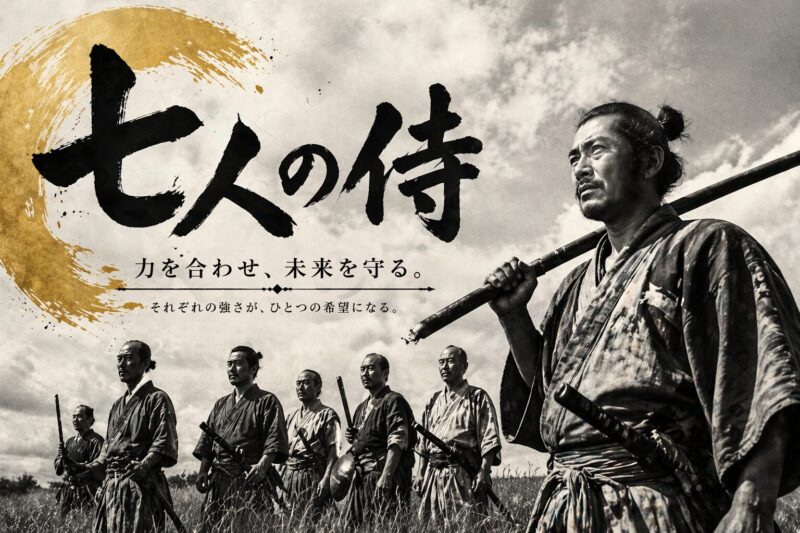
「七人の侍」は1954年の4月26日に公開された日本映画の金字塔です。監督は黒澤明、主演は志村喬と三船敏郎。上映時間はなんと約3時間27分という大作で、同年のヴェネツィア国際映画祭では銀獅子賞を受賞し、世界に日本映画の存在を知らしめました。
Seven Samurai is a landmark of Japanese cinema, released on April 25, 1954. Directed by Akira Kurosawa and starring Takashi Shimura and Toshiro Mifune, this epic runs approximately 3 hours and 27 minutes. It won the Silver Lion at the Venice International Film Festival that same year, introducing Japanese cinema to the world stage.

あらすじ/Story
時代設定は戦国時代末期(約1600年頃)/The film is set in the late Sengoku period, around 1600.
毎年収穫の季節になると、山賊(野武士の集団)が村を襲い、食料を根こそぎ奪っていく貧しい農村があります。村人たちは「また今年もやられる…」と絶望していましたが、「侍を雇って村を守ろう!」という案が生まれます。
しかし報酬はお金ではなく「飯だけ」。そんな条件で引き受けてくれる侍など…と思いきや、老練な浪人・島田勘兵衛が立ち上がり、仲間の侍を集め始めます。
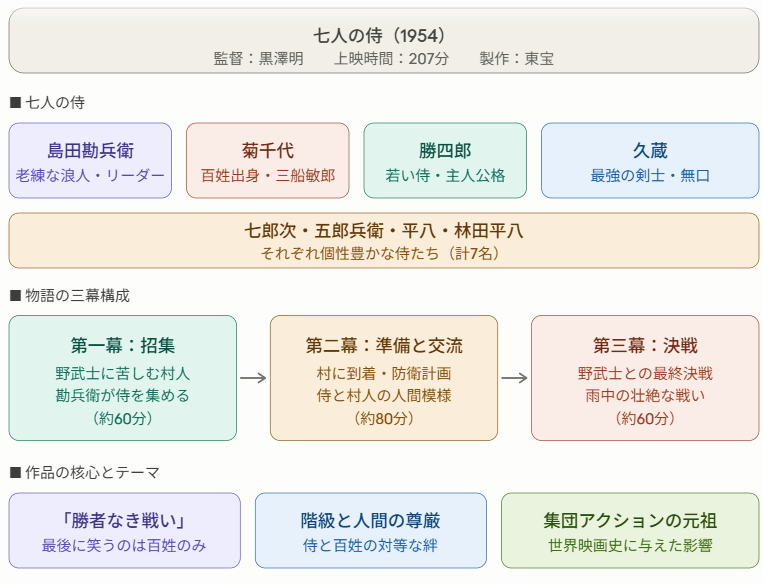
こうして集まった7人が村に乗り込み、村人と協力して防衛体制を整え、最終的に野武士の大群と雨の中で壮絶な決戦を繰り広げます。
Every harvest season, a band of bandits — rogue samurai — raids a poor farming village, stripping it of food. The villagers despair, assuming the same fate awaits them again. Then someone proposes an idea: “Let’s hire samurai to protect the village!”
The catch? There’s no money to offer — only rice. Who would take a job like that? As it turns out, a weathered ronin named Kambei Shimada steps forward and begins recruiting companions.
The seven samurai who answer the call ride into the village, work alongside the farmers to build a defense, and ultimately face the bandit horde in a desperate, mud-soaked battle in the pouring rain.
七人それぞれのキャラクター/The Seven Characters
- 島田勘兵衛(志村喬)― リーダー格。冷静沈着で人望が厚い、この映画の精神的な中心
- 菊千代(三船敏郎)― 実は百姓の出身で侍ではない。野性的でコミカルだが心が熱い
- 久蔵 ― 寡黙で最強の剣士。静かな存在感が光る
- 勝四郎 ― 若くて青い侍。村娘との恋愛も描かれ、観客の視点役
- 七郎次・五郎兵衛・平八 ― それぞれ異なる個性と背景を持つ
Kambei Shimada (Takashi Shimura) — The leader. Cool-headed and deeply respected, he is the film’s moral and spiritual center.
Kikuchiyo (Toshiro Mifune) — Actually a farmer’s son, not a true samurai. Wild and comedic, but burning with passion.
Kyuzo — The deadliest swordsman of the group. Speaks little; his quiet presence says everything.
Katsushiro — Young and inexperienced. A romance with a village girl unfolds, and he serves as the audience’s eyes.
Shichiroji, Gorobei, Heihachi — Each brings a distinct personality and backstory to the group.
この映画が「すごい」理由/Why This Film Is Extraordinary
映画史を変えた技術と演出/Techniques that changed cinema
黒澤明は当時としては革新的な手法を数多く使いました。複数台のカメラで同時に撮影したアクション、望遠レンズを多用したリアルな描写、雨の中での泥まみれの決戦シーンは世界中の映画人に衝撃を与えました。
Kurosawa employed methods that were revolutionary for the time — multi-camera action sequences, heavy use of telephoto lenses for gritty realism, and a climactic battle scene in rain and mud that stunned filmmakers around the world.
「勝者なき戦い」というテーマ/The theme of “a war with no winners”
映画のラストで勘兵衛は「また負け戦だったな…」とつぶやきます。戦いに勝ったのに「負けた」という。これは、死んだ仲間・報酬もない現実を見て、本当に勝ったのは侍ではなく農民(村)だという深い皮肉です。
At the film’s end, Kambei murmurs, “…Another losing battle.” They won the fight — yet he calls it a loss. With comrades dead and no reward to show for it, the true victors, he implies, were not the samurai but the farmers — the village itself. It’s a deeply ironic conclusion.
世界映画への圧倒的な影響/Its towering influence on world cinema
「荒野の七人」「スター・ウォーズ」「バグズ・ライフ」など数えきれないほどの名作がこの映画の構造やテーマを受け継いでいます。「少数精鋭の英雄が弱者を守る」というフォーマットはここから始まったと言っても過言ではありません。
Countless celebrated works — The Magnificent Seven, Star Wars, A Bug’s Life — have borrowed the film’s structure and themes. It is no exaggeration to say that the template of “a band of elite heroes defending the vulnerable” began right here.
どんな人に刺さる映画か/Who Should Watch It
モノクロ・3時間半という壁はありますが、一度見始めると引き込まれること間違いなし。アクション・人間ドラマ・笑い・哲学がすべて詰まった「映画の教科書」のような作品です。映画好きなら必見の一本です!
It’s black-and-white and three and a half hours long. But once you start, you won’t be able to look away. Action, human drama, humor, philosophy — it’s all here. This is a film that teaches you what cinema can be. If you love movies, this one is essential.
今週末は映画を見てのんびり過ごすのもいいですよね。
では、よい一日をお過ごしください。
see you soon.
Spending the weekend relaxing with a movie sounds like a great idea, doesn’t it?
Well, have a wonderful day.
See you soon.


コメント