5月25日。2026年は月曜日、大安。今日はなんとも縁起のいい一日です。
今日は2つの「20年越しの夢」が実った物語をお届けします。
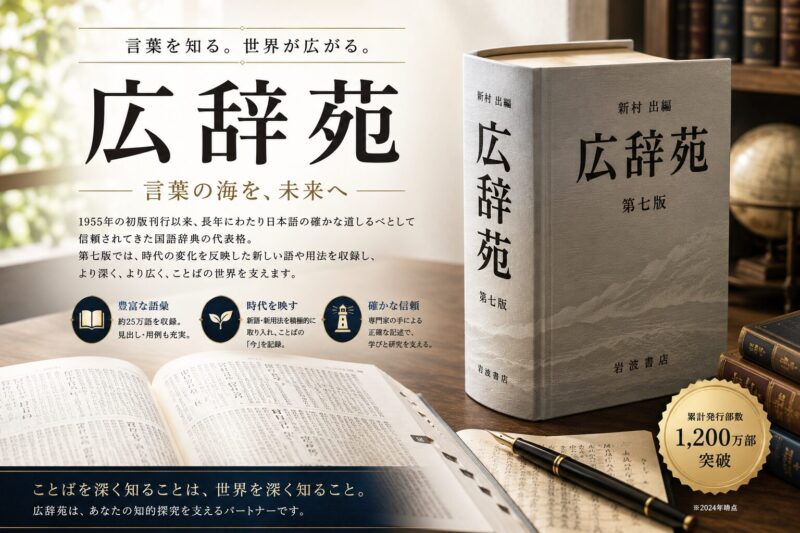
ひとつは1955年——父と息子が20年かけて作り上げた日本語の集大成「広辞苑」が初版を刊行した日。
もうひとつは1899年——瀬戸内航路の客船に旅客を奪われていた鉄道会社が、対抗策として走らせた日本初の「食堂車」。揺れる汽車で食べた洋食が、明治の人々を驚かせた日です。
5月25日の記念日まとめ
5月25日の主な記念日・出来事
・食堂車の日——1899年5月25日、山陽鉄道が日本初の食堂車を運行
・広辞苑記念日——1955年5月25日、岩波書店が「広辞苑」初版を刊行
・主婦休みの日——年3回(1/25・5/25・9/25)。主婦がリフレッシュする日
・愛車の日——日本初の外国車ディーラー・ヤナセの創立記念日にちなむ
・納本制度の日——1948年5月25日、国立国会図書館で納本受付が開始
・ターミネーターの日——1984年5月25日、映画「ターミネーター」が米国公開
・ガリレオ衛星発見(1610年)——ガリレオがエウロパ・ガニメデなどを発見した記録の日
・みやざきマンゴーの日——「マンゴー(05)ニッコリ(25)」の語呂合わせ
「父と息子の20年越しの執念」——広辞苑が生まれるまで
1955年5月25日。岩波書店から一冊の分厚い辞書が刊行されました。その名は「広辞苑」。収録語約20万語・約2,600ページという、当時としては前代未聞の大型国語辞典でした。
しかしこの辞書が生まれるまでの道のりは、想像を絶するほど険しいものでした。
広辞苑完成までの道のり
・1935年:前身の辞書「辞苑」が博文館から刊行(編者:新村出)
・1936年:新村出(60歳)、大学を退官し改訂作業に専念し始める
・1937年〜:日中戦争・太平洋戦争の激化で作業が中断・難航
・戦後:博文館が改訂版の刊行を拒否→岩波書店に引き継ぎ
・戦後の国語改革(仮名遣い・漢字の変更)でさらに編集が複雑に
・1955年5月25日:刊行。改訂作業開始から実に約20年が経過
この長い歳月を支えたのは、父・新村出と息子・新村猛の親子二人三脚でした。
大学を退官した60歳の父が「今度こそ完璧な辞書を作る」と夢を描き、戦争が邪魔をし、出版社が変わり、国語そのものが変わっても、父子は諦めませんでした。
NHKの伝説的番組「プロジェクトX」でも「父と息子 執念燃ゆ 大辞典」と題して紹介されたこの物語——その執念の結晶が、今も「広辞苑で調べる」という日本語として生き続けています。
広辞苑の今
・現在は第7版(2018年刊行)で、収録語約25万語
・1冊の重さ:約3.3kg(持ち歩けない辞書の代名詞)
・「広辞苑に載る」ことが、言葉の”公式認定”の象徴になっている
・電子辞書・スマホアプリ版も展開し、今も現役の「日本語の基準」
「広辞苑に載っている」という言葉が一種の権威になっているのは、20年という時間と、父と息子の執念が積み重なっているからかもしれません。
「船に勝ちたい」——食堂車を生んだ明治の熾烈なサービス競争
1899年5月25日。山陽鉄道(現・JR山陽本線)の急行列車に、日本で初めて「食堂車」が連結されました。
なぜ食堂車が生まれたのか——その背景に、熾烈な「鉄道VS船」の競争がありました。
食堂車誕生の背景——瀬戸内航路との競争
山陽鉄道が走る沿線(神戸〜下関)は、瀬戸内海を行く客船航路と真っ向勝負のルートでした。客船は揺れが少なく、船内でのんびり食事もできる。このサービスに対抗すべく、山陽鉄道は次々と革新的なサービスを導入します。
・1896年:荷運び夫(赤帽のルーツ)による手荷物サービス
・1898年:列車ボーイによる車内サービス
・1899年:食堂車の導入(日本初)
・1900年:寝台車の導入(日本初)
当時の食堂車は一等・二等客専用で、メニューは洋食のみ。揺れる汽車の中でナイフとフォークで西洋料理を食べるというのは、当時の日本人にとって衝撃的なほど「モダン」な体験でした。
明治の食堂車レポート
・乗れたのは:一等・二等の乗客のみ(現在のグリーン車クラス)
・メニュー:洋食のみ(コース料理)
・評判:「汽車で景色を見ながら洋食を食べるなんて、モダンだ!」と好評
・揺れが激しくゆったりはできなかったが、それでも大人気
・運営:神戸の「自由亭ホテル(後のみかど)」が請け負う
その後、1906年に三等急行列車にも和食堂車が登場し、ようやく一般庶民も食堂車を利用できるようになりました。
「汽車でご飯」が当たり前になったあの食堂車の歴史——その始まりは、船との顧客争奪戦から生まれた逆転の発想でした。
ターミネーターの日——1984年5月25日に生まれた名言
1984年5月25日、映画「ターミネーター」がアメリカで公開されました。これにちなんで5月25日は「ターミネーターの日」にも認定されています。
低予算のB級SF映画として製作された「ターミネーター」。しかし世界中で大ヒットし、アーノルド・シュワルツェネッガーの代名詞「I’ll be back(また来る)」という名台詞を生みました。
ターミネーター豆知識
・製作費:わずか約620万ドル(約9億円)の低予算映画
・世界興行収入:約7,800万ドル(製作費の12倍超)
・「I’ll be back」はアメリカ映画協会が選ぶ「映画史上の名セリフTop100」に選出
・監督:ジェームズ・キャメロン(のちにタイタニックを制作)
・2015年5月25日には映画5作目を記念してシュワちゃん公認の記念日に認定
まとめ——5月25日は「長い時間をかけて生まれたものの重さ」を感じる日
20年越しで生まれた広辞苑。船との競争から生まれた食堂車。どちらも「すぐには結果が出なくても、続ける意味がある」ということを教えてくれます。
今日は大安でもあります。何か新しいことを始めるのにもってこいの日かもしれません。
まとめ
- 5月25日は食堂車の日——1899年、山陽鉄道が日本初の食堂車を運行。船との競争から生まれた
- 当初は一等・二等客専用の洋食のみ。「汽車で洋食」は明治人に衝撃のモダン体験
- 1906年に三等列車にも和食堂車が登場し、ようやく庶民も食堂車を楽しめた
- 5月25日は広辞苑記念日——1955年、父・新村出と息子・猛の20年越しの執念が結実
- 戦争・出版社変更・国語改革にも負けなかった親子の物語は「プロジェクトX」でも紹介された
- 現在の広辞苑は第7版・約25万語収録。「広辞苑に載る」は今も言葉の権威
- ターミネーターの日——1984年5月25日公開。「I’ll be back」が映画史に残る名台詞に
- 2026年の5月25日は大安——縁起よく、新しいことを始めるのにぴったりな一日
最後まで読んでくださってありがとうございました😊
今日は「広辞苑」を一度手に取ってみてください。あの重さの中に、父と息子の20年が詰まっています。
では、よい一日をお過ごしください。
see you soon.
What Day Is May 25th? “A Father, a Son, and Twenty Years of Stubbornness” — The Day Japan’s Greatest Dictionary Was Born, and the Day a Train Decided to Take On a Ship
May 25th. In 2026, today is a Monday — and by the traditional Japanese calendar, a Taian day, the luckiest day of the six-day cycle. An auspicious start to the week.
Today, two stories about dreams that took twenty years to come true.
The first is from 1955 — the day a father and son finally published the monumental Japanese dictionary they had spent two decades building: the Kōjien.
The second is from 1899 — the day a railway company, losing passengers to the steamships of the Seto Inland Sea, launched Japan’s first-ever dining car. Western food, served on a rattling train, left Meiji-era Japan speechless.
May 25th Commemorative Days at a Glance
Main Events & Commemorative Days on May 25th
· Dining Car Day — May 25th, 1899: the Sanyō Railway ran Japan’s first dining car
· Kōjien Anniversary Day — May 25th, 1955: Iwanami Shoten published the first edition of the Kōjien dictionary
· Housewife’s Day Off — Three times a year (Jan 25, May 25, Sep 25): a day for homemakers to rest and recharge
· Beloved Car Day — Marks the founding anniversary of Yanase, Japan’s first foreign car dealership
· Legal Deposit Day — May 25th, 1948: the National Diet Library began accepting legal deposits
· Terminator Day — May 25th, 1984: The Terminator was released in the United States
· Galilean Moon Discovery (1610) — The day Galileo’s observation records note the discovery of Europa, Ganymede, and others
· Miyazaki Mango Day — Wordplay on “Mango (05) Nikkori (25)” (smile!)
“A Father, a Son, and Twenty Years of Stubbornness” — The Making of the Kōjien
On May 25th, 1955, a very thick book was published by Iwanami Shoten in Tokyo. Its name: Kōjien (広辞苑). Approximately 200,000 entries. Roughly 2,600 pages. It was, at the time, the most comprehensive single-volume Japanese dictionary ever produced.
But the road to its publication was almost incomprehensibly long and difficult.
The Road to the Kōjien — A Timeline
· 1935: The predecessor dictionary, “Jien,” is published by Hakubunkan (editor: Izuru Niimura)
· 1936: Niimura (age 60) retires from his university post and devotes himself to the revised edition
· 1937 onward: The Second Sino-Japanese War and Pacific War repeatedly disrupt and delay the work
· Postwar: Hakubunkan refuses to publish the revision → the project transfers to Iwanami Shoten
· Postwar language reforms (new spelling conventions, revised kanji) force sweeping re-editing
· May 25th, 1955: Published — roughly 20 years after revision work began
Throughout those twenty years, the project was held together by the partnership of father Izuru Niimura and his son Takeru Niimura.
At 60, freshly retired from academia, the father set out with a dream: “This time, I will build the definitive dictionary.” A war got in the way. The publisher pulled out. The Japanese language itself was reformed around them. Still, the father and son did not stop.
The legendary NHK documentary series “Project X” dedicated an episode to their story, titled “Father and Son: A Burning Obsession for the Great Dictionary.” The fruit of that obsession is still alive today — every time someone says “let me look it up in the Kōjien.”
The Kōjien Today
· Current edition: 7th edition (published 2018), approximately 250,000 entries
· Weight: approximately 3.3 kg — famously too heavy to carry around
· “Being listed in the Kōjien” is considered the unofficial stamp of official recognition for a Japanese word
· Also available in electronic dictionary and smartphone app formats — still Japan’s benchmark dictionary
The authority that comes with the phrase “it’s in the Kōjien” — that weight comes from twenty years, and from a father and son who refused to give up.
“We Have to Beat the Ships” — The Fierce Rivalry That Gave Birth to Japan’s First Dining Car
On May 25th, 1899, the Sanyō Railway (now part of JR’s Sanyō Main Line) connected Japan’s first-ever dining car to one of its express trains.
Why did the dining car exist? Behind it was a fierce and very real battle: trains versus ships.
The Origin of the Dining Car — Competition with the Seto Inland Sea Steamships
The Sanyō Railway’s route (Kobe to Shimonoseki) ran in direct competition with the passenger steamship services crossing the Seto Inland Sea. Ships were steady, comfortable — passengers could relax and enjoy a proper meal on board. To fight back, the Sanyō Railway launched one innovation after another:
· 1896: Baggage porter service at stations (the origin of the “red cap” porter)
· 1898: On-board attendant (train boy) service
· 1899: First dining car in Japan
· 1900: First sleeping car in Japan
At the time, the dining car was reserved exclusively for first- and second-class passengers. The menu offered only Western cuisine. Eating a course of French-style food with a knife and fork, watching the scenery pass through the window of a rattling steam train — for Meiji-era Japanese passengers, it was almost shockingly “modern.”
A Meiji-Era Dining Car Report
· Who could use it: First- and second-class passengers only (equivalent to today’s Green Car)
· Menu: Western cuisine only (course meals)
· Reception: “Eating Western food on a train while watching the scenery — how modern!” — widely praised
· The ride was rough and not exactly relaxing, but passengers loved it anyway
· Operated by: the Jiyūtei Hotel in Kobe (later renamed “Mikado”)
In 1906, a Japanese-style dining car was added to third-class express trains, finally making the experience accessible to ordinary passengers.
The dining car we remember so fondly — that cozy world of white tablecloths rolling through mountain scenery — was born not from romance, but from a railway company’s desperate need to beat its rivals on the water.
Terminator Day — The Famous Line Born on May 25th, 1984
On May 25th, 1984, The Terminator was released in the United States — which is why May 25th has been officially recognized as Terminator Day.
Made as a low-budget science fiction film, The Terminator became a worldwide phenomenon — and gave Arnold Schwarzenegger one of cinema’s most quoted lines: “I’ll be back.”
Terminator Fun Facts
· Production budget: approximately $6.2 million — a genuinely low-budget film
· Worldwide box office: approximately $78 million (more than 12 times the budget)
· “I’ll be back” was selected by the American Film Institute for its list of the 100 Greatest Movie Quotes
· Director: James Cameron (who later made Titanic)
· In 2015, May 25th was officially designated Terminator Day with Schwarzenegger’s endorsement, timed to the 5th film in the franchise
Closing Thoughts — May 25th Is a Day to Feel the Weight of Things That Took Time
A dictionary that took twenty years to build. A dining car born from the refusal to lose a rivalry with ships. Both stories share the same quiet message: even when results don’t come quickly, there is meaning in continuing.
And today is Taian — traditionally the luckiest day on the Japanese calendar. If there’s something new you’ve been wanting to start, today might be exactly the right moment.
Summary
- May 25th is Dining Car Day — in 1899, the Sanyō Railway ran Japan’s first dining car, born out of competition with Seto Inland Sea steamships
- Reserved at first for first- and second-class passengers, Western cuisine only. “Western food on a train” was a thrillingly modern experience for Meiji-era Japan
- In 1906, Japanese-style dining cars reached third-class trains — ordinary people could finally join the table
- May 25th is also the Kōjien Anniversary — in 1955, the twenty-year obsession of father Izuru Niimura and son Takeru finally reached its readers
- Wars, a publisher’s withdrawal, and a wholesale reform of the Japanese language — none of it stopped them. Their story was featured on NHK’s legendary Project X
- The current Kōjien is the 7th edition with around 250,000 entries. “It’s in the Kōjien” remains the gold standard of word authority
- Terminator Day — released May 25th, 1984. “I’ll be back” became one of cinema’s most enduring lines
- May 25th, 2026 is Taian — the luckiest day in the traditional Japanese calendar. A fine day to begin something new.
Thank you so much for reading all the way to the end 😊
Today, if you have a copy of the Kōjien nearby — pick it up. Feel the weight of it. That 3.3 kilograms holds twenty years.
Have a wonderful day.
See you soon.
コメント