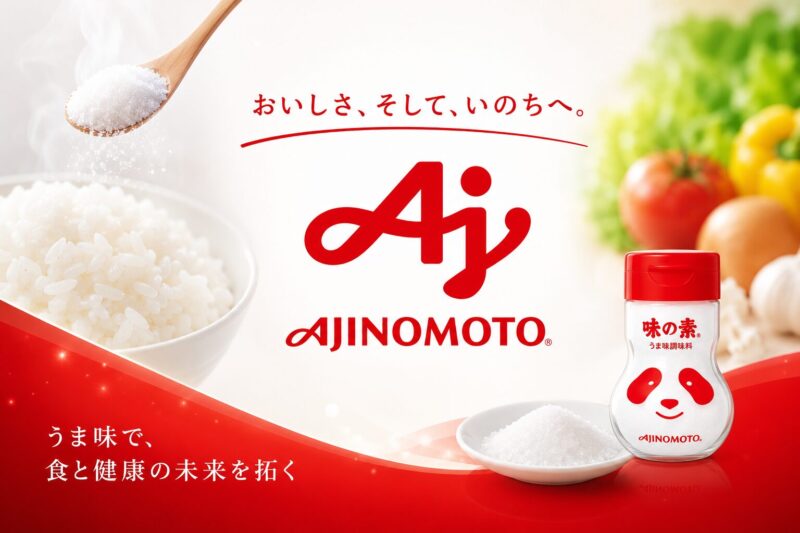
5月20日。今日はあなたの台所に関係する、とても身近な話をしたいと思います。
1909年5月20日——世界で初めてのうま味調味料「味の素」が発売されました。
そのきっかけは、ある大学教授が湯豆腐のだし汁を飲んでいたことでした。そして驚くことに、うま味を発見したこの人物は、ロンドンで夏目漱石と同じ下宿に住んでいたのです。
今日はその感動のエピソードと、5月20日に重なるさまざまな記念日をお届けします。
5月20日の記念日まとめ
5月20日の主な記念日・出来事
・味の素創業記念日——1909年5月20日、世界初のうま味調味料「味の素」が発売
・世界計量記念日——1875年5月20日、パリで「メートル条約」が締結
・世界ミツバチの日——国連が制定。近代養蜂の先駆者アントン・ヤンシャの誕生日にちなむ
・ローマ字の日——日本ローマ字社が制定
・東京港開港記念日——1941年5月20日、東京港が国際貿易港として開港
・成田空港開港記念日——1978年5月20日、新東京国際空港が開港
・ジーンズの日——1873年5月20日、リーバイスがリベット補強のズボン特許を取得
「湯豆腐のだし汁」から始まった世界的大発見
1907年のある日。東京帝国大学の化学教授・池田菊苗は、自宅で湯豆腐を食べていました。
湯豆腐のだし汁を口に含んだとき、池田は不思議な感覚を覚えます。甘味でも、酸味でも、塩味でも、苦味でもない——もうひとつ、何か別の味がある。
当時、人間の基本的な味は「甘・酸・塩・苦」の4種類とされていました。しかし池田は確信していました。「昆布だしには、その4つとは別の味がある」と。こうして昆布だしの研究が始まりました。
池田菊苗の研究データ
・投入した昆布の量:約12〜38kg
・抽出できたうま味成分:わずか約30g
・1908年、グルタミン酸が昆布だしのうま味成分であることを発見
・この味を「うま味(Umami)」と命名——池田博士自身による命名
38kgの昆布から、わずか30グラム。気が遠くなるような根気の作業の末、池田は1908年に世界で初めて「うま味」を発見しました。
「うま味(Umami)」は現在、英語として世界中に広まり、甘・酸・塩・苦に次ぐ「第5の基本味」として国際的に認められています。
「日本人の栄養状態を改善したい」——発見の裏にあった熱い志
池田がうま味の研究を始めたのは、単純な知的好奇心だけではありませんでした。
1899年、池田はドイツへ留学します。そこで彼が目にしたのは、当時の日本人とは明らかに違うドイツ人の体格と栄養状態でした。「なぜこれほど違うのか」——池田は考えました。当時の日本人の食事は粗食が中心で栄養が十分に摂れていなかった。しかし「おいしい食事」なら、人は自然に多く食べるようになる。
池田菊苗の志
「うま味を通じて粗食をおいしくし、日本人の栄養状態を改善したい」
科学的な大発見の裏に、こんなにも人間的な「誰かの役に立ちたい」という気持ちがありました。
夏目漱石と同じ下宿に住んでいた!
池田菊苗には、あまり知られていない意外な縁があります。
ドイツ留学を終えた池田は、帰国前にロンドンに数ヶ月滞在しました。そこで夏目漱石と同じ下宿になったのです。漱石は博学多識な池田に感銘を受けたといいます。その交流の様子は、漱石が弟子の寺田寅彦に宛てた書簡にも記録されています。
「うま味」を発見した化学者と、「吾輩は猫である」を書いた文豪が、ロンドンの同じ下宿で語り合っていた——歴史の不思議な巡り合わせを感じますね。
最初は全然売れなかった!——大阪のうどん屋が救った味の素
1909年5月20日、うま味調味料「味の素」が発売されました。しかし——最初は全く売れませんでした。
新製品すぎて誰も使い方がわからない。「何に使えばいいの?」という状態だったのです。
そこで創業者の鈴木三郎助が販売促進のために大阪へ向かいます。するとそこには昆布でだしを取るうどん文化が根付いていました。「昆布のうま味成分を抽出したものです」——この説明が大阪のうどん屋と料亭にドンピシャで刺さり、口コミで一気に広がっていったのです。
味の素・驚きの歴史
・1909年発売当初:中瓶30gで50銭(高価な新製品)
・1951年:瓶から「ふりかけ式穴あき容器」に変更→売り上げが大幅拡大
・現在:世界100カ国以上で使用、年間需要190万トン以上
・池田博士の功績:特許庁選定「日本の十大発明家」の一人に選ばれた
大阪のうどん屋が救った味の素——「地元の食文化を知る」ことがビジネスを成功させた好例ですね。
(各1個セット) 味の素 アジパンダ瓶 70g 詰め替え用50g
世界計量記念日——「1メートル」を世界で統一した日
1875年5月20日、パリで「メートル条約」が欧米17カ国間で締結されました。これを記念して5月20日は「世界計量記念日」とされています。
それまで世界各国は「長さ」「重さ」の単位がバラバラでした。日本も江戸時代から「尺貫法」を使っており、メートルは使われていませんでした。
メートル法雑学
・条約締結:1875年5月20日、パリ
・日本のメートル条約加盟:1886年(明治19年)
・日本でメートル法が法律で義務付け:1921年(大正10年)
・現在の「1メートル」の定義:光が真空中を2億9979万2458分の1秒間に進む距離
→ つまり1メートルは「光の速さ」を基準に定義されている!
今日あなたが「ここから10メートル先」と言うとき、その「メートル」は151年前の今日生まれたものです。
世界ミツバチの日——食卓の3分の1はミツバチが支えている
5月20日は国連が制定した「世界ミツバチの日(World Bee Day)」でもあります。近代養蜂の先駆者・アントン・ヤンシャ(スロベニア人)の誕生日(1734年5月20日)にちなんでいます。
実は私たちの食卓は、ミツバチなしには成り立ちません。
ミツバチがいなくなると…
・世界の食料生産の約3分の1は、ミツバチなどの花粉媒介生物に依存している
・リンゴ・いちご・アーモンド・コーヒー・カカオなど多くの食物がミツバチの受粉で成立
・アインシュタインは「ミツバチが地球上からいなくなったら、人間は4年で絶滅する」と語ったとされる(真偽は不確かだが、それほど重要という意味で語り継がれている)
今日はちょっとだけ、庭の花や野の草にとまるミツバチに感謝してみてください。
MYHONEY ハチミツ 非加熱 はちみつ アカシア 500g×1本 チューブボトル ハンガリー産 アカシア蜂蜜 100% 無添加
国産百花はちみつ300g【蜂と旅する養蜂家 和歌山県産100%】国産 純粋蜂蜜 百花蜜 非加熱 生はちみつ 無添加
ジーンズの日——リーバイスの特許取得から153年
1873年5月20日、リーバイ・ストラウスとジェイコブ・デイヴィスが「リベットでポケットを補強したズボン」の特許を取得しました。これがジーンズの発祥とされています。
金鉱採掘者のために「丈夫なズボン」として作られたジーンズが、153年後には世界中の人々が日常的に穿く定番ファッションになっている——モノの可能性って、本当にわからないものですね。
まとめ——5月20日は「日常の中の革命」を思い出す日
湯豆腐のだし汁からうま味を発見した池田菊苗。パリで生まれたメートルという共通言語。世界の食料を支えるミツバチ。丈夫なズボンから生まれたジーンズ。
今日の5月20日に重なる記念日はどれも、「日常の中に隠れている革命」の話です。
まとめ
- 5月20日は味の素創業記念日——1909年、世界初のうま味調味料「味の素」が発売
- うま味の発見者・池田菊苗は湯豆腐のだし汁からヒントを得て研究を開始
- 38kgの昆布からわずか30gのグルタミン酸を抽出——根気の研究の末の大発見
- 発見の動機は「日本人の栄養状態を改善したい」という熱い志
- 池田は留学中に夏目漱石とロンドンの同じ下宿に住んでいた
- 発売当初は売れなかったが、大阪のうどん文化が味の素を救った
- 「うま味(Umami)」は現在、第5の基本味として世界に認められた日本語
- 世界計量記念日——1875年今日、パリでメートル条約が締結。1メートルは光の速さで定義される
- 世界ミツバチの日——食料生産の3分の1を支えるミツバチに感謝する日
最後まで読んでくださってありがとうございました😊
今日、味の素を使ったときは、明治時代の化学者が38kgの昆布と向き合った話を少し思い出してみてください。
では、よい一日をお過ごしください。
see you soon.
What Day Is May 20th? “Hot Tofu Broth” and the Man Who Changed the World’s Kitchens — The Founding Anniversary of Ajinomoto and Its Surprising Connection to Natsume Soseki
May 20th. Today, I want to tell you a story that reaches right into your kitchen.
On May 20th, 1909 — the world’s very first umami seasoning, “Ajinomoto,” went on sale.
It all started when a university professor was sipping the broth of his hot tofu one evening. And remarkably, the man who discovered umami once shared a boarding house in London with the great novelist Natsume Soseki.
Today, let’s explore that fascinating story — along with the other commemorative days that fall on May 20th.
May 20th Commemorative Days at a Glance
Main Events & Commemorative Days on May 20th
· Ajinomoto Founding Anniversary — May 20th, 1909: the world’s first umami seasoning goes on sale
· World Metrology Day — May 20th, 1875: the Metre Convention was signed in Paris
· World Bee Day — Established by the United Nations; marks the birthday of pioneer beekeeper Anton Janša
· Roman Alphabet Day — Established by the Japan Roman Alphabet Society
· Tokyo Port Opening Anniversary — May 20th, 1941: Tokyo Port opened as an international trade port
· Narita Airport Opening Anniversary — May 20th, 1978: New Tokyo International Airport (now Narita) opened
· Jeans Day — May 20th, 1873: Levi Strauss and Jacob Davis received their patent for riveted-pocket trousers
A World-Changing Discovery That Started with Hot Tofu Broth
One day in 1907, Kikunae Ikeda — a chemistry professor at Tokyo Imperial University — was at home eating a bowl of yudofu (hot tofu in broth).
As the broth touched his tongue, he noticed something that stopped him in his tracks. It wasn’t sweet. It wasn’t sour, salty, or bitter. There was something else — a fifth, distinct taste.
At the time, the scientific consensus held that there were four basic tastes: sweet, sour, salty, and bitter. But Ikeda was certain: “There is another taste in kombu dashi. Something beyond those four.” And with that conviction, he began his research.
Professor Ikeda’s Research Data
· Amount of kombu used: approximately 12–38 kg
· Umami compound extracted: just about 30 g
· 1908: discovered that glutamic acid is the key umami compound in kombu dashi
· Named this taste “umami” — the word coined by Ikeda himself
From 38 kilograms of kombu, just 30 grams. After painstaking, patient work, Ikeda made his discovery in 1908 — the world’s first identification of umami.
Today, “umami” has spread worldwide as an English word, and is officially recognized internationally as the fifth basic taste — alongside sweet, sour, salty, and bitter.
“I Want to Improve the Nutrition of the Japanese People” — The Human Heart Behind a Scientific Discovery
Ikeda’s motivation wasn’t purely intellectual curiosity.
In 1899, he traveled to Germany for his studies. There, he was struck by something he couldn’t ignore: the physical size and nutritional health of Germans compared to Japanese people at the time. “Why such a difference?” he asked himself. The Japanese diet was sparse and plain, leaving many people undernourished. But if food tasted better, people would naturally eat more — and eat better.
Professor Ikeda’s Vision
“I want to use umami to make simple food delicious — and improve the nutrition of the Japanese people.”
Behind one of the world’s great scientific discoveries was a very human wish: to be of service to others.
He Shared a Boarding House with Natsume Soseki!
There’s a lesser-known connection in Ikeda’s life that still surprises people.
After finishing his studies in Germany, Ikeda spent several months in London before returning to Japan. And there, he ended up in the same boarding house as Natsume Soseki — the novelist who would go on to write I Am a Cat and Kokoro.
Soseki was deeply impressed by the breadth and depth of Ikeda’s knowledge. Their time together is documented in letters Soseki wrote to his student Torahiko Terada.
The man who discovered umami and the father of modern Japanese literature — sharing a boarding house in London, talking long into the evenings. History has a wonderful sense of coincidence.
It Didn’t Sell at All at First — How Osaka’s Udon Culture Saved Ajinomoto
When “Ajinomoto” went on sale on May 20th, 1909, the reaction was underwhelming. Nobody bought it.
It was too new. People didn’t know what to do with it. “What is this even for?” was the general response.
So founder Saburoske Suzuki traveled to Osaka to try to build a market. What he found there was a city with a deep culinary tradition of kombu-based dashi for udon. The explanation — “this is the extracted umami essence of kombu” — landed perfectly. Udon restaurants and high-end ryotei restaurants in Osaka got it immediately. Word spread fast, and Ajinomoto found its foothold.
Ajinomoto — Surprising History
· 1909 launch price: 50 sen for a 30g bottle (expensive for the time)
· 1951: switched from plain bottles to the shaker-cap design → sales surged dramatically
· Today: used in over 100 countries, annual demand exceeding 1.9 million tons
· Professor Ikeda’s legacy: selected by the Japan Patent Office as one of Japan’s Top 10 Inventors
Osaka’s udon culture saved Ajinomoto. Knowing the local food culture — and speaking directly to it — is one of the oldest lessons in business.
World Metrology Day — The Day “One Metre” Was Agreed Upon by the World
On May 20th, 1875, the Metre Convention was signed in Paris by representatives of 17 nations. This is the origin of World Metrology Day.
Before this, measurements varied wildly from country to country — and even within countries. Japan used the traditional shakkan-hō system (based on the shaku and kan) for centuries before transitioning to metric.
Metre Convention — Fun Facts
· Signed: May 20th, 1875, Paris
· Japan joined the Metre Convention: 1886 (Meiji 19)
· Metric system made legally mandatory in Japan: 1921 (Taishō 10)
· How “1 metre” is defined today: the distance light travels in a vacuum in 1/299,792,458 of a second
→ In other words, the metre is defined by the speed of light
The next time you say “ten metres from here,” remember: that word “metre” was born 151 years ago today in Paris.
World Bee Day — One Third of Your Dinner Was Made Possible by Bees
May 20th is World Bee Day — a UN-designated international day that marks the birthday of Anton Janša (born May 20th, 1734), a Slovenian beekeeper who pioneered modern apiculture.
The truth is, our food supply would collapse without bees.
What Would Happen If Bees Disappeared?
· Approximately one-third of global food production depends on bees and other pollinators
· Apples, strawberries, almonds, coffee, cacao — all rely on bee pollination to exist
· A quote often attributed to Einstein: “If bees disappeared from the earth, humans would have only four years left.” (Its authenticity is debated, but it captures how critical bees truly are)
Today, take a quiet moment to appreciate any bee you see resting on a flower. They’re holding up a surprising share of your world.
Jeans Day — 153 Years Since Levi’s Filed Their Patent
On May 20th, 1873, Levi Strauss and Jacob Davis received a patent for “an improvement in fastening pocket-openings” — reinforcing pants pockets with copper rivets. This is considered the birth of blue jeans.
Designed for gold miners who needed tough, durable workwear — 153 years later, this same garment is worn casually by billions of people across the world, every single day. You never quite know where an invention will end up.
Closing Thoughts — May 20th Is a Day to Remember the Revolutions Hidden in Everyday Life
Kikunae Ikeda, who found a taste hidden in tofu broth. A shared unit of measurement born in Paris. Bees quietly sustaining a third of the world’s food. A pair of tough work trousers that became a global icon.
Every commemoration that falls on May 20th tells the same kind of story: a revolution quietly hiding in something completely ordinary.
Summary
- May 20th is the Ajinomoto Founding Anniversary — in 1909, the world’s first umami seasoning went on sale
- The discovery began when Professor Ikeda noticed an unexplained taste in the broth of his hot tofu
- He extracted about 30g of glutamate from 38kg of kombu — a discovery born of extraordinary patience
- The motivation behind it all: “I want to improve the nutrition of the Japanese people”
- Ikeda once shared a boarding house in London with novelist Natsume Soseki
- Ajinomoto didn’t sell at first — it was Osaka’s udon culture that gave it its breakthrough
- “Umami” is now recognized worldwide as the fifth basic taste — a Japanese word adopted by the world
- World Metrology Day — the Metre Convention was signed in Paris on this day in 1875; one metre is defined by the speed of light
- World Bee Day — a day to appreciate the bees that quietly support one-third of our food supply
Thank you so much for reading all the way to the end 😊
The next time you reach for Ajinomoto in the kitchen, spare a thought for the Meiji-era chemist who spent his evenings with 38 kilograms of kombu.
Have a wonderful day.
See you soon.


コメント