5月18日。今日は「言葉の力」と「正義の重さ」について考えさせられる記念日が重なる一日です。
1896年のこの日、アメリカ連邦最高裁が「黒人と白人を分離しても、待遇が同じなら差別ではない」という判決を下しました。「分離すれども平等(Separate but Equal)」——この5文字が、その後58年間アメリカの差別を合法化し続けることになります。
また今日は「ことばの日」でもあります。言葉はときに人を傷つけ、ときに世界を変える——今日はそんな「言葉の力」についても考えてみたいと思います。
5月18日の記念日まとめ
📖 5月18日の主な記念日・出来事
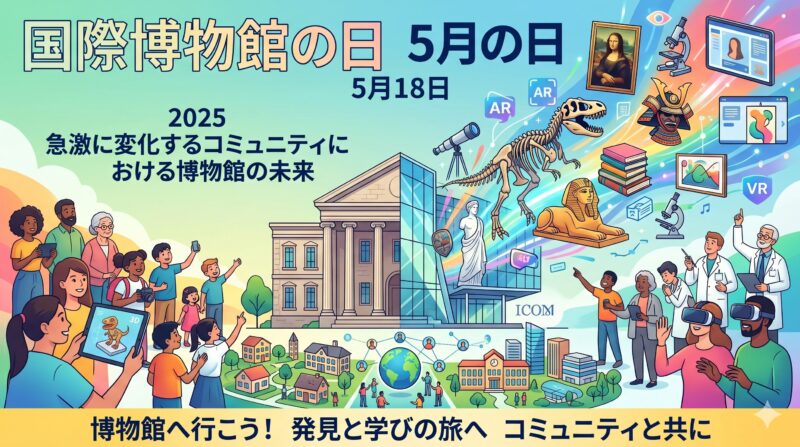
・国際博物館の日——1977年制定。ICOM(国際博物館会議)が博物館の役割を広める日
・ことばの日——「こ(5)と(10)ば(8)」の語呂合わせ。言葉を大切に使う日
・国際親善デー——1899年、ニコライ2世提唱の第1回万国平和会議開会を記念
・サロンパスの日——「こ(5)りを癒(18)す」の語呂合わせ
・ファイバーの日——「ファ(5)イ(1)バー(8)」の語呂合わせ
・プレッシー対ファーガソン裁判(1896年)——最高裁が「分離すれども平等」を合憲と判決
・セント・ヘレンズ山噴火(1980年)——123年ぶりの大噴火。死者・行方不明90人
「分離すれども平等」——差別を合法化した130年前の最高裁判決
1890年、アメリカ・ルイジアナ州で「隔離車両法」が成立しました。鉄道の車両を白人用と非白人用に分けることを義務付けたこの法律は、「黒人の血が1滴でもあれば非白人」とみなすという、今では信じられないほど乱暴な基準を持っていました。
これに立ち向かったのが、ホーマー・プレッシーという人物でした。
ホーマー・プレッシーとは
・8分の7が欧州系、8分の1がアフリカ系の血を持つ人物
・見た目はほぼ「白人」だったが、ルイジアナ州法では「非白人」に分類
・1892年6月、市民的不服従の一環として意図的に白人専用車両に乗車
・車掌に「私は非白人である」と名乗り出て逮捕された
プレッシーは「すべての国民に法の平等な保護を義務づける」合衆国憲法修正第14条に違反するとして、連邦最高裁に上告します。
そして1896年5月18日——最高裁は7対1の判決を下しました。
「プレッシー対ファーガソン裁判」の判決(1896年)
「待遇が同じであれば、白人と黒人を分離することは憲法修正第14条に違反しない」
→ 「分離すれども平等(Separate but Equal)」の原則が確立
この判決はアメリカ全土の差別に法的なお墨付きを与え、学校・バス・レストラン・トイレ・飲み水の蛇口に至るまで、あらゆる公共施設での人種分離が合法化されました。
唯一の反対票——ジョン・マーシャル・ハーラン判事の孤独な正論
7対1の判決で、たった一人だけ反対票を投じた裁判官がいました。ジョン・マーシャル・ハーラン判事です。
かつてケンタッキー州の奴隷所有者の家に生まれ、南北戦争では北軍に抵抗した経歴を持つハーラン。しかし最高裁判事となった彼は、人種差別に対して時代を超えた正義の目を向けていました。
ハーラン判事の反対意見(1896年)
「合衆国憲法は色盲(color-blind)であり、市民の間に上位の階級を知らず、下位の階級も知らない。法の観点からは、すべての市民が平等である」
「憲法は色盲だ」——この言葉は、当時の多数意見に全く無視されましたが、58年後にその正しさが証明されることになります。
58年後の逆転——ブラウン対教育委員会裁判(1954年)
1954年5月17日(昨日の5月17日!)——ブラウン対トピカ教育委員会裁判の判決が下されました。
カンザス州トピカに住む黒人少女・リンダ・ブラウン(8歳)は、自宅から1ブロックの白人専用小学校に通えず、遠くの黒人専用学校まで通わされていました。父親のオリバー・ブラウンは娘のために裁判を起こします。
最高裁の判決は全会一致でした。
ブラウン判決(1954年)
「人種分離した教育機関は、本来的に不平等である。
『分離すれども平等』は否定される」
1896年のプレッシー判決から58年。ハーラン判事の「憲法は色盲だ」という反対意見がついに多数意見となった瞬間でした。
この判決はアメリカ公民権運動の大きな礎となり、1964年の公民権法制定へとつながっていきます。
正しいことを言い続けても、すぐには認められないことがある。それでも正しいことは正しい——ハーラン判事の孤独な反対票が58年後に証明されたこの事実は、今日の「ことばの日」にも重なるメッセージがあるように感じます。
国際博物館の日——今日は博物館・美術館が無料になる!
毎年5月18日は、ICOM(国際博物館会議)が制定した「国際博物館の日(International Museum Day)」です。1977年にモスクワで開かれた第11回国際博物館会議で制定されました。
この日を中心に、日本全国の博物館・美術館・動物園・水族館などで無料開館や特別イベントが行われます。
国際博物館の日 豆知識
・世界150カ国以上、4万館以上の博物館が参加
・毎年世界共通のテーマが設定される
・日本でも各地の博物館・美術館で無料開館や記念事業が実施
・「博物館」には美術館・科学館・動植物園・水族館なども含まれる(博物館法)
今日は近くの博物館や美術館に足を運んでみてはいかがでしょうか。入館が無料になるところも多いのでお得ですよ😊
ことばの日——「言葉」という字が生まれた日
「こ(5)と(10)ば(8)」の語呂合わせから、今日は「ことばの日」です。
「言葉」という言葉自体の歴史をご存知ですか?実はもともと「言の葉(ことのは)」と書いていました。平安時代前期の『古今和歌集』仮名序にはこう記されています。
古今和歌集 仮名序より
「やまとうたは、人の心を種として、よろづの言の葉とぞなれりける」
(和歌は人の心を種として、無数の言の葉となって育っていくものだ)
「言の葉」——言葉を木の葉に例えた、なんと美しい表現でしょうか。木の葉が一枚一枚違うように、言葉もひとつひとつに違う意味と重みがある。
今日の「プレッシー対ファーガソン裁判」のエピソードで見たように、「分離すれども平等」という5文字が58年間差別を合法化し、「憲法は色盲だ」という言葉が58年後に歴史を動かしました。言葉はそれほどの力を持っています。
今日はあなたの日常の「言葉」をほんの少し丁寧に使ってみてください。
まとめ——5月18日は「言葉と正義の重さ」を考える日
「分離すれども平等」という言葉が差別を正当化した130年前。「憲法は色盲だ」という言葉が58年後に正義を取り戻した歴史。そして今日が「ことばの日」であること——これらが重なる5月18日は、言葉の持つ力と責任を改めて考える日だと思います。
📝 まとめ
- 1896年5月18日、アメリカ最高裁が「分離すれども平等」を合憲と判決。人種分離が法的に正当化された
- 7対1の判決で唯一反対したハーラン判事は「憲法は色盲だ」と述べ、時代を先取りした孤独な正論を残した
- 58年後の1954年、ブラウン対教育委員会裁判でプレッシー判決が覆され、ハーラン判事の正しさが証明された
- 公民権運動の礎となり、1964年の公民権法制定へとつながった
- 国際博物館の日——全国の博物館・美術館で無料開館や特別イベントが開催される
- ことばの日——「言の葉」が語源。言葉は一枚一枚違う木の葉のように、それぞれ異なる重みを持つ
- 「分離すれども平等」も「憲法は色盲だ」も、たった数文字の言葉が歴史を動かした実例
最後まで読んでくださってありがとうございました😊
今日はことばの日。誰かに「ありがとう」「大丈夫?」——そんな一言を、少しだけ丁寧に届けてみてください。
では、よい一日をお過ごしください。
see you soon.
What Day Is May 18th? “Separate but Equal” — The Day the Supreme Court Legalized Discrimination, and Why Today Is Also “Words Day”
May 18th. Today is a day when the weight of justice and the power of words collide.
On this day in 1896, the United States Supreme Court ruled that separating Black and white people was not discrimination — as long as the facilities were “equal.” The phrase “Separate but Equal” — just three words — went on to legally justify racial discrimination in America for the next 58 years.
Today is also “Kotoba no Hi” — Words Day — in Japan. Words can wound, and words can change the world. Today, let’s reflect on both.
May 18th Commemorative Days at a Glance
Main Events & Commemorative Days on May 18th
· International Museum Day — Established in 1977 by ICOM to highlight the role museums play in society
· Kotoba no Hi (Words Day) — Wordplay on “Ko (5) To (10) Ba (8)”; a day to use words with care
· International Goodwill Day — Marks the opening of the 1st International Peace Conference, proposed by Tsar Nicholas II in 1899
· Salonpas Day — Wordplay on “Ko (5) ri o Iya (18) su” (relieving stiffness)
· Fiber Day — Wordplay on “Fa (5) I (1) Ba (8)” (fiber)
· Plessy v. Ferguson (1896) — The Supreme Court ruled “Separate but Equal” constitutional
· Mount St. Helens Eruption (1980) — First major eruption in 123 years; 90 dead or missing
“Separate but Equal” — The 1896 Supreme Court Ruling That Legalized Discrimination
In 1890, the state of Louisiana passed the Separate Car Act — a law requiring railway cars to be divided into separate sections for white and non-white passengers. Under the law, anyone with “one drop of Black blood” was classified as non-white — a standard as crude as it sounds, even by the standards of its time.
The man who chose to challenge it was Homer Plessy.
Who Was Homer Plessy?
· Seven-eighths European and one-eighth African ancestry
· In appearance, indistinguishable from white — but classified as “non-white” under Louisiana law
· In June 1892, as an act of deliberate civil disobedience, he boarded a whites-only railway car
· He identified himself to the conductor as non-white and was arrested
Plessy appealed his conviction to the U.S. Supreme Court, arguing that Louisiana’s law violated the Fourteenth Amendment — which guarantees all citizens equal protection under the law.
On May 18th, 1896, the Court handed down its decision: 7 to 1.
⚖️ The Plessy v. Ferguson Ruling (1896)
“Legislation is powerless to eradicate racial instincts… If one race be inferior to the other socially, the Constitution of the United States cannot put them upon the same plane.”
→ The principle of “Separate but Equal” was established as constitutional law.
The ruling gave legal cover to racial segregation across the entire country — in schools, buses, restaurants, restrooms, and even drinking fountains. If the separate facilities were nominally “equal,” the separation itself was permitted.
The Lone Dissent — Justice Harlan’s Solitary Stand for Justice
Of the eight justices who voted, only one dissented: Justice John Marshall Harlan.
Born into a slaveholding family in Kentucky, Harlan had fought against the Union in the Civil War. Yet as a Supreme Court justice, he had arrived at a vision of justice that transcended his own origins and the prejudices of his era.
Justice Harlan’s Dissent (1896)
“Our Constitution is color-blind, and neither knows nor tolerates classes among citizens. In respect of civil rights, all citizens are equal before the law.”
“The Constitution is color-blind.” These words were completely ignored by the majority in 1896 — but 58 years later, they would be proven right.
The Reversal, 58 Years Later — Brown v. Board of Education (1954)
May 17th, 1954 — just yesterday’s date — the Supreme Court handed down one of the most consequential rulings in American history: Brown v. Board of Education of Topeka.
Linda Brown was an 8-year-old Black girl in Topeka, Kansas. Despite living just one block from a white elementary school, she was required to travel across town to attend a segregated Black school. Her father, Oliver Brown, sued on her behalf.
The Supreme Court’s decision was unanimous.
⚖️ The Brown Ruling (1954)
“Separate educational facilities are inherently unequal.”
“Separate but Equal” was overturned — 58 years after Plessy v. Ferguson.
Justice Harlan’s dissent — “The Constitution is color-blind” — had finally become the majority opinion.
The ruling became a cornerstone of the American Civil Rights Movement, leading directly to the landmark Civil Rights Act of 1964.
Sometimes, saying the right thing doesn’t mean being heard right away. But what is right remains right — and Justice Harlan’s solitary dissent, vindicated 58 years later, carries a message that feels very much in the spirit of today’s Words Day.
International Museum Day — Many Museums Are Free Today!
Every May 18th is International Museum Day, established by ICOM (the International Council of Museums) in 1977, on the occasion of their 11th General Conference in Moscow.
Around this date, museums, art galleries, zoos, aquariums, and botanical gardens across Japan and the world hold free admission days and special events.
International Museum Day — Fun Facts
· More than 40,000 museums in over 150 countries participate
· A new global theme is chosen each year
· In Japan, many museums and galleries offer free admission or commemorative events
· Under Japanese law, “museum” includes art galleries, science centers, zoos, aquariums, and botanical gardens
If there’s a museum or gallery near you today, it might be worth checking whether admission is free! 😊
Kotoba no Hi (Words Day) — The Day “Kotoba” Became a Word
The Japanese wordplay “Ko (5) To (10) Ba (8)” gives us Kotoba no Hi — Words Day.
Do you know the origin of the Japanese word for “word” — kotoba? It comes from the older form koto no ha (言の葉) — literally “leaves of words.” In the preface to the Kokinwakashū (the first imperial anthology of Japanese poetry, compiled in the early Heian period), there is this passage:
From the Kana Preface to the Kokinwakashū
“Yamato uta wa, hito no kokoro wo tane toshite, yorozu no koto no ha to zo narikeru.”
(“Japanese poetry takes root in the human heart, and grows into ten thousand leaves of words.”)
“Leaves of words” — what a beautiful image. Just as no two leaves on a tree are the same, no two words carry exactly the same weight or meaning.
As today’s story of Plessy v. Ferguson shows, three words — “Separate but Equal” — legalized discrimination for 58 years. And four words — “The Constitution is color-blind” — helped dismantle that discrimination 58 years later. Words hold that kind of power.
Today, try to use your words — even just a little — with more care and intention.
May 18th Is a Day to Reflect on the Weight of Words and Justice
Words that justified discrimination 130 years ago. Words that reclaimed justice 58 years later. And a day devoted to the power of language itself. The layers that fall on May 18th invite us to think carefully about the words we choose — and the weight they carry.
Summary
- On May 18th, 1896, the U.S. Supreme Court ruled “Separate but Equal” constitutional, legally sanctioning racial segregation
- Justice Harlan, the sole dissenter in the 7-to-1 ruling, wrote: “The Constitution is color-blind” — a solitary stand for justice ahead of its time
- 58 years later, in 1954, Brown v. Board of Education overturned Plessy v. Ferguson — and Harlan’s dissent became the law of the land
- The ruling became a foundation of the Civil Rights Movement, leading to the Civil Rights Act of 1964
- International Museum Day — museums and galleries around Japan and the world hold free admission and special events
- Kotoba no Hi (Words Day) — “Kotoba” derives from “koto no ha” (leaves of words); each word, like each leaf, carries its own unique weight
- “Separate but Equal” and “The Constitution is color-blind” — both show how a handful of words can shape history
Thank you so much for reading all the way to the end 😊
Today is Words Day. “Thank you.” “Are you okay?” — try delivering even one small word a little more gently today.
Have a wonderful day.
See you soon.

コメント