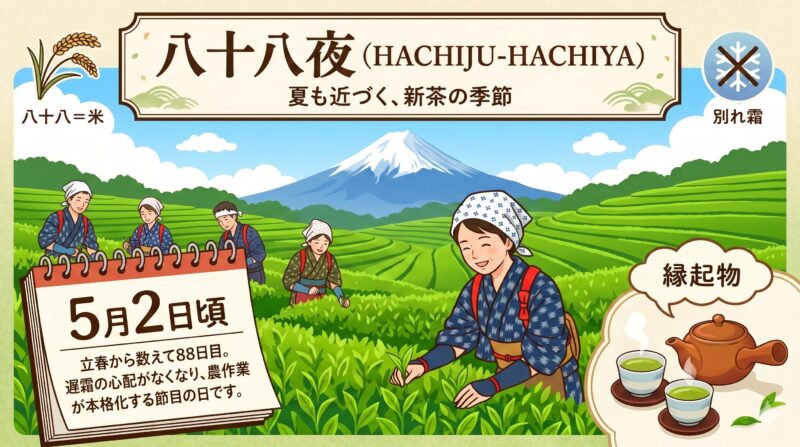
5月2日は多くの年で「八十八夜(はちじゅうはちや)」にあたります。立春から数えてちょうど88日目のこと。
May 2nd falls on “Hachijūhachiya” (the 88th Night) in most years — exactly 88 days counted from the start of spring.
「八十八」が「米」になる、日本語の粋/”Eighty-Eight” Becomes the Character for “Rice” — The Elegance of the Japanese Language
漢字の「米」を分解してみると……「八」+「十」+「八」。そう、88という数字は「米」という字そのものなんです。だから農家にとってこの日は特別な節目。霜の心配がなくなり、本格的な農作業がはじまる目安とされてきました。
Break down the kanji character 米 (“rice”) and you get… 八 + 十 + 八. That’s right — the number 88 is the character for “rice” itself. For farmers, this day has long been a significant milestone: the point at which the risk of late frost passes and serious agricultural work can finally begin.
「この日のお茶を飲むと長生きする」/”Drink Tea on This Day and You’ll Live Long”
八十八夜に摘んだ新茶は、一年で最も上等とされています。各地に「八十八夜のお茶を飲むと病気にならない」「長生きできる」という言い伝えが残っており、この日の新茶は縁起物として珍重されてきました。
GW中に静岡や宇治方面を旅行している方がいたら、ぜひ八十八夜の新茶を一杯。先人の知恵と自然の恵みを、ゆっくり味わってみてください🍃
Tea picked on Hachijūhachiya is considered the finest of the year. Traditions passed down across Japan say that drinking this tea will keep illness away and bring a long life, making it a treasured good-luck charm. If you’re traveling through Shizuoka or Uji during Golden Week, treat yourself to a cup of fresh Hachijūhachiya tea. Take a quiet moment to savor the wisdom of those who came before us and the gifts of nature 🍃
樋口一葉の誕生日(1872年)― お札の顔になった天才女流作家/The Birthday of Higuchi Ichiyō (1872) — The Literary Genius Whose Face Graces Our Banknotes
1872年5月2日、東京・内幸町に一人の女の子が生まれました。本名・奈津。後に「樋口一葉」として歴史に名を刻む人物です。
On May 2, 1872, a baby girl was born in Uchisaiwaicho, Tokyo. Her given name was Natsu. She would go on to leave her mark on history as Higuchi Ichiyō.
17歳で一家の大黒柱に/Becoming the Family’s Breadwinner at 17
父が多額の借金を残してこの世を去り、一葉はわずか17歳で一家の戸主となります。針仕事や洗濯で生計を立てながら、小説家を目指して書き続けました。
吉原遊郭や下町の貧しい女性たちの現実を描いた作品は当時の文壇で高く評価されましたが、その人生はわずか24歳で幕を閉じます。肺結核でした。
Her father died leaving enormous debts, and Ichiyō became the head of household at just 17 years old. She supported her family through needlework and laundry while never giving up her dream of becoming a novelist.
Her works — depicting the harsh realities faced by women in the Yoshiwara pleasure district and the poverty-stricken downtown neighborhoods — earned high praise from the literary world of her day. Yet her life came to an end at just 24, taken by tuberculosis.
「たけくらべ」「にごりえ」― 今読んでも刺さる/Takekurabe, Nigorie — Stories That Still Hit Home
代表作『たけくらべ』や『にごりえ』は、150年以上前の作品とは思えないほど、生き生きとした人物描写と社会への問いかけに満ちています。
「水の低きに就くが如く、人の弱きを圧するが世の習い」― 樋口一葉
2004年から5,000円札の肖像として親しまれている一葉。毎日財布の中にいるあの顔が、これほど波乱万丈の人生を歩んだ人物だと知ると、少し見え方が変わりませんか?
Her masterworks feel nothing like writing from over 150 years ago. The vivid characterization and the questions she poses to society remain as alive and striking as ever.
“Just as water flows to the lowest place, so it is the way of the world to press down upon the weak.” — Higuchi Ichiyō
Since 2004, Ichiyō’s face has graced the 5,000-yen note, familiar to us all. Knowing that the face in your wallet every day belonged to someone who lived such a turbulent life — doesn’t it change how you see her, just a little?
✏️ えんぴつ記念日(1887年)― 万博に感動した男が変えた
日本/Pencil Day (1887) — The Man Who Was Moved by a World’s Fair and Changed Japan
1887年5月2日、眞崎仁六(まさきにろく)が東京・新宿に「眞崎鉛筆製造所」を創立。これが日本初の鉛筆工場の生産のはじまりとされています。この会社こそ、現在の三菱鉛筆の前身です。
On May 2, 1887, Masaki Niroku established the Masaki Pencil Manufacturing Factory in Shinjuku, Tokyo — said to be the beginning of Japan’s first pencil factory production. This company would go on to become Mitsubishi Pencil Co., Ltd.
パリ万博で「鉛筆」に出会った瞬間/The Moment He Encountered a Pencil at the Paris Exposition
眞崎が鉛筆を初めて見たのは、1878年のパリ万博。日本にはまだない文明の利器に感動した彼は、帰国後から研究を重ね、近くの川を水車の動力に使った鉛筆工場を建て上げます。
一人の人間の「感動」と「行動力」が、日本の文具文化を根本から変えたわけです。徳川家康や伊達政宗の遺品からも鉛筆が発見されているなど、実は日本と鉛筆の縁は意外と深いんですよ。
Masaki first laid eyes on a pencil at the 1878 Paris World’s Fair. Captivated by this writing tool that had yet to reach Japan, he threw himself into research after returning home, eventually building a pencil factory powered by a water wheel on a nearby river.
One person’s sense of wonder, combined with the drive to act on it, fundamentally transformed Japan’s stationery culture. And did you know — pencils have been discovered among the personal effects of Tokugawa Ieyasu and Date Masamune? Japan’s connection to the pencil runs surprisingly deep.
⚾ 野茂英雄、MLBデビュー(1995年)― 夢を諦めなかった男/Nomo Hideo Makes His MLB Debut (1995) — The Man Who Never Gave Up on His Dream
1995年5月2日、野茂英雄投手がロサンゼルス・ドジャースでMLBデビューを果たしました。
On May 2, 1995, pitcher Nomo Hideo made his Major League Baseball debut with the Los Angeles Dodgers.
「変人」と呼ばれた先駆者/The Pioneer They Called “Eccentric”
当時、日本人がMLBでプレーするなど「ありえない」と思われていた時代。周囲の反対を押し切って単身アメリカへ渡った野茂は、独特のトルネード投法でアメリカのバッターを次々と翻弄しました。
その年のオールスターにも選出され、奪三振王のタイトルも獲得。イチロー、松井秀喜、大谷翔平……後に続く多くの日本人選手たちの「道」を切り開いたのは、間違いなくこの日からはじまっています。
「自分を信じることをやめなければ、夢は諦めなくていい」
誰かに「無理だ」と言われたとき、野茂の背中を思い出してみてください。
At a time when it seemed unthinkable for a Japanese player to compete in the MLB, Nomo defied those around him and headed to America alone. His signature “Tornado” pitching style left American batters completely baffled.
That same season, he was selected for the All-Star Game and claimed the strikeout title. The path that Ichiro, Matsui Hideki, Ohtani Shohei, and so many other Japanese players would later walk — it was undeniably opened on this very day.
“As long as you never stop believing in yourself, you never have to give up on your dreams.”
The next time someone tells you something is impossible, think of Nomo’s back as he took the mound.
オジーは、野茂が初登板する日授業をさぼり、TV前で応援したのを覚えてます。
そんなに野球が好きというわけではなかったのですが、本当に当時は大ニュースになっていてどうしても同じ日本人として応援してあげたかったという思いだったと記憶します。
今の大谷ブームもすごいですけど、野茂も本当にすごかったんですよー。歌まで出来たんですから(笑)
何かに打ち込んでる人はどんな分野であれ応援したくなりますよね。
では、よい一日をお過ごしください。
See you soon.
I still remember skipping class on the day of Nomo’s first start to cheer him on in front of the TV.
It’s not like I was a huge baseball fan or anything. But it was genuinely big news at the time, and I just had this feeling — as a fellow Japanese person — that I had to root for him. That’s what I remember thinking.
The Ohtani craze today is incredible, but Nomo was truly something else too. They even wrote a song about him! 😄
You know, no matter what the field is — when someone is pouring everything they have into something, you just want to cheer them on, don’t you?
Have a wonderful day.
See you soon.

コメント