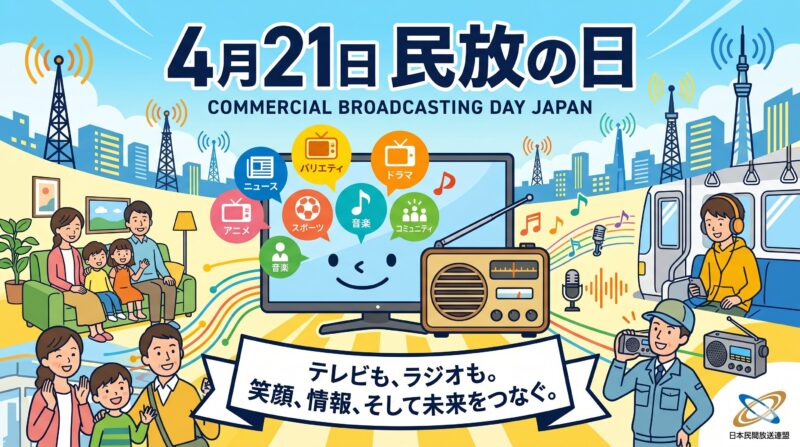
民放の日/Commercial Broadcasting Day
1951年4月21日、日本で初めて民間放送局への予備免許が交付されました。これを記念して日本民間放送連盟が4月21日を「民放の日」と制定しています。
最初に予備免許を受けたのは中部日本放送(CBC)や新日本放送(現・毎日放送)など16社。テレビよりもラジオが先行していた時代、民放の誕生は人々の情報と娯楽のあり方を根本から変えました。
On April 21, 1951, Japan issued its first provisional licenses to private broadcasters — an event commemorated annually as “Commercial Broadcasting Day” by the Japan Commercial Broadcasters Association.
The initial batch of licenses went to 16 companies, including Chubu-Nippon Broadcasting (CBC) and Shin-Nippon Broadcasting (now Mainichi Broadcasting System). In an era when radio still led the way over television, the birth of commercial broadcasting fundamentally transformed how people consumed information and entertainment.
テレビは「一億総白痴化」から始まった?/Did TV Start with “A Nation of Idiots”?
民放テレビ放送が始まった当初、評論家の大宅壮一が「テレビを見ていると一億総白痴化する」と批判したことは有名な逸話です。しかしその後、テレビは文化・スポーツ・ニュースを家庭に届け、日本の高度経済成長を支えるメディアとなりました。
批判を受けながらも成長する。民放の歴史はそのままエンターテインメントの歴史でもあります。
When commercial television launched, critic Sōichi Ōya famously quipped that watching TV would turn Japan’s 100 million people into idiots (ichi-oku sō hakuchika). Yet despite the backlash, television went on to bring culture, sports, and news into every home, becoming a cornerstone of Japan’s postwar economic miracle. Growing through criticism — that story is inseparable from the history of entertainment itself.
現状:どれくらい減っているの?/How Much Has Viewership Actually Fallen?
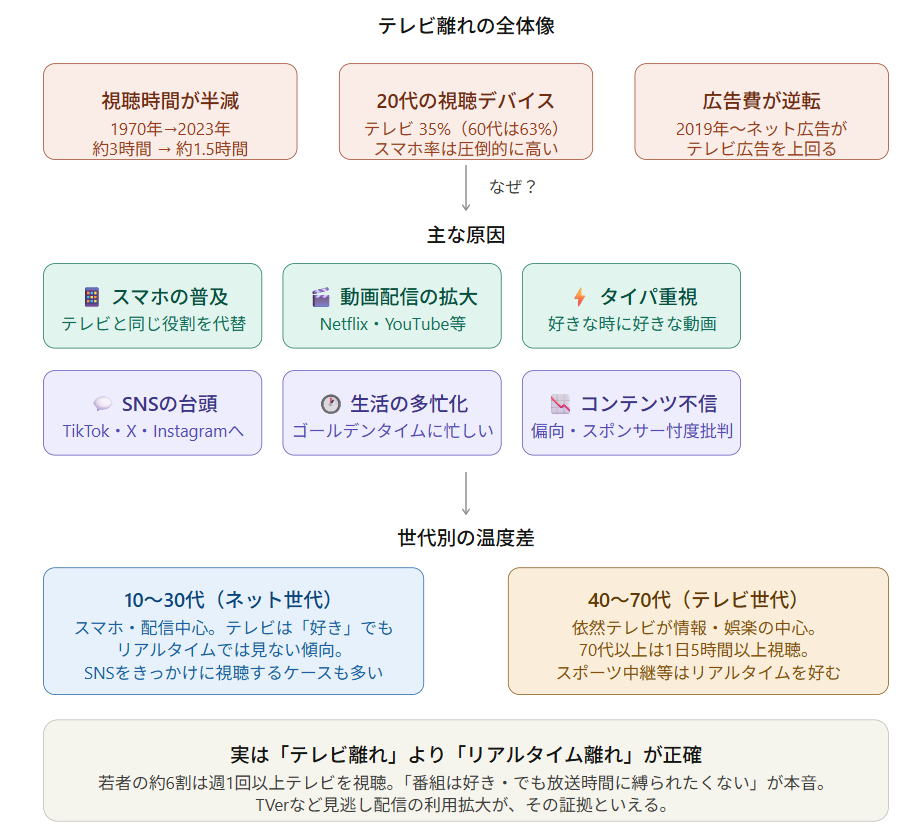
1970年当時は平均視聴時間が約3時間あったのに対して、2023年には約1.5時間にまで半減しています。また2019年以降はネット広告費がテレビ広告費を上回るようになり、企業側もテレビを重視しにくくなってきました。
Average daily TV viewing time stood at around 3 hours in 1970. By 2023 it had dropped to roughly 1.5 hours — cut in half. Since 2019, digital advertising spending has also overtaken TV ad spending, making it harder for companies to justify prioritizing television.
なぜ離れているの?(原因)/Why Are People Drifting Away?
主な原因は大きく5つです。
まずスマートフォンさえあれば各テレビ局のアプリから番組を視聴できるため、テレビと同じ役割をスマホが果たせるようになったことが大きいです。次にAmazonプライムやNetflixなどの動画配信サービスの利用者が年々増え、いつでもどこでも好きな動画を見られることが魅力になっています。
またタイムパフォーマンス(タイパ)を重視する若者は、テレビをリアルタイムで視聴する機会が減り、見たいときに好きなものを見られる見逃し配信へのニーズが高まっています。さらにそもそもゴールデンタイムに仕事やアルバイトをしている若者が多く、テレビを見られる環境にないという現実的な理由も。
マスメディアに対する不信感の高まりや、番組内容がスポンサーの要望で変更されることへの批判 も、特にネットに慣れた世代には根強くあります。
Five main reasons stand out.
First, smartphones can now do everything a TV does — most broadcasters have their own apps, so a phone is all you need. Second, subscription streaming services like Amazon Prime Video and Netflix keep gaining subscribers, offering the freedom to watch anything, anywhere, anytime.
Third, younger viewers who prioritize time efficiency (タイパ, “time performance”) have little interest in scheduled broadcasts; catch-up streaming — watching what you want, when you want — is far more appealing. Fourth, there’s a practical reality: many young people are simply at work or part-time jobs during prime time.
Finally, growing distrust of mass media — and frustration that program content can be shaped by sponsor interests — runs deep, especially among generations raised on the internet.
実は「テレビ嫌い」ではなく「リアルタイム離れ」/It’s Not “Hating TV” — It’s “Leaving Live TV”
ここが面白いポイントで、テレビ番組が「とても好き」と答えた人は10〜20代が最も多く、33.9%にも達するというデータがあります。大学生の2人に1人はテレビ視聴のきっかけが「SNS」であり、すべての若者が一様にテレビ離れしているわけではないことも分かっています。
つまり「テレビのコンテンツは好き、でも放送時間に縛られたくない」というのが若者の本音に近く、「テレビ放送離れ」であって「映像コンテンツ離れ」ではないとも言えます。
Here’s the interesting twist. Among people in their teens and twenties, those who say they “really like” TV programs actually reach 33.9% — the highest of any age group. About one in two college students says their gateway to watching TV content is social media. In other words, not all young people have abandoned television.
The more accurate picture is: “I love the content — I just don’t want to be tied to a broadcast schedule.” This is a departure from broadcast television, not from video content itself.
世代の分かれ目/The Generational Divide
10代・20代は明らかにテレビよりネット利用時間が長く、高度経済成長期前後でテレビ世代かネット世代かに分かれています。40〜60代はまだテレビの需要が高く、70代以上は1日5時間以上視聴している状況です。
Teens and twenties clearly spend more time online than watching TV. The line falls roughly around Japan’s high-growth era: those before it tend to be TV people, those after, internet people. Demand for television remains strong among viewers in their 40s–60s, while those 70 and over watch an average of more than five hours a day.
おじーも、今単身赴任中ですがTVは持ってないです。TVがあるとついつい時間を溶かしちゃうんですよねー(笑)カミさんからのおすすめ番組はTver、Amazon primeでみれるしTVなくても全然困らないですね。
皆さんのTV事情等も教えて頂けると幸いです。
では、よい一日をお過ごしください。
see you soon.
As for me — I’m currently living away from home on a work transfer and I don’t even own a TV. Honestly, having one around just makes time disappear (lol). My wife sends me her recommendations and I catch everything on TVer or Amazon Prime, so I’m not missing it at all.
Would love to hear about your own TV habits — feel free to share!
Have a wonderful day.
See you soon.


コメント