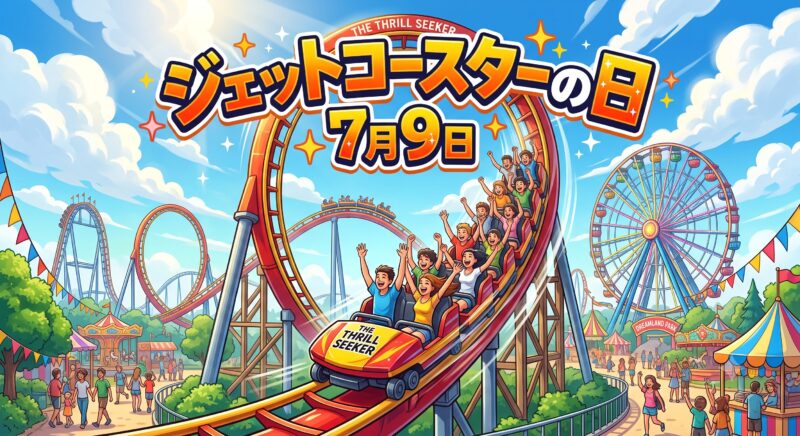
今日7月9日は、日本初のジェットコースターが登場した「ジェットコースターの日」と、「な(7)く(9)」の語呂合わせから生まれた「泣く日」が重なる、なんとも個性的な一日です。
絶叫と涙——正反対のようで、実はどちらも「感情を解放する」という点では同じかもしれませんね。
ジェットコースターの日——「ジェット機みたいに速い!」から生まれた和製英語
1955年7月9日、東京・文京区に後楽園遊園地(現・東京ドームシティアトラクションズ)が開園し、日本初の本格的なジェットコースターが登場しました。
全長550メートル、最高時速55キロのコースを疾走するその姿を見ようと、近くの道路には人垣ができるほどの大人気。当時の人々にとっては、まさに「未来の乗り物」のような体験だったことでしょう。
実はここに面白い豆知識が。英語では「ローラーコースター(roller coaster)」と呼ばれますが、日本では後楽園遊園地がこの乗り物に「ジェットコースター」という名前をつけ、それが全国に広まりました。「ジェット機のように速い!」というイメージから生まれた純粋な和製英語なんです。
ちなみに現代のジェットコースターは時速100キロ超えも珍しくありません。1955年の55キロが「東洋一の速さ」だった時代から、70年でここまで進化したのですね。
泣く日——涙は「心のデトックス」
「な(7)く(9)」の語呂合わせから生まれた「泣く日」。全米感涙協会が制定したこの記念日は、泣くことで感情を豊かに表現し、心をリセットしようという趣旨のものです。
実は涙には3種類あります。目を常に潤す「基本的な涙」、玉ねぎなどに反応する「反射的な涙」、そして感情によって流れる「感情の涙」。この最後の「感情の涙」だけが、ストレス物質を体外に排出する働きがあると言われています。
日本人は特に「人前で泣くのは恥ずかしい」という意識が強いかもしれませんが、泣きたい時は素直に泣いていい。涙は弱さの証拠ではなく、感情が豊かな証拠です。
浅草寺「ほおずき市」——今日から江戸情緒たっぷりの夏祭り
毎年7月9日・10日は、東京・浅草の浅草寺でほおずき市が開催されます。
この日(9日・10日)に浅草寺に参拝すると、なんと四万六千日分のご利益があるとされる特別な縁日。境内に並ぶ赤いほおずきの屋台は、まさに江戸情緒たっぷりの夏の風物詩です。
四万六千日とは約126年分。一度参拝するだけで一生分以上のご利益が得られるとあれば、行かない手はないですよね!
7月9日のその他の出来事
- 1816年:アルゼンチンがスペインから独立を宣言。現在も国民の祝日として記念されています。
- 1922年:文豪・森鴎外が60歳で死去。「舞姫」「高瀬舟」「雁」など多くの名作を遺しました。
- 1955年:ラッセル=アインシュタイン宣言が発表。核兵器の廃絶と平和的紛争解決を訴えたこの宣言には、湯川秀樹も署名しました。
- 1982年:キヤノンが世界初のオートフォーカスカメラ「スナッピィ50」を発売。
✍️ 今日のまとめ
絶叫系の興奮も、涙のデトックスも、ほおずき市の江戸情緒も——今日は「感情を素直に表現する日」という気がします。
感情を押し込めず、笑いたい時は笑って、泣きたい時は泣いて。そうやって心を軽くしながら、暑い夏を乗り越えていきましょう!
本日も良い一日をお過ごしください。
See you soon.
Today, July 9th, brings together “Roller Coaster Day” — marking the debut of Japan’s first proper roller coaster — and “Crying Day,” born from the wordplay “na (7) – ku (9)” (meaning “to cry” in Japanese). What a uniquely expressive pair of anniversaries.
Screaming at the top of your lungs and shedding tears might seem like opposites — but in a way, both are about the same thing: letting your emotions out.
Roller Coaster Day — A Uniquely Japanese Word Born from “Fast as a Jet!”
On July 9, 1955, Korakuen Amusement Park (now Tokyo Dome City Attractions) opened in Bunkyo Ward, Tokyo — and with it came Japan’s very first full-scale roller coaster.
With a track length of 550 meters and a top speed of 55 km/h, the ride drew such crowds that people lined the surrounding streets just to watch it zoom by. For the people of that era, it must have felt like riding something straight out of the future.
Here’s a fun piece of trivia: in English, the ride is called a “roller coaster,” but Korakuen Amusement Park gave it the name “jetto kōsutā” (jet coaster), which spread across the country and became the standard Japanese term. It’s a purely Japanese coinage, born from the image of something as fast as a jet aircraft.
These days, roller coasters topping 100 km/h are nothing unusual. To think that 55 km/h was once considered “the fastest in the Orient” — in just 70 years, the world has come a long way.
Crying Day 😢 — Tears as “Emotional Detox”
“Crying Day” grew from the wordplay “na (7) – ku (9).” Established by the Foundation for the Promotion of Emotional Tears in the U.S., the idea is to express your emotions freely through tears and give your heart a reset.
There are actually three kinds of tears: basal tears (which continuously keep the eyes moist), reflex tears (triggered by things like onions or irritants), and emotional tears (produced by feeling). It’s only this last type — emotional tears — that are said to carry stress-related substances out of the body when you cry.
Many Japanese people may feel a strong sense that “crying in front of others is embarrassing.” But when you feel like crying, it’s okay to simply cry. Tears are not a sign of weakness — they’re a sign of emotional richness.
Asakusa-dera Hōzuki Market 🌸 — An Edo-Era Summer Festival Begins Today
Every year on July 9th and 10th, the famous Hōzuki (Chinese lantern plant) Market is held at Sensō-ji Temple in Asakusa, Tokyo.
Visiting Sensō-ji on these two days is said to earn you the equivalent of 46,000 days’ worth of divine blessing — a truly extraordinary special festival day. The stalls selling bright red hōzuki plants lined up throughout the temple grounds are the very essence of Edo-era summer atmosphere.
46,000 days works out to roughly 126 years — more than a lifetime’s worth of blessings in a single visit. If you ever have the chance, it seems well worth the trip!
Other Events on July 9th
- 1816: Argentina declared independence from Spain — still celebrated as a national holiday there today.
- 1922: Literary giant Mori Ōgai passed away at the age of 60, leaving behind masterpieces including “Maihime,” “Takasebune,” and “Gan.”
- 1955: The Russell–Einstein Manifesto was issued, calling for nuclear disarmament and the peaceful resolution of conflicts. Yukawa Hideki was among the signatories.
- 1982: Canon released the world’s first autofocus camera, the “Snappy 50.”
Today’s Takeaway ✍️
The rush of a screaming ride, the release of a good cry, the timeless charm of an Edo-era festival — today feels like a day to express what you feel, honestly and without holding back.
Don’t bottle things up. Laugh when you want to laugh, cry when you want to cry. Keeping your heart light is how we get through this hot summer.
Have a wonderful day today. See you soon.

コメント