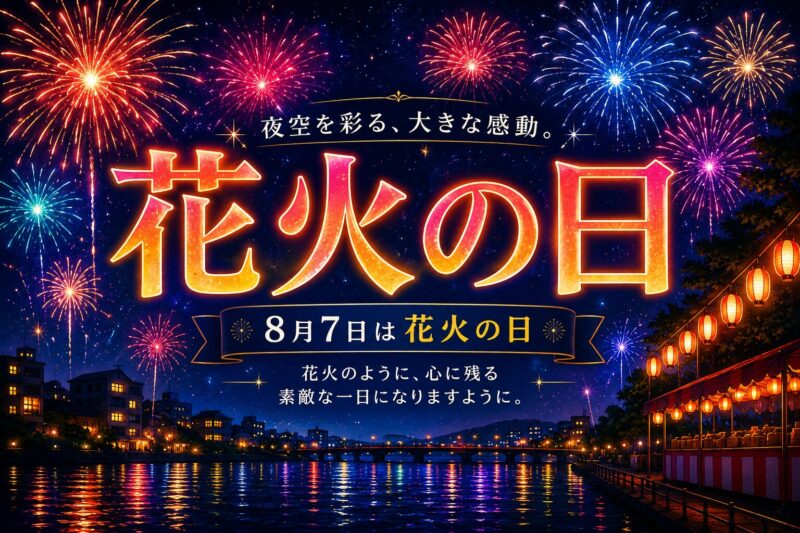
5月28日。今日は「花火の日」です。
夏の風物詩・花火大会。その原点が、293年前の今日(旧暦)にあることをご存知ですか?
1733年旧暦5月28日——8代将軍・徳川吉宗が、前年の大飢饉で亡くなった無数の命を弔うため、隅田川のほとりで水神祭を行いました。その際に打ち上げられた花火が、日本の花火大会のルーツとなりました。
「たまや〜!」「かぎや〜!」——あの掛け声にも、今日につながる深い物語があります。
5月28日の記念日まとめ
5月28日の主な記念日・出来事
・花火の日——1733年旧暦5月28日、隅田川で水神祭の川開きが行われ、花火が打ち上げられた
・国際アムネスティ記念日——1961年5月28日、アムネスティ・インターナショナルが発足
・ゴルフ記念日——1927年5月28日、第1回日本オープンゴルフ選手権が横浜・保土ヶ谷で開催
・張本勲・3000本安打達成(1980年)——日本プロ野球史上初の偉業
・縄文杉・公式発見(1966年)——屋久島の縄文杉が正式に発見・記録された日
・コインランドリーの日——「コ(5)インランドリーでふわ(28)ふわ」の語呂合わせ
・骨盤の日——「骨(52)盤(8)」の語呂合わせ
・佐藤琢磨インディ500初優勝(2017年)——日本人初の快挙
花火大会は「慰霊」から生まれた——享保の大飢饉と徳川吉宗
1732年(享保17年)——江戸時代中期、西日本を中心に空前の大飢饉が起きました。「享保の大飢饉」です。
冷害とウンカ(稲に寄生する害虫)の大発生が重なり、西日本の稲作がほぼ壊滅。その年だけで餓死者は推定約1万2千人〜数万人に上り、全国で100万人以上が飢えに苦しみました。さらに翌年にはコレラも流行し、江戸の町は死の影に覆われました。
享保の大飢饉(1732年)
・原因:冷害+ウンカ(稲の害虫)の大発生
・被害地域:西日本を中心に全国
・餓死者:推定1万2千人〜数万人(諸説あり)
・影響人口:100万人以上が食糧危機に
・翌年:コレラが流行し、さらに死者が増加
8代将軍・徳川吉宗はこの惨状に心を痛め、翌1733年旧暦5月28日、両国橋のほとりで「川施餓鬼(かわせがき)」——餓死した人々の霊を弔う法会——を行いました。
そのとき、両国橋周辺の料理屋が許可を得て花火を打ち上げました。これが「両国の川開き」と呼ばれるようになり、現在の隅田川花火大会へと続く293年の歴史の始まりです。
夏の夜空に輝く花火——その光のひとつひとつには、飢えと疫病で亡くなった江戸の人々への追悼が込められていたのです。
「たまや〜!」「かぎや〜!」——あの掛け声に秘められたドラマ
花火大会の掛け声「たまや〜!」「かぎや〜!」。なぜ2種類の掛け声があるのか、疑問に思ったことはありませんか?
実は、江戸の隅田川花火には「鍵屋」「玉屋」という2つの老舗花火師が存在し、会場の上流と下流で競い合って花火を打ち上げていました。観客はそれぞれお気に入りの花火師の名前を叫んで声援を送ったのです。
鍵屋と玉屋の歴史
・鍵屋:1659年(万治2年)創業の老舗花火師。江戸随一の花火師として名をはせた
・玉屋:鍵屋の暖簾分けで誕生。その腕前は鍵屋を上回るとも言われ江戸っ子に大人気に
・観客の声援:「たまや〜!」が圧倒的に多かったとされる(玉屋人気の証拠)
・玉屋の最期:1843年に花火の失火による大火事を起こし、江戸追放に——わずか1代で幕を閉じた
・鍵屋は現在も15代目が存続。「かぎや〜!」の掛け声と共に今も活躍中
人気絶頂の玉屋は、わずか1代で江戸追放となり消滅。しかしその名声は「たまや〜!」という掛け声として、300年近く経った今も生き続けています。
縄文杉発見の日——1966年5月28日、屋久島の巨木が「公式に」発見された
1966年5月28日——屋久島の山中で、のちに「縄文杉」と命名される世界最大級の屋久杉が、学術調査によって正式に記録されました。
推定樹齢2,000〜7,200年(諸説あり)。幹周り16.4m、高さ25.3mというその巨体は、「もしかしたら縄文時代から生き続けているかもしれない」という思いから「縄文杉」と名付けられました。
縄文杉のデータ
・推定樹齢:2,000〜7,200年(最古の屋久杉とも)
・幹周り:約16.4m
・高さ:約25.3m
・所在地:屋久島(鹿児島県)・世界自然遺産
・発見・記録:1966年5月28日(公式な学術記録)
2,000年以上前から生き続けてきた木が今日発見された——今日の花火の日と合わせると、「時を超えて生き続けるもの」について考えさせられる一日です。
国際アムネスティ記念日——1961年5月28日「世界を変えた一本の記事」
1961年5月28日、イギリスでアムネスティ・インターナショナルが設立されました。現在、世界最大規模の人権NGOです。
きっかけは、イギリスの弁護士ピーター・ベネンソンがポルトガルの新聞記事を読んだことでした。「ポルトガルで2人の学生が政府に乾杯することを拒否して逮捕された」という記事。ベネンソンはこの不条理に怒り、新聞に「忘れられた囚人たち」と題する記事を執筆します。
アムネスティの歴史
・1961年5月28日:ロンドンで設立
・活動内容:良心の囚人の救済・死刑廃止・拷問禁止・難民支援など
・1977年:ノーベル平和賞受賞
・1978年:国連人権賞受賞
・現在:世界150カ国以上に1,000万人以上の会員・支持者
「たった一本の新聞記事が、世界最大の人権組織を生んだ」——言葉の力、発信することの力を感じる話です。
まとめ——5月28日は「悼む心が文化を生む」ことを思い出す日
享保の大飢饉で亡くなった人々を弔うために生まれた花火。不条理な投獄に怒った一人の弁護士が起こした人権運動。どちらも「誰かを思う気持ち」が歴史を動かしました。
まとめ
- 5月28日は花火の日——1733年旧暦5月28日、享保の大飢饉の慰霊を目的とした水神祭で花火が打ち上げられた
- 餓死者・コレラ死者の霊を弔う「川施餓鬼」が原点。293年後の今も隅田川花火大会として続いている
- 「たまや〜!」「かぎや〜!」——鍵屋と玉屋の2大花火師が競い合った。玉屋は失火で江戸追放となったが名声は今も生きる
- 1966年5月28日、屋久島で縄文杉が正式発見——推定樹齢2,000〜7,200年の世界最大級の巨木
- 1961年5月28日、アムネスティ・インターナショナル設立——一本の新聞記事から始まった世界最大の人権NGO
- 1980年5月28日、張本勲が日本プロ野球史上初の通算3000本安打を達成
- 2017年5月28日、佐藤琢磨がインディ500で日本人初優勝の快挙
最後まで読んでくださってありがとうございました😊
今年の夏、花火を見上げるとき、293年前の飢饉で亡くなった人々のことを、ほんの少しだけ心に留めてみてください。あの光は、誰かへの祈りから始まりました。
では、よい一日をお過ごしください。
see you soon.
What Day Is May 28th? “Tamaya! Kagiya!” — Japan’s Summer Fireworks Tradition Was Born as a Prayer for the Dead
May 28th. Today is Fireworks Day (Hanabi no Hi) in Japan.
Summer fireworks festivals — one of Japan’s most beloved seasonal traditions. Did you know that their origin traces back to this very date (by the old lunar calendar), 293 years ago?
On May 28th, 1733 (by the lunar calendar), the eighth shogun, Tokugawa Yoshimune, held a water god ceremony on the banks of the Sumida River to mourn the countless lives lost in the previous year’s catastrophic famine. The fireworks set off that night became the origin of Japan’s fireworks festival tradition.
“Tamaya!” “Kagiya!” — even those famous calls carry a story that leads back to today.
May 28th Commemorative Days at a Glance
📖 Main Events & Commemorative Days on May 28th
· Fireworks Day (Hanabi no Hi) — Lunar May 28th, 1733: the Sumida River water god ceremony launches the first fireworks
· International Amnesty Day — May 28th, 1961: Amnesty International is founded in London
· Golf Memorial Day — May 28th, 1927: the 1st Japan Open Golf Championship is held in Hodogaya, Yokohama
· Harimoto Isao’s 3,000th Hit (1980) — The first player in Japanese professional baseball history to reach this milestone
· Jōmon Sugi Official Discovery (1966) — The ancient cedar tree on Yakushima Island is formally documented
· Coin Laundry Day — Wordplay on “Ko (5) in laundry de fuwa (28) fuwa” (fluffy laundry!)
· Pelvis Day — Wordplay on “Ko-tsu (52) ban (8)” (骨盤 = pelvis)
· Takuma Sato’s Indy 500 Victory (2017) — The first Japanese driver to win the Indianapolis 500
【Main Story】Fireworks Were Born from Grief — The Great Kyōhō Famine and Shogun Yoshimune
In 1732 (Kyōhō 17) — the middle of the Edo period — an unprecedented famine struck Japan, centered on the western regions. This was the Great Kyōhō Famine.
Cold weather and a massive outbreak of planthopper insects (an agricultural pest that devastates rice crops) combined to almost completely destroy the rice harvest across western Japan. In that single year, an estimated tens of thousands of people starved to death, and over a million people faced food shortages. The following year, a cholera epidemic spread through Edo, casting the city further into shadow.
📜 The Great Kyōhō Famine (1732)
· Causes: cold summer + mass outbreak of rice planthopper insects
· Worst-affected areas: western Japan, with ripple effects nationwide
· Deaths from starvation: estimated 12,000 to tens of thousands (accounts vary)
· Population in crisis: over one million people facing food shortages
· The following year: cholera epidemic adds further casualties
Deeply moved by the suffering around him, Shogun Yoshimune arranged for a ceremony called “Kawasegaki” — a Buddhist memorial service to console the spirits of those who had died of starvation — to be held on the banks of the Ryōgoku Bridge on lunar May 28th, 1733.
During this ceremony, restaurants and establishments near Ryōgoku Bridge were given permission to set off fireworks. This became known as the “Ryōgoku River Opening” (Ryōgoku Kawabira-ki) — and it marks the beginning of a tradition that has continued for 293 years, down to the present-day Sumida River Fireworks Festival.
The fireworks that light up the summer night sky — every single burst of light began as an act of mourning, a prayer for the people of Edo who had died of starvation and disease.
【Moving Episode ①】”Tamaya!” “Kagiya!” — The Drama Behind Those Famous Calls
The shouts of “Tamaya!” and “Kagiya!” at fireworks displays — have you ever wondered why there are two different calls?
In Edo’s Sumida River fireworks tradition, there were two rival pyrotechnic houses: Kagiya and Tamaya. Each set off their fireworks from opposite ends of the river — upstream and downstream — competing to outdo each other. Spectators would shout the name of whichever house they favored, in the same spirit as cheering for a team.
🎆 The History of Kagiya and Tamaya
· Kagiya: founded in 1659 (Manji 2) — the oldest and most prestigious fireworks house in Edo
· Tamaya: born as a spin-off from Kagiya; their skill was said to surpass even their parent house, making them wildly popular with the people of Edo
· Crowd response: “Tamaya!” was reportedly by far the louder cry — testament to Tamaya’s popularity
· Tamaya’s end: in 1843, a fire caused by a fireworks accident led to their banishment from Edo — the house closed after just one generation
· Kagiya continues to this day under its 15th-generation master, still performing under the “Kagiya!” cheer
Tamaya — at the peak of its fame, beloved by all of Edo — was extinguished in a single generation and banished from the city. And yet its name has lived on for nearly 300 years, in the shout of “Tamaya!” still echoing at summer fireworks displays across Japan.
【Moving Episode ②】Jōmon Sugi Discovery Day — May 28th, 1966: A Giant Cedar Is Officially Found
On May 28th, 1966, a colossal ancient cedar tree deep in the mountains of Yakushima Island was formally documented by a research expedition. It would later be named Jōmon Sugi — the “Jōmon Cedar.”
Its estimated age: 2,000 to 7,200 years (accounts vary). Its trunk circumference: 16.4 meters. Its height: 25.3 meters. The name “Jōmon” was chosen because the tree may have been alive since Japan’s prehistoric Jōmon period — a thought that stops you in your tracks.
🌳 Jōmon Sugi — Key Facts
· Estimated age: 2,000–7,200 years (possibly the oldest living yakusugi cedar)
· Trunk circumference: approximately 16.4 m
· Height: approximately 25.3 m
· Location: Yakushima Island, Kagoshima Prefecture — UNESCO World Natural Heritage Site
· Formally documented: May 28th, 1966
A tree that has been alive for at least 2,000 years — formally discovered on today’s date. Paired with Fireworks Day, May 28th becomes a day to reflect on the things that outlast us, and carry meaning across generations.
【Holiday ③】International Amnesty Day — May 28th, 1961: “The Article That Changed the World”
On May 28th, 1961, Amnesty International was founded in London — now the world’s largest human rights NGO.
It began when British lawyer Peter Benenson read a newspaper item: two students in Portugal had been arrested for raising a toast to freedom. Outraged by the injustice, Benenson wrote and published an article in a British newspaper titled “The Forgotten Prisoners.” The response was overwhelming — and within months, an organization had been born.
✊ Amnesty International — Key History
· Founded: May 28th, 1961, London
· Work: advocating for prisoners of conscience, opposing the death penalty, fighting torture, supporting refugees
· 1977: Nobel Peace Prize
· 1978: UN Human Rights Prize
· Today: over 10 million members and supporters in more than 150 countries
One newspaper article — and from it, the world’s largest human rights organization. It’s a reminder that words matter, and that the act of speaking up can move the world.
Closing Thoughts — May 28th Is a Day to Remember That Grief Can Give Birth to Culture
Fireworks born to mourn the dead of a famine. A human rights movement sparked by one lawyer’s outrage at an injustice he read about in a newspaper. In both cases, it was caring about someone — feeling something on behalf of others — that moved history.
📝 Summary
- May 28th is Fireworks Day — on lunar May 28th, 1733, fireworks were set off at a water god ceremony on the Sumida River to mourn victims of the Great Kyōhō Famine
- The ritual origin was Kawasegaki — a Buddhist memorial for those who died of starvation. That tradition has continued for 293 years as the Sumida River Fireworks Festival
- “Tamaya!” and “Kagiya!” — Kagiya and Tamaya, two rival fireworks houses, competed on the river. Tamaya was banished from Edo after a single generation — but its name has lived on for 300 years
- On May 28th, 1966, Jōmon Sugi was officially documented on Yakushima Island — a cedar estimated to be between 2,000 and 7,200 years old
- On May 28th, 1961, Amnesty International was founded — the world’s largest human rights NGO, born from a single newspaper article
- On May 28th, 1980, Isao Harimoto recorded the 3,000th hit of his career — the first player in Japanese professional baseball history to do so
- On May 28th, 2017, Takuma Sato became the first Japanese driver to win the Indianapolis 500
Thank you so much for reading all the way to the end 😊
This summer, when you look up at a fireworks display, take a quiet moment to think of the people who lived — and died — 293 years ago. Every burst of light began as someone’s prayer.
Have a wonderful day.
See you soon.
コメント