由来
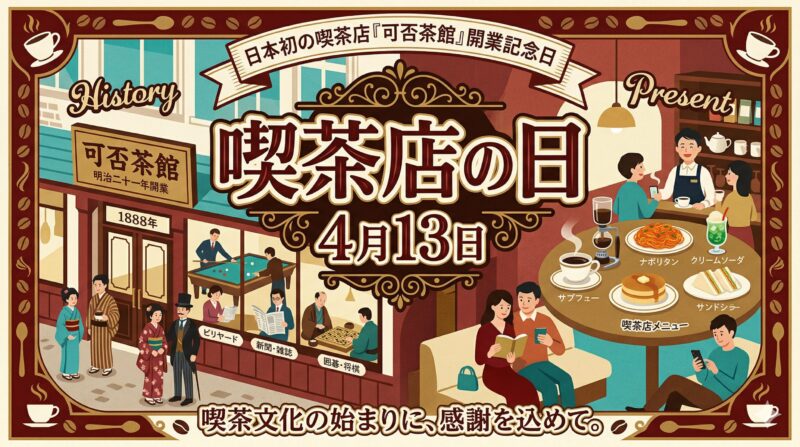
1888年(明治21年)4月13日、東京・上野に日本初の本格的な喫茶店「可否茶館(かひいさかん)」が開業。元外務省官吏・鄭永慶が、アメリカで体験したカフェを再現したいという思いで自宅を改造してオープン。「コーヒーを飲みながら知識を吸収し、文化交流をする場」がコンセプトだった。1階がビリヤード場、2階が喫茶室という2階建て洋館で、新聞・書籍・シャワー室まで完備。しかし値段が高く(そば1杯1銭の時代にコーヒー1銭5厘+席料)、わずか3〜4年で閉店。この記念すべき開業日が「喫茶店の日」の由来となっている。
On April 13, 1888 (Meiji 21), Japan’s first full-scale coffee shop, Kahiichakan (可否茶館), opened in Ueno, Tokyo. Its founder, Tei Eikei — a former official of the Ministry of Foreign Affairs — wanted to recreate the café experience he had encountered in America, and converted his own home to make it happen. The concept was “a place to absorb knowledge and exchange culture over a cup of coffee.” The two-story Western-style building housed a billiard room on the ground floor and a tearoom upstairs, and was equipped with newspapers, books, and even a shower room. However, the prices were steep for the era — coffee cost 1.5 sen plus a seating fee, at a time when a bowl of soba noodles was just 1 sen — and the shop closed after only three or four years. This historic opening date became the origin of “Coffee Shop Day.”
時代別 喫茶店の歴史/A History of Japanese Coffee Shops Through the Ages
江戸〜明治前期/Edo to Early Meiji
コーヒーとの出会い/First Encounter with Coffee
江戸時代、長崎の出島でオランダ人によりコーヒーが伝わるが「焦げ臭くて味わうに堪えず」と不評。黒船来航後に横浜・長崎などの開港地で西洋料理店が開き、一般庶民もコーヒーを目にするように。1874年(明治7年)、神戸元町に「放香堂」が開店し、コーヒーの店内飲みが始まる。
Coffee was introduced to Japan during the Edo period by Dutch traders at Dejima in Nagasaki, but it was poorly received — described as “burnt-smelling and barely drinkable.” After the arrival of Commodore Perry’s Black Ships, Western-style restaurants opened in port cities like Yokohama and Nagasaki, gradually bringing coffee into public view. In 1874 (Meiji 7), Hokodo opened in Kobe’s Motomachi district, marking the beginning of in-store coffee drinking.
明治21年(1888)/Meiji 21
日本初の喫茶店「可否茶館」誕生/Birth of Japan’s First Coffee Shop
現代的な喫茶店の形態を初めて持つ店として「可否茶館」が上野に開業。約4年で閉店するも、日本の喫茶文化の礎を築いた歴史的存在として名を残す。
Kahiichakan opened in Ueno as the first establishment to take the form of a modern coffee shop. It closed after roughly four years, but left its mark in history as the foundation of Japan’s café culture.
明治末〜大正(1910年代〜)/Late Meiji to Taisho (1910s)
銀座にカフェー文化が花開く/Café Culture Blooms in Ginza
1911年(明治44年)、パリのカフェをモデルにした「カフェー・プランタン」が銀座に開業。同年「カフェー・パウリスタ」「カフェー・ライオン」も相次いで誕生し、文士・芸術家の社交の場として人気に。モガ・モボと呼ばれる流行の若者が集まる”銀ぶら“文化が形成される。
In 1911 (Meiji 44), Café Printemps, modeled after Parisian cafés, opened in Ginza. That same year, Café Paulista and Café Lion followed in quick succession, becoming popular social hubs for writers and artists. The “Ginbura” culture took shape — trendy young people known as moga and mobo strolling the Ginza streets and gathering at cafés.
昭和初期(1930年代〜)/Early Showa (1930s)
「純喫茶」と「カフェー」の分化/The Split Between “Jun Kissa” and “Café”
昭和に入り、女給(ホステス)によるサービスを主体とする「特殊喫茶(カフェー)」と、コーヒー・軽食を主体とする「純喫茶」に二分化。1935年には東京だけで喫茶店が1万店舗を超える盛況ぶりに。地域ごとに個性も育まれ、銀座は高級、神田は学生向けスタイルが定着。
The Showa era saw a divergence: tokushu kissa (specialty cafés), centered on hostess service, separated from jun kissa (pure coffee shops) focused on coffee and light meals. By 1935, Tokyo alone had over 10,000 coffee shops. Regional identities also emerged — Ginza became associated with upscale establishments, while Kanda developed a student-friendly style.
昭和30〜40年代(1950〜60年代)/Showa 30s–40s (1950s–60s)
ジャズ喫茶・歌声喫茶の時代/The Age of Jazz Cafés
CDのなかった時代、音楽を聴ける場所として「ジャズ喫茶」「歌声喫茶」が大流行。喫茶店は文化・社交の中心地となり、若者の溜まり場として定着。店主がこだわりのコーヒーをハンドドリップで淹れるスタイルも広まる。
Before CDs existed, jazz kissa and utagoe kissa (sing-along cafés) boomed as places where people could actually listen to music. Coffee shops became cultural and social centers, firmly establishing themselves as gathering spots for young people. The owner-brewed, hand-drip style of coffee also began to spread.
昭和50〜60年代(1970〜80年代)/Showa 50s–60s (1970s–80s)
喫茶店の黄金期・全盛期/The Golden Age of Coffee Shops
1981年には全国で約15万4千店という史上最多記録を達成。ナポリタン・プリンアラモード・クリームソーダなど「喫茶店メニュー」が確立される。ドトールコーヒー(1980年)が低価格路線のチェーン展開を開始し、喫茶店の大衆化が加速。
In 1981, the number of coffee shops nationwide peaked at a record high of approximately 154,000. Iconic café menu items like Napolitan pasta, pudding à la mode, and cream soda became firmly established. Doutor Coffee (founded 1980) launched an affordable chain model, accelerating the popularization of café culture.
平成(1990〜2000年代)/Heisei (1990s–2000s)
スタバ上陸・カフェブームへ/Starbucks Arrives, the Café Boom Begins
1996年にスターバックスが日本1号店を銀座に出店し、「カフェ」という言葉が一般化。おしゃれなカフェ文化が若い世代に浸透。一方、個人経営の喫茶店は減少傾向に。コンビニコーヒーの台頭も競争を激化させる。
In 1996, Starbucks opened its first Japanese location in Ginza, popularizing the word “café” in everyday usage. A stylish café culture took hold among younger generations. Meanwhile, independently owned coffee shops began to decline, and the rise of convenience store coffee intensified competition.
令和(2020年代〜)/Reiwa (2020s onward)
レトロ喫茶の再評価・サードウェーブ/Retro Kissaten Revival and the Third Wave
SNS映えやコロナ禍による「ゆっくりできる場所」への需要増から、昭和レトロな純喫茶が若者に再人気。スペシャルティコーヒーを丁寧に淹れるサードウェーブ文化も定着。国内カフェ市場は1兆円超の規模に。一方、コーヒー豆・人件費高騰により小規模店の淘汰も進む二極化が課題。
Driven by social media aesthetics and a post-pandemic desire for “places to unwind,” Showa-era retro jun kissa have surged back in popularity among young people. Third-wave coffee culture — with its focus on carefully brewed specialty coffee — has also taken root. The domestic café market now exceeds one trillion yen. At the same time, rising coffee bean prices and labor costs are pushing out smaller independent shops, creating a growing divide in the industry.
現在の人気店 TOP5(チェーン別・複数調査総合)/Current Top 5 Popular Chains (Based on Multiple Surveys)
スターバックスコーヒー/Starbucks Coffee
国内約1,991店舗(2025年4月)。SNSで話題の季節限定フラペチーノ、豊富なカスタマイズ、おしゃれな店内がZ世代から中高年まで幅広く人気。全47都道府県に展開中。
#SNS映え #カスタマイズ #全国展開
Approximately 1,991 locations in Japan (April 2025). Seasonal limited-edition frappuccinos, extensive customization options, and stylish interiors draw fans across all age groups from Gen Z to middle age. Present in all 47 prefectures. #SocialMediaWorth #Customization #Nationwide
コメダ珈琲店/Komeda Coffee
1968年名古屋創業。約1,000店舗以上展開。「モーニングサービス」(ドリンク代のみで付いてくるトーストとゆで卵)と「シロノワール」が看板。ゆったりソファで過ごす昭和的くつろぎ感が人気。Z世代にも急上昇中。
#モーニング #シロノワール #くつろぎ重視
Founded in Nagoya in 1968. Over 1,000 locations. Famous for its “Morning Service” — toast and a boiled egg included with the price of a drink — and its signature Shironoir (soft cream on a warm Danish). The relaxed, sofa-heavy atmosphere with a nostalgic Showa feel has also won over younger generations. #Morning #Shironoir #Relaxation
ドトールコーヒーショップ/Doutor Coffee Shop
国内約1,079店舗。1980年創業の日本発チェーン。リーズナブルな価格(ブレンド280円〜)と手軽さが強み。ミラノサンドなどのフードも人気。忙しいビジネスパーソンや学生に長年支持される定番。
#コスパ最強 #日本発 #駅ナカ多数
Approximately 1,079 locations. Founded in Japan in 1980. Known for affordable prices (blended coffee from 280 yen) and convenience. Food items like the Milano Sand are also popular. A long-time staple for busy professionals and students. #BestValue #JapaneseBorn #StationLocations
タリーズコーヒー/Tully’s Coffee
国内約800店舗。こだわりのコーヒー豆と落ち着いた空間が特徴。季節限定ドリンクもSNSで話題に。スタバと並ぶ「本格派カフェ」として根強いファンを持つ。店舗数は年々増加中。
#コーヒー本格派 #限定メニュー
Approximately 800 locations. Characterized by quality coffee beans and a calm atmosphere. Seasonal drinks generate buzz on social media. Maintains a loyal following as a “serious coffee” option alongside Starbucks, with the number of locations steadily growing. #SeriousCoffee #LimitedMenuItems
星乃珈琲店/Hoshino Coffee
ドトール・日レスHDが運営。英国風レトロな内装と半個室構造で「静かに過ごせる」と好評。ハンドドリップコーヒーと窯焼きスフレパンケーキが看板。純喫茶ブームの追い風もあり店舗数が急拡大中。
#純喫茶スタイル #スフレパンケーキ #急成長中
Operated by Doutor-Nihonresu Holdings. Praised for its British-style retro interior and semi-private booth layout, making it a popular spot for quiet time. Signature items include hand-drip coffee and oven-baked soufflé pancakes. Riding the retro jun kissa wave, the chain is expanding rapidly. #JunKissaStyle #SoufflePancakes #RapidGrowth
おじーはコーヒーが好きでよく飲むのですが、実際の所喫茶店にはあまり行ったりはしないのですが、本当に最近は色んな番組等でもおしゃれなカフェや美味しそうなメニューを紹介されていることが多く行ってみたいなぁとは思います。
これを機にカフェ巡りでも始めてみようかと思う今日この頃。
カフェで挙動不審でコーヒーを楽しんでいるオジーがいても弄らず、優しく見守っていてください(笑)
では、本日もよい一日をお過ごしください。
see you soon.
I personally love coffee and drink it often, but honestly I don’t visit coffee shops all that much. That said, lately it feels like every TV program is featuring stylish cafés and mouth-watering menus, and I find myself thinking, “I really should go sometime.”
This might just be the push I need to start making my way around local cafés.
If you happen to spot a slightly awkward old guy quietly enjoying his coffee at a café somewhere — please don’t tease him. Just watch over him with warmth. (lol)
Have a wonderful day.
See you soon.


コメント